
TranceAddict Forums (www.tranceaddict.com/forums)
- Political Discussion / Debate
-- This website is so ass-backwards it's funny
Pages (14): « 1 2 3 4 5 6 7 8 9 10 11 12 [13] 14 »
| quote: |
| Originally posted by pkcRAISTLIN 4.03am. about to smoke some weed and listen to some trance  |

Well define study 
I took a look at his book list and it's quite obvious he's done a fuckload of reading on this subject overall.
I should probably switch my minor to Philosophy, surprisingly my major in Theology isn't really helping me much in this debate because we're sort of leaving the matter of Church history out of it... Not that it really has much place in this sort of debate, apart from the questions of exegesis that have emerged.
| quote: |
| Originally posted by Lebezniatnikov It's actually not at all dissimilar from Plato's world of forms. Plato was obviously not a Christian theologian, but he laid the base for Christian dogma quite well by arguing that every object and being on Earth must exist in pure form in another realm. Mankind's "form" has been usurped by the concept of God - various doctrines may get the details wrong (i.e. creation), but Plato's formulation serves quite well when pondering whether or not "God" can evolve as well. I can't remember which dialogue it appeared in, but Plato had a whole discussion about forms and the divine. |
| quote: |
| Originally posted by Alex Well define study |
| quote: |
| Originally posted by Lebezniatnikov |

This is a neat little thing I came across, it's called Pascal's Wager and it is sort of a "proof" or facilitation to a proof of God's existence, not through the need for his existence but more based on a gamble:
| quote: |
| Suppose you, the reader, still feel that all of these arguments are inconclusive. There is another, different kind of argument left. It has come to be known as Pascal's Wager. We mention it here and adapt it for our purposes, not because it is a proof for the existence of God, but because it can help us in our search for God in the absence of such proof. As originally proposed by Pascal, the Wager assumes that logical reasoning by itself cannot decide for or against the existence of God; there seem to be good reasons on both sides. Now since reason cannot decide for sure, and since the question is of such importance that we must decide somehow, then we must "wager" if we cannot prove. And so we are asked: Where are you going to place your bet? If you place it with God, you lose nothing, even if it turns out that God does not exist. But if you place it against God, and you are wrong and God does exist, you lose everything: God, eternity, heaven, infinite gain. "Let us assess the two cases: if you win, you win everything, if you lose, you lose nothing." Consider the following diagram:  The diagram is in the shape of a square with the opposite corners connected by lines. Going clockwise from the top left the labels are 'God Exists' then 'God does not exist' then I believe in Him' then 'I do not believe in Him' The vertical lines represent correct beliefs, the diagonals represent incorrect beliefs. Let us compare the diagonals. Suppose God does not exist and I believe in him. In that case, what awaits me after death is not eternal life but, most likely, eternal nonexistence. But now take the other diagonal: God, my Creator and the source of all good, does exist; but I do not believe in him. He offers me his love and his life, and I reject it. There are answers to my greatest questions, there is fulfillment of my deepest desires; but I decide to spurn it all. In that case, I lose (or at least seriously risk losing) everything. The Wager can seem offensively venal and purely selfish. But it can be reformulated to appeal to a higher moral motive: If there is a God of infinite goodness, and he justly deserves my allegiance and faith, I risk doing the greatest injustice by not acknowledging him. The Wager cannot�or should not�coerce belief. But it can be an incentive for us to search for God, to study and restudy the arguments that seek to show that there is Something�or Someone�who is the ultimate explanation of the universe and of my life. It could at lease motivate "The Prayer of the Skeptic": "God, I don't know whether you exist or not, but if you do, please show me who you are." Pascal says that there are three kinds of people: those who have sought God and found him, those who are seeking and have not yet found, and those who neither seek nor find. The first are reasonable and happy, the second are reasonable and unhappy, the third are both unreasonable and unhappy. If the Wager stimulates us at least to seek, then it will at least stimulate us to be reasonable. And if the promise Jesus makes is true, all who seek will find (Mt 7:7-8), and thus will be happy. |
nothing more than an exercise in intellectual dishonesty.
| quote: |
| Originally posted by pkcRAISTLIN nothing more than an exercise in intellectual dishonesty. |
| quote: |
| Originally posted by pkcRAISTLIN intellectual dishonesty. |

| quote: |
| Originally posted by pkcRAISTLIN that's funny, because plato's world of forms is the single thing i remember about him. after i encountered it i just couldn't take him seriously anymore. |
| quote: |
| Originally posted by Alex Alright, I like you pkc but you really know how to act like a childish bastard when you have nothing of importance to say. And you are the king of typing up bullshit that has 0 basis in anything whatsoever, drunk or not |

You took it too seriously
| quote: |
| Originally posted by Lebezniatnikov and was hardly the embodiment of his work. |
| quote: |
| Originally posted by pkcRAISTLIN oh, of course not. its merely the only thing i remember (10 years ago man!). i only discarded plato because i discarded philosophy generally to focus on politics. but his perfect forms still annoyed me |
| quote: |
| Originally posted by Renegade No it isn't: http://en.wikipedia.org/wiki/Kin_selection |
| quote: |
| No it isn't. (I'm beginning to enjoy starting my replies like that.) Morality is derived from our capacity to sympathise with the mental states of others. The gratuitous suffering of another causes me to suffer and this is wired into our very being (I mentioned it before, but read up on mirror neurons). When I say that morality is instinctive (or objective - the suffering of another is not likely to be any more or less apparent to another human being than it is to me, for this very reason) this is what I mean. |
| quote: |
| So if morality "begins with God" and "has been passed down" wouldn't it be fair to say that the original interpretations have a greater chance of being correct than the latter ones? If morality began with god and has been passed down from generation to generation, on what grounds can we say that the injunction to stone an adulterer to death is immoral (or that the murder of an excommunicated Catholic is unlawful) without resorting to non-theistic (dare I say, humanistic) rationalisations? |
| quote: |
| You can't have it both ways. You can either denounce the morality of generations past who claimed to derive their morality from God, or you can claim that your generation of Catholics has inherited - to the exclusion of all previous generations - the one true morality. In either case, your claim that moral systems can only be derived from God appears to have no basis in reality (I'll say it again: where did the "wrong" moral system come from?). |
)
That Scooby-Doo picture is perfect 
| quote: |
| Originally posted by Lebezniatnikov Ah, but then how can you discard The Republic! It's the first work of political science! |

| quote: |
| Originally posted by Alex See this is why things can get a bit hectic, but no matter when I get the chance I will respond to each in turn... Except Psy-T because I don't really understand what you were trying to accomplish in your post, |
| quote: |
| Originally posted by Alex it seems you made a bunch of statements saying what I was saying was irrelevant to the discussion. |
| quote: |
| Originally posted by Alex If Renegade had thought so, he would not have responded to the things I'd said, but he did. |
| quote: |
| Originally posted by Alex For now though, I will explain my point about objective morality a bit better because it appears it isn't so obvious a solution for some as I thought it would be. (PS Renegade this is from Kant, it's just a summary of the arguments but it shows the train of thought that I was trying to lay down): In reference to the normativity of morality: 1. It appears to human beings that moral normativity exists. 2. The best explanation of moral normativity is that it is grounded in God. 3. Therefore God exists. 4. Moral normativity is best explained through the existence of authoritative moral rules. 5. Authoritative moral rules must be promulgated and enforced by an appropriate moral authority. 6. The only appropriate moral authority is God. 7. Thus, given that there is moral normativity, there is a God. |
| quote: |
| Originally posted by Alex Arguing that there is no God based on objective morality would be a tricky case and it would be difficult to prove how human beings would all be instilled with the knowledge of an act being wrong if there was no "guiding morality" behind it that set the standard in the first place, otherwise there would simply be nothing to compare our moral or immoral actions to. There simply would be no standard. |
| quote: |
| Originally posted by Alex PS: Psy-T Are you really asking how the Bible could be considered divine? Really? Come on now Your understanding of the Bible is extremely primitive and I think you either need to look a little deeper or actually read it before making the statements you did about it merely being a bunch of stories passed down. A big portion of the Bible are stories and parables, there is also an enormous portion devoted to straight forward teachings that involve absolutely no stories. There are letters from Saint Paul to Churches all over the known (at the time) world that were not stories at all, and there is apocalyptic literature there... Some of which relies on mythology and parables and a lot of which does not. |
| quote: |
| Originally posted by Alex The Bible is considered divine because it is a record of the word of God, it is not written by him, this we know. But it is written by a number of Prophets and witnesses to his actions and teachings. The Bible is divine in the same way that Jesus is considered divine, it combines the human element AND the divine one, just as Jesus combined both being a man and God. |
| quote: |
| Originally posted by Lebezniatnikov Aristotle's Nicomachean Ethics, Book I, Section IX Here Aristotle seems to argue that morality (ethics/virtue) is grounded in man's desire to attain god's gift of happiness. To be moral is to be rewarded with that which only God could have created. |
| quote: |
| Originally posted by Alex Just think about it: Intrinsically-valuable, thinking persons do not come from impersonal, non-conscious, unguided, valueless processes over time. |
| quote: |
| Originally posted by Alex A personal, self-aware, purposeful, good God provides the natural and necessary context for the existence of valuable, rights-bearing, morally-responsible human persons. |
| quote: |
| Originally posted by Alex That is, personhood and morality are necessarily connected; moral values are rooted in personhood. Without God (a personal Being), no persons - and thus no moral values - would exist at all: no personhood, no moral values. Only if God exists can moral properties be realized. |
| quote: | ||
| Originally posted by Alex In reference to naturalistic or the evolutionary theory of ethics/morals based on survival:
|
| quote: |
| Originally posted by Alex To reinforce further the point about the God-morality connection, a number of atheists and skeptics have noted it. The late atheist philosopher J. L. Mackie said that moral properties are "queer" given naturalism: Agnostic Paul Draper says: |
.
| quote: |
| Originally posted by Alex Now lets clear something up, perhaps the language I've been using has been misleading. I do not believe that ALL morality came from God. I do however believe that God instilled in us our very core sense of morality, the objective morality. |
| quote: |
| Originally posted by Psy-T yes, we can trust our minds, even if we are nothing more than the products of naturalistic evolution. why can we trust our minds? because there is no practical alternative (barring some true display of an omnipotent being's existence via an otherwise impossible change of nature), and can not even visualize an alternative that would be in any way preferable. i could link you to a long discussion me and renegade (among other forum denizens) have had on the issue of free will a few years ago if you'd like, it touches on this very point. on the other hand, i don't see how the fact our minds have evolved from those of lower beings would bring us to questions their trustworthiness. nor do i see why we should not trust the minds of lower beings to begin with. furthermore, it seems like you're positing that interest in fitness/survival/et cetera undermines rational thought. how would that be? rational thought aides and facilitates fitness/survival/etc. onwards, a conclusion that you can not trust your standard reasoning could be the most correct ones in various situations in which your knowledge is limited. a high success rate for our senses and intuitions makes more sense as a reason for why we trust those faculties. |
| quote: |
| what is included in this objective morality we've been instilled with? |
| quote: |
| Originally posted by Alex This argument, if I can call it that, is so beyond invalid it's unbelievable. You contradict yourself at least 3 times here in trying to point out some absurd relation between naturalism and the evolution of reason. Please re-structure it in a logically valid way that at least makes some sort of sense and I'll have another look. |
| quote: |
| Originally posted by Alex Also, please stop trying to apply the socratic method to absolutely every post you make. Yes, asking the questions makes us look smart, I get it. Especially seeing as how the questions you ask are in the following format "how"/"why"/"huh"? With absolutely no request for any specific information whatsoever |
| quote: |
| Originally posted by Alex This leads me to believe that you do not understand what is being discussed here, the answer to your question is in your question. Literally. |

| quote: |
| Originally posted by Alex At the very least if Renegade asks a question or says something is wrong he provides some sort of reason/proof/quote/link/logical retort that allows me to further address the matter. You on the other hand either make one line statements with no follow up, ask questions with no follow up or post personal opinions with no follow up. |

| quote: |
| Originally posted by pkcRAISTLIN not to gush here or anything, but renegade is the owner of the keenest intellect i have ever come across. what's really crazy is that he hasn't studied any of this shit. his uni involves something quite separate if i remember correctly. he's definitely a freak! |
| quote: |
| Originally posted by Psy-T seeing as it's "so beyond invalid it's unbelievable", how about you actually demonstrate how it is so? shouldn't be too hard, after all, it's so beyond invalid, that you shouldn't have any problem doing so. is there anything wrong with the socratic method? or do you just dislike it when people actually use debating 'techniques' while debating? you've just contradicted yourself. and here's the kicker, i'll even explain how you've contradicted yourself! you've just admitted that i apply the socratic method to "absolutely every post (i) make", and a moment later you believe that me asking a question stands for me not understanding the subject at all, rather than staying in line with your own statement that i'm using the socratic method. sorry my posts force you to think for yourself a tiny bit more, if that's what you're saying. |
| quote: |
| a conclusion that you can not trust your standard reasoning could be the most correct ones in various situations in which your knowledge is limited. a high success rate for our senses and intuitions makes more sense as a reason for why we trust those faculties. |
| quote: |
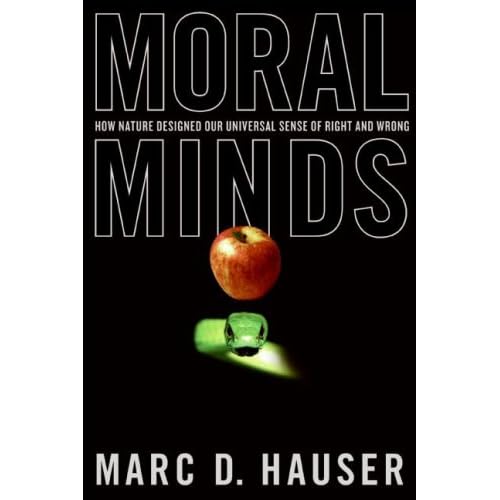
| Originally posted by DrUg_Tit0 Humans, however, do have at least some basic moral values installed at birth, similar to the universal grammar Lira was talking about. |
| quote: |
| Originally posted by Alex Your posts don't really force me to think at all, |
| quote: |
| Originally posted by Alex just give monotonous responses to statements about the Bible having 2 testaments and the fact that Objective morality is Objective morality. |
| quote: |
| Originally posted by Alex Yes I contradicted myself by exaggerating, get over it |

| quote: |
| Originally posted by Alex All you're trying to do is "debate" without actually providing any evidence for anything, |
| quote: |
| Originally posted by Alex I notice you didn't respond to that part of my post. Interesting. |
| quote: |
| Originally posted by Alex Get some sources, get some actual points of some sort instead of just trying to hop on the Renegade bandwagon. Lets face it, in all your posts I don't think you've cited a single source for anything, |
| quote: |
| Originally posted by Alex and you have actually been wrong about some very basic terminology, |
| quote: |
| Originally posted by Alex so without exaggeration this time; I believe you have attempted to use the Socratic method but as a result of not knowing what the hell you were talking about in the first place. Therefore my point is still valid |
| quote: |
| Originally posted by Alex As for the only statement you made at length about anything... And your absurd attempt to rationalize our ability to reason and why we should trust our minds: How could we possibly trust our minds if, in a naturalistic view, our minds simply think the way they do at a given time based on environmental conditions? AKA: Sense perceptions, as Renegade pointed out? "If such reasoned conclusions are only built originally upon a foundation of sense perceptions, then, the argument being considered goes, our most logical conclusions can never be said to be certain because they are built upon the very same fallible perceptions they seek to better." So that calls any conclusion your mind reaches into question if it is purely based on sense perception. Therefore, if any sort of alternative were to arise to our current one, we would not even be able to acknowledge it as an alternative. The fact that people DO trust things apart from their own minds, as Plato put it a "higher reality" that allows us to arrive at truth without relying purely on the senses proves that there are existing alternatives without empirical proof of a higher power. |
| quote: |
| Originally posted by Alex And here is your glaring contradiction that invalidated what you first wrote: |
| quote: |
| Originally posted by Alex Your "standard reasoning" appears to be sense perception, |
| quote: |
| Originally posted by Alex and you admit there are situations where you don't have much knowledge AND you admit that your standard reasoning would not be sufficient in analyzing those situations... |
| quote: |
| Originally posted by Alex Therefore you admit that an alternative would be welcome to deal with those situations that our senses clearly fail to address. |
| quote: |
| Originally posted by Alex Basically you are admitting that the naturalist sense of reasoning is not all that practical itself, |
| quote: |
| Originally posted by Alex and if our minds are merely the result of natural evolution and are unaffected by the evolution of reason (since according to you we're still only relying on sense perception) any alternative that could possibly arise would automatically be considered irrational. Therefore our minds are self-defeating and your point is self-refuting because you seem to admit the (however unlikely) possiblity that there could be some other alternative. |
Alright well, when the "shut the fuck ups" start I put you on ignore, there is no reason to start with things like that, I guess my points sort of got to you, and I'm sorry. Not to mention all you've really tried to do is bait me into a poo-slinging match that I will not participate in, sorry bud.

Powered by: vBulletin
Copyright © 2000-2021, Jelsoft Enterprises Ltd.