
TranceAddict Forums (www.tranceaddict.com/forums)
- Chill Out Room
-- Favorite frozen food aisle item
Pages (3): « 1 [2] 3 »
what are dumplings?
what are dumplings?
When you take a dump on a asian guy named Ling. And then you freeze it.
| quote: |
| Originally posted by nchs09 When you take a dump on a asian guy named Ling. And then you freeze it. |
| quote: |
| Originally posted by shuni is it tasty? |
ohhhh!! kinda like two girls one cup, i get it know, thanks! nachos, i will definitely try it
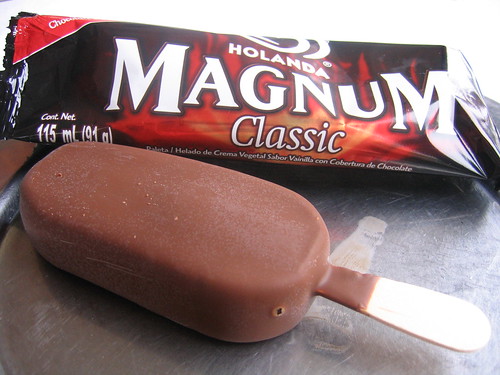
the cheap ice-cream of kings.
Just about anything by Marie Calendars.
Of all the frozen food manufacturers I've experimented with, they stand out as the highest in quality in that department.
On the exact opposite end of the spectrum, any of those "10 for 10 dollar" frozen dinners, as I just toss a bunch into the microwave, and hope for the best. I usually wind up with a 30 percent quality figure.

Re: Re: Favorite frozen food aisle item
| quote: |
| Originally posted by DJ Shibby I'm addicted to joe the plumber. |
I almost never buy anything frozen. Mixed veggies for shepherd's pie, perogies, and pizza. S'about it. Can't stand frozen food really. Blech.
The only thing I buy frozen is edamame but I wouldn't call it a "favorite food;" it's just the only thing I buy from a frozen food aisle.
I don't find frozen food that appealing either. Its a necessary evil for those times you don't want to make something. Although, I do like fish sticks.
Here in the UK , frozen food was always a bit dodgy. You know , all mechanically retrevied stuff but thier putting some effort into frozen food now.
fish fingers are now made with fish
Lasagne's starting to taste like a lasagne
Real potatoes instead of moulded forms made out of starch
Every available curry
good times
| quote: |
| Originally posted by Echo of Silence The only thing I buy frozen is edamame but I wouldn't call it a "favorite food;" it's just the only thing I buy from a frozen food aisle. |
the best part about frozen vegetables is that people actually think they get nutrition from them.
| quote: |
| Originally posted by elFreak the best part about frozen vegetables is that people actually think they get nutrition from them. |
pro tip : the numbers you see on the side of the package (vitamins, fiber) are the numbers before they were cooked and frozen.
the actual numbers when you pull the stuff out of the microwave are way less lol...sometimes they are not even there.
there are tons of lovely misleading facts on those nutrient values charts to make people think they are eating healthy. The best is when you see low fat tv dinners, and the numbers look awesome, then you see it is just for 1/5 of the tray.
eww frozen food aisle *vomits*
ice would be the only thing I get
IV always heard on the food network that they are just as nutricious
a quick search
| quote: |
| Freezing is a very efficient method of preserving the nutritional value, texture and flavour of many vegetables. Most vitamins will keep well in frozen vegetables. Carotene (a compound that is converted to vitamin A in the body) may actually be better preserved in frozen produce because packaging keeps the vegetables away from light (which destroys carotene). For example, frozen peas typically have about 60% more carotene than 'fresh' peas (that have been exposed to light during their trip to the market and while awaiting sale). Some losses of vitamin C and folate (also known as folic acid) occur during commercial freezing. About 25% of the vitamin C, and perhaps a greater percentage of the folate, will be lost during the blanching process that precedes commercial freezing. A smaller quantity (perhaps 10%) of the thiamin (formerly called vitamin B1) will be lost during blanching. Little further loss occurs during the time the food is kept frozen, provided that it has been stored properly (-18 degrees C for no more than six months). However, the vitamin losses associated with blanching and the thawing/cooking process are similar to those that occur during normal cooking of fresh vegetables. This means that, provided they have been stored and then cooked properly, frozen vegetables provide similar levels of nutrition to fresh vegetables. It is also worth noting that for cooking both frozen and fresh vegetables, microwave cooking and steaming are both superior (in terms of retaining nutritional value) than boiling in a large volume of water. Other vitamins are generally fairly heat stable and are largely retained during the blanching process and subsequent period of frozen storage, or are not found in significant quantities in vegetables anyway. Nutrients other than vitamins are not significantly affected by the freezing process. In Australia it is recommended that people eat seven serves of fruits and vegetables each day, with five of these being vegetables. Some people find it inconvenient to prepare fresh vegetables. This can lead to a reduction in their intake of vegetables generally. Therefore, frozen vegetables (which are already washed, peeled and sliced or diced) can be a useful way of encouraging greater intake of these highly nutritious foods. To retain the maximum nutritional value, texture and flavour of frozen vegetables (and of most other frozen foods) the following is recommended by the CSIRO Division of Food Research: Collect your frozen foods last at the supermarket and take them home in insulated containers. Put frozen food in a freezer maintained at about -18 degrees C as soon as you arrive home. Frozen storage for no more than about six months is recommended for most vegetables. Steam or microwave frozen (and fresh) vegetables to retain a high proportion of the vitamins. If cooking frozen food in boiling water, the food should be taken directly from the freezer and placed in water that has already come to the boil. Boil vigorously until ready, and then serve immediately (ie, do not leave the food 'simmering' for long periods). Do not use saucepans or other utensils made from copper or brass. Cooking utensils made from glass, stainless steel, aluminium or enamel do not affect the nutritional content. Issued 1999 *Statements and opinions presented in the Frequently Asked Questions do not necessarily reflect the policies or opinions of Nutrition Australia, nor does Nutrition Australia accept responsibility for the accuracy of such statement and opinion. |
issued 1999.
trust me, it is better than eating french fries, but is nothing like eating real vegetables.
i will try and find the study done last year by your own FDA for you, that explains why nutritional readings done the traditional way are skewed.
Steaming is the best way for nutrients to stay in veggies and what not but unless you have a steamer wtf. Like I listen to this health radio show the guy steams all his veggies then at the end of the week he takes that residue steam and makes it into a broth. He also only drinks raw milk because the pasteurization kills bacteria that our body needs, also when they pasteurize milk they dont filter that dead bacteria our body doesn't know how to process dead bacteria so in the end it ends up being stored. Raw milk is illegal here in florida but I really wanna try and find a way to get it.
raw veggies ftw.
| quote: |
| Originally posted by chach Steaming is the best way for nutrients to stay in veggies in what not but unless you have a steamer wtf. Like I listen to this health radio show the guy steams all his veggies then at the end of the week he takes that residue steam and makes it into a broth. He also only drinks raw milk because the pasteurization kills bacteria that our body needs, also when they pasteurize milk they dont filter that dead bacteria our body doesn't know how to process dead bacteria so in the end it ends up being stored. |
| quote: |
| Originally posted by chach Steaming is the best way for nutrients to stay in veggies and what not but unless you have a steamer wtf. Like I listen to this health radio show the guy steams all his veggies then at the end of the week he takes that residue steam and makes it into a broth. He also only drinks raw milk because the pasteurization kills bacteria that our body needs, also when they pasteurize milk they dont filter that dead bacteria our body doesn't know how to process dead bacteria so in the end it ends up being stored. Raw milk is illegal here in florida but I really wanna try and find a way to get it. |


Powered by: vBulletin
Copyright © 2000-2021, Jelsoft Enterprises Ltd.