
TranceAddict Forums (www.tranceaddict.com/forums)
- Chill Out Room
-- Drugs: Different strokes, different folks
Pages (3): « 1 2 [3]
Posted by Evolve140 on Sep-05-2012 22:31:
Congrats on 10 years EZ.
Yep, fuck AA. I mean, it's sets you up to where if you fuck up, your life is over. What's worse than years of sobriety out the window, being drunk or feeling like you just lost 10 years of your life and that you're a miserable failure? Same reason why someone who was sober for 25 years suddenly drank himself to death, he probably felt like a piece of shit from eating up all that AA garbage his whole life. But, it does work for some people and as long as it keeps them alive then I suppose that's a good thing. What it did provide me with was some perspective. I have none of the observable physical symptoms, I clean up well, etc. But hearing these people talk about what they would do while drinking( they're 30,40, 50 years old..) while I'm at 25 and have nothing weighing me down with my whole life ahead of me, makes me happy and makes me want to become more responsible. I get this feeling like there's a pit inside of me when I think about all the things I want to do in life, we only live once, scary but sobering.
Great article about drinking. My dad had epilepsy so that could help explain why I have such awful anxiety sometimes. He would have a grand mal seizure every 2 weeks and depending on where he was or what he was doing, it could be pretty traumatic. A 10 year old boy trying to catch a 200 pound, 6'1 man is pretty scary. Pulling his clenched, contracted fists from around the handle of a lawn mower that's turned on can be too. Among other things. I don't have PTSD though, no nightmares (hardly ever), etc. I think my problem now is motivation, determination, and frankly just becoming an adult. The way I feel like I'm on track is that I haven't been asking people for help or wearing down relationships the way I was before, so people are much more willing to enjoy my company. Staying away from old influences is important too. I have a friend and when we get together, all bets are off.
Rann, yes they are awful. But it's also sad to see the social and societal implications of drug law. The effects of the drugs are one thing, but being an addict also makes you a criminal in the eyes of the law, not a patient. My friend who started taking me to AA was addicted to crack for 10 years, and has 4 years sober. I'm glad that I've only done crack and ketamine a handful of times, haven't done cocaine in over a year and haven't done ecstasy in over a year. After a while, it gets too stressful trying to have a blissful night out when you're worried about your friends ODing, blacking out, hurting themselves or someone else, or getting in trouble with the law.
Posted by Evolve140 on Sep-06-2012 02:49:
Update: today my buddy I was crashing out with had his desktop jacked by a meth head who my friend was letting stay there for a few days. Dude comes back and gets super defensive and aggressive saying people are accusing him, when I followed him down based on the last known direction he was travelling and spoke to 2 separate eye witnesses who described his fat, ugly tattooed ass carrying a bunch of shit. Has the nerve to come back and ask for a place to crash. He started getting in my face, I packed up my computer and got the fuck out of there. Fuck that shit.
Posted by Looney4Clooney on Sep-06-2012 05:15:
| quote: |
Originally posted by DJ RANN
Oh, and richie is actually right; Cocaine and crack are NOT physically addictive.
You can do it every day for a year then stop and you will not go through physical withdrawal from the drug itself. Extreme psychological withdrawal? Yes.
You may have severe physical problems from what the drug itself has done to your immune system and organs over time, but just the lack of the drug itself will not kill you.
Same thing with Ketamine.
Really, all these drugs are fucking horrible. |
the only drugs i will do are ones insurance will cover. I found that this new lifestyle is much more rewarding in that i get up at 7 ready to roll. I do go out out every few months and if i need a supplement, i just take adderall and xanax or if i just landed a contract , oxycontin. But i won't drink if do that.
I have a prescription for this stuff for years and i've been cutting down but i keep refilling my prescription. I have a treasure chest of pharmaceutical flavours. My girlfriend gave me her sephora make up case for it. That heavy duty metal one. Its kinda funny.
I can't really do street drugs. Cocaine will make my nose bleed. Crack is just funny. I mean where do you even get that. Actually i wouldn't even know where to get any drug. I think that is probably a good thing if you have problems.
I say ditch the friends. Not sure if you have anything worth money but most thefts are someone you know. Get a new phone and don't transfer any numbers. Don't live with people that do drugs. I'm a little devil well, used to be in that if the means are there, and i've had 1 drink, it seems like a good idea to just take it up a level.
most importantly, set yourself some goals. You will not want to ruin the momentum you have when you notice how much you are getting done. Eventually you will get so much reward from not being all fucked up for days. I look forward to mornings so it would take alot of convincing to go hard.
I went from a functioning adderal , benzo , painkiller user in that it wasn't to get high but i was so over loaded with work and stress that it was to just cope. I eventually started to find ways to improve my ability to work more as the drugs are like a loan. You pay eventually. I would say my habit was not really an issue except to me. Nobody noticed but i felt i could do more if i found better ways. This was say from 2003-2010. Painkillers were more when i was at school in a nerdy classical setting which was kinda funny. But even while i was doing this stuff, i still exercised, rarely drank and managed to not end up like so many. I never wanted to get high, just feel ok on the good side. So that the 4 hours of sleep doesn't make you want to tell everyone around you to suck it hard.
And probably the one thing is getting up early. And exercise. Your libido will also thank you. And eat right. No sugar. Veggies. And lots of water.
Ah shit i just noticed the theft. Rule of thumb, do not let anyone that does meth or crack see or know anything about you. Where you live, who your friends are. Those drugs , well you dont' start off doing meth at least banging it. You are already an addict by that point. Same with crack. It is probably a good idea to be very selective who you let in your house.
Even when i sell equipment from someone i don't know. I never do it at my house. Just don't trust musicians. Especially EDM or rap artists.
Posted by LAdazeNYnights on Sep-06-2012 05:31:
| quote: |
Originally posted by Miss Pie
I have to laugh at K heads, because K really ruins the bladder. Can't wait till all these people are 40 year old pants pissers. Lol. |
Most of what I've read on the topic relates such problems to prolonged, addiction-type use. A lot of studies cite the use of 5 grams a day as a sort of guarantee for these things, with long-term use of a lot of k causing it as well, but I've also read that many associated symptoms abate when a user weens off of the drug (of course, it's very possible that one could do irreparable damage before that happens). I don't think most users fit this profile at all.
You might be more well-read on this than I am, or have better information. This is just the general picture of things that I have.
Posted by Looney4Clooney on Sep-06-2012 05:42:
there is also those lesions they found in rat research. Onley ? something with an o. But honestly, i can't imagine how much you would have to do to do real damage. I mean are people doing this 2-3 times a week ?
Posted by LAdazeNYnights on Sep-06-2012 05:49:
Well that's what I'm wondering as well. As with most drugs, the ketamine use of normal users doesn't seem to have been studied in any reasonable way. As for 2-3 times a week: if you read the anti-drug campaign literature, or watch some of the documentaries (like the one posted earlier in this thread), you'd think that using 1-5grams 6-7 days a week is normal. Somehow I just don't think that's right. Perhaps ketamine abuse is more prevalent in European countries where the drug is much less expensive? I don't know all that much about it, but I do know that I've both read an experienced that k isn't addictive, and I've found that recreational k use, especially that associated with certain dance music scenes, doesn't seem to even come close to 5grams a day, or even 5 grams a month for that matter.
Posted by Guest on Sep-06-2012 15:02:
Take a look at the documentary. Spells out where K usually originates from, and shows an addict. Aparently, it is psychologically addictive.
Jenny is right re: the bladder problems. However, it was an extreme addict case in the documentary. Some guy had to have his bladder removed and replaced. Now, everytime he takes a piss he has to stick a tube up his uretha and drain his bladder to a bag.
Doctors are noticing that symptom more and more with repeat K users. The problem with K is that you build up a tolerance extremely quickly; so finding the K-hole gets more dangerous and more expensive as time goes on (if you are a repeat user). Guess you can say that with almost any drug dependency though, lol
Posted by Evolve140 on Sep-06-2012 17:25:
Shit, I don't even know any "EDM artists". I'm the only one in this town who produces properly anyway. Sometimes it feels like I'm the only dude who put any effort into learning the ropes. Everyone else is a DJ poser, I don't even pretend like I DJ, because I fucking do not. DJs suck.
The whole change your number bit, I like that. Fortunately I hid my laptop cleverly before I left to get beer and when I got back it was still where I put it. I honestly just wish I had it in me to bash this mother ******'s skull in, because we know who did it. He came back.
I do wish one day I could eat more raw vegetables. drink way more water, and quit drinking during the week. When I started getting into alcohol it was when I ran out of cannabis, so I'm obviously an addict by nature. It was just way easier to go buy a 12 pack for $15 if I couldn't find any weed for $20 or $40 or $60. Fuck, if I was hunting down an eighth and I couldn't find one I'd buy a bottle and a 12 pack and a pack of cigarettes, get fucked up and write on the interwebs all night, wake up and realize all the stupid shit I wrote -- and got nothing done. Tlyphe whole point of the weed was I could combine it with caffeine and get lots of music done, I simply accomplish nothing when I drink.
Fuck people who steal from others. I steal from stores for fun or if I don't feel like paying for menial shit, but NEVER from others. But a whole computer? It's kind of a rush being around crack heads though. Kind of makes me feel better about myself. I am glad to report, however, that I'm out of that situation and tonight I will be eating ribs and chilling out with non-crack head people that I love and trust.
edit: 4 grams of ketamine is a LOT. They bring it back in water bottles, boil water for a source of heat, put a ceramic plate with a little ketamine solution poured on top of the boiling water pot to vaporize it, which leaves the powder K there. Trust me, if it's easy to get K in the UK, it's far easier to get it by crossing the border to Mexico and hitting up the pharmacy. The guy I was hanging out with barely had use of his nostrils but I know they weren't doing grams at a time. You can't do anything on K, it's fucking stupid. You can't even have a conversation with anyone. If it were possible to just do a tiny bump of K and go on with the party and have a good time, that might be OK, but typically from what I've seen people just sit around in groups and get retarded on this shit.
Posted by Looney4Clooney on Sep-06-2012 17:40:
they make you feel better because they lower the standard. Surround yourself with people that inspire you and pull you up, not drag you down.
As far as water, just get in the habit of assuming not drinking this water will result in the worst headache ever. YOu should always be drinking water. Well to a point. Then you die.
Posted by Evolve140 on Sep-06-2012 17:53:
Well, I generally do drink plenty of water, especially when I'm drinking. I have a pretty good capacity to ingest it while in the midst of a bender, which allows me to get more drunk for longer periods of time then my friends. I have very fair skin and excellent complexion, I'm 25 and I look 19. But I am wondering how long this will last until I just start to look like shit.
Pretty sure I've always made that assumptions about headaches. If I get carried away with too much water I eat a package or 2 of saltines. And yeah, hanging out with crack heads is awful, but I always know for certain that I'm the best looking, smartest person in the room. Not at that rate though. No fucking way I'm ever associating with crack/meth heads again. Dumb, ugly, smelly, trouble.
Posted by Dykes_on_Jay on Sep-07-2012 00:57:
stroke victims rate a 8.3 on the lol look at that cripple scale. (metric)
Posted by EddieZilker on Sep-09-2012 18:38:
| quote: |
Originally posted by DJ RANN
Congrats Eddie. That's quite the milestone and you should be proud of the self discipline. |
After a few years, it takes all the discipline necessary to keep from touching a hot stove-top burner or slamming my foot in a car door - not really much of an accomplishment but thank you, none-the-less.
| quote: |
Originally posted by DJ RANN & Evolve140
Fuck AA.
|
Cor version: Fuck AA.
I got lucky and found a group who actually knew what the fuck they were doing. Most don't. Never minding the issue of *God/Higher Power, the second step is, Came to believe that a power greater than ourselves could restore us to sanity. I can't say I blame either of you for this sentiment and would grant RANN an honorable mention for being an AA outsider who's astute powers of observation give him insight into what I've also observed as a "social dependency." How one is supposed to come to believe their sanity would be restored when they see a group of people, many of whom are just lonely and/or horny and not really alcoholics, carrying on in the way that is typical in 99% of AA meetings is quite impossible. And if anyone thinks that's sanity, they are clearly too fucked up to know what's good for them.
I will tell you, from personal experience, that there is nothing wrong with the AA model. Adhered to closely, it has favorable results, but it's not for everyone, let alone every legitimately diagnosed alcoholic. The problems arise from the interpretations and applications of the model. ~AA's 12 steps are adapted fairly directly from the Bible's Book of James. Religion, at the time of the Oxford Group - the coalition of recovering alcoholics responsible for AA's founding - was almost as loaded a term then as it is, now. What Bill Wilson, who authored much of the literature currently used in AA meetings, today, was trying to dispense with was the need to directly confront the individual's fear of religion and, instead, make a very clever and subversive suggestion that God was an almost formless entity completely untethered to the dogma meted out my many pastors of the time.
Wilson authored the AA Big Book; the formal instruction manual the first 164 pages of which, along with the Doctor's Opinion as its prologue, are currently used in AA, today. The writing of that book was essentially what put him on the map as AA's founder. He was exalted to nearly the level of a saint, not just in AA, but outside of it as well. Unfortunately, Wilson was as far from being a saint as a hog from the Moon. He had numerous extra-marital affairs with new-comer women (a huge taboo in AA, called 13th stepping). He was such a prolific philanderer that, in order to protect AA's reputation along with the women who were arriving, looking for help, a few of the first members of Oxford/AA secretly formed the Founder's Group specifically to run interference against Bill's seductions; to, quite literally, cock-block Bill W.
In later years after the publication of the Big Book, Bill was falling on financial hard times. He decided to write a companion piece to the Big Book that would further explain the steps and traditions, suggested in AA. More commonly referred to as the 12 & 12, it is truly some of the worst writing in the history of self-help. As dated as the Big Book has become (the book contains a prediction about landing on the moon among its other anachronisms), it is still an example of very clear, lucid writing that, while too simplified to be above misinterpretation, is still useful in the hands of people who have had more stringent experience following its suggestions.
The 12 & 12 is quite the opposite. Its genesis speaks volumes as to why. Fame had gone to his head and Wilson lost touch with the realities of sober living. To the alarmed consternation of many in AA's founding circle, rumors of a pending relapse began circulating through the grapevine. AA's hierarchy became alarmed that Wilson, whose now precariously inflated fame had garnered so much successful publicity for AA, would topple the organization altogether with a brutal notoriety. The danger that Bill would once again raise booze to lips was quite close to becoming a very public reality that would torpedo the reputation of AA in one sip.
A select group was sent for an intervention to get him to come back into the fold. After a great deal of persuasion, Wilson relented. For a while, he would reform his behavior but, on the brink of financial ruin, he still finished the 12 & 12. Bill would eventually be convinced to repudiate its content but the damage had been done. In financial terms, AA would still be successful but so much of what it is currently has been influenced by the rambling musings of a narcissist who'd let his fame decide who he was.
Just a few years later, Bill Wilson and Timothy Leary, who was touting LSD as a miracle drug that could be used to treat all manner of psychiatric conditions (including alcoholism), formed a chemical bromance. News reports threatened to tarnish AA's reputation and, if Bill would have tested Leary's cure with a drink, he would be relapsed and AA would be scuttled. He was, once again, pulled back into the fold before he could test Leary's cure. He may have helped launch AA but to members concerned with the work of actually helping other alcoholics, Bill W. was a huge pain in the ass. Bill Wilson died, begging for a last drink. In a thinly veiled kidnapping, The Founders Group had closed ranks around his deathbed and forbade his relapse. It was a public relations effort that would preserve the figurehead's mythological quality of sobriety. He did, in fact, die sober.
From its inception, on a realistic level, AA has an essential vulnerability in that its message requires someone who is experienced with its suggestions to interpret, to the newcomer, their meaning. This is neither by accident nor was it really ever avoidable. The thinking of the alcoholic, coming in from the cold, is so distorted that their ability to comprehend much of anything is negated by a brain in the perilous throws of detoxification. Inherently, there is a need for that person to form a support network - if not from within AA than from people who have been through similar straights and know how to navigate the way out of them.
After the 12 & 12 was published, Wilson's saintly reputation superseded his admonishments against it. Slowly but surely, amidst the useful lore of the Oxford Group becoming diluted with time and outside social influences - the rejection of authority evolving throughout the Sixties or the practices of judges referring simple binge drinkers, drug-addicts, and other non-alcoholics to AA - the 12 & 12's specious reasoning took hold in an organization that already derived all of its growth from its inclusion of people at their absolute worst. If the Big Book and mentoring model were the genetic back-bone of Alcoholics Anonymous, the 12 & 12, along with subsequent ramblings authored by Wilson, are its herpetic virus - forever changing the intellectual make-up of the formerly efficacious subculture.
The first 100 members of AA may have tried to thwart the new influences but as new members came in and garnered influence within the rapidly growing organization's hierarchy, the war for AA's intellectual (and some would argue spiritual) integrity was lost. An example of this is the word, sponsor; circulated in the general public's consciousness through movies, television, and news. It wasn't a word commonly uttered in AA until its appearance, in the 12 & 12.
On its surface, it's this nice, warm, fuzzy word. "I'm going to call my sponsor!" I've got a connection to someone who's seen what I've seen, has felt what I'm feeling, and is there to support me. Just one person who has taken a small pledge to be there for me and help me pull my head from its seemingly inextricable lodging, firmly up my ass. The problem with the concept, however, is that it promotes isolation from the larger group who, as a result of following the same model, are fragmented in terms of having an otherwise common solution. This isolation often prohibits new members from checking with those, outside of their sponsors, as to the efficacy of his or her suggestions. The sponsor, if he or she is so inclined, can exploit the vulnerability of the newcomer and foster, in them, an emotional dependence that can last for years. Sometimes this dependence is only as parasitic as the pursuit of personal gratification through the act of helping others. Sometimes it's far more dangerous than that, as the sponsor forms his own micro-cult consisting of psychologically vulnerable newcomers. Regardless, it's next to impossible for the newly recovering to discern whether the sponsor, taking them through the steps, has actually done them, himself.
The group I got sober in didn't use sponsors or the 12 & 12. They did it the old-school way and, while I'm not convinced their way was always the right way++, they had a common efficacy with a lot of people who had achieved relatively successful, very long-term (a combined average of 20 years or more) sobriety. It wasn't just not drinking. They had visible signs of success. Their reasoning - the sanity - was restored. They carried themselves in a different way than most AAs. Many had just quit smoking after being in the group for a while without any effort, let alone a decision to stop, on their part. There was a logic to their discourse that eludes most AA meetings.
The average AA meeting usually has at least one person with ten or more years of sobriety. Sometimes the number is a little higher but 75% of the population in AA, today, has less than one. There are a few with two or more. There are hardly any collectives with a combined average of 5 or more years. Many of the "old timers" are just as insane as when they came in. Some of them, more-so.
Most meetings consist of attention-seeking behavior and dialogue constructed around loose relation to the literature along with AA's countless, practically meaningless platitudes ("Live and Let Live, One Day at a Time", "Let go and let God" et al). Newcomers are welcome to share but, invariably, everyone indulges in rambling monologues that meander so ridiculously that their speaker nearly always loses the point of what they were trying to relate to the group, in the first place. They wind up speaking in circles, constantly having to return to the origin of the thoughts they were trying to convey. Those who do speak well are typically regurgitating long-rehearsed speeches that have been practiced for the length of time they've been sober. Trap them in a conversation where they can't fall back on the cliche's, however, and they invariably resort to the previously described pattern of accidental tautologies, non sequiturs, and syllogisms.
One, that I remember because it was said, so often, goes like this:
"I remember when I first got here (to AA). I was having a lot of trouble because I couldn't find a sponsor. Finally, there was this one guy who told this other guy in a meeting to shut up. He said, 'You're just trying to make fucked-up look cool!' I thought that was cool and I knew, right then and there, I was going to ask that guy to be my sponsor.
"Well, me and him didn't always get along. I got pissed off at him, one night, and fired him and you know what he says to me? I'm out there smoking on the front steps and he walks right up to me and says, 'I know all about abandonment, Steve!' That shit got me, right in the heart. I knew... as pissed off as I was, I knew that guy had my number."
He constantly recited this very same monologue, over and over and over, again.
Above, I've mentioned just a few things that make AA truly fucked up. To catalog everything which has changed it from being a formerly helpful subculture to being a loosely organized cult would take a few hundred pages. Most people who criticize AA, criticize it from the outside. They don't like the God aspect or disagree with the disease model and it's not my place to say that these criticisms are necessarily incorrect. Sometimes their criticism is leveled incorrectly at things they just can't understand. Other times they're criticizing something that actually is fucked up but it's a symptom of a deeper problem that eludes their comprehension. They might not like the notion of sponsorship and use that to dismiss the entirety of AA. What they don't understand are that ideas, like sponsorship, were never part of the original model and therefor shouldn't really be the focus of their criticism.
*No, seriously, I'm not ever going to argue that my sobriety is proof of the existence of God - not even a direction I'm interested in taking this discussion. Pretty sure that better debaters than myself could successfully argue that me being sober is evidence that there is no such being. 
~Most of this has been explained to me by a few old-timers with 20+ years of sobriety. It's part of their narratives, being able to speak to people who were actually there, rather than just blindly following the over-blown mythology.
++There were other groups who were persistently old-school who managed long-term sobriety without nearly as much drama. Some members, in the pretense of being helpful, indulged in what I call axiom abuse in which a rule or ideal is invoked to bully other, often less experienced members. Others were just prima donnas who, although decent enough, tended toward self-righteousness when it came to the smell of their own farts.
Posted by itsamemario on Sep-09-2012 19:20:
Holy shit Eddie that's a lot of letters. I bet it also only took you two and a half minute to type that out.
Posted by Vector A on Sep-09-2012 19:20:
Interesting take, Eddie.
Have you ever read Infinite Jest?
Posted by EddieZilker on Sep-09-2012 19:39:
| quote: |
Originally posted by itsamemario
Holy shit Eddie that's a lot of letters. I bet it also only took you two and a half minute to type that out. |
I actually started it, last night. It's as abridged as I could get it while still attempting to explain part of AA's somewhat convoluted history.
| quote: |
Originally posted by Vector A
Interesting take, Eddie.
Have you ever read Infinite Jest? |
No. Just skimmed the Wiki, though. Did Wallace allude to some of what I was discussing?
Posted by Vector A on Sep-09-2012 19:56:
Not really, just curious. Some of your posts remind me of its style, and parts of the book talk about AA / NA a lot.
Posted by Evolve140 on Sep-09-2012 22:21:
There was a lot of clarity and depth to what you wrote that I really enjoyed reading. What hit home for me was that you mentioned people almost always have underlining emotional or otherwise mental issues that they haven't addressed properly in a clinical fashion. Instead of just going, "Oh, I'm an alcoholic because it runs in my family. I have a disease" . It's far more important to get the help you need, professionally. The thing is, in this country, mental health is such a disaster. When I was in San Francisco all the homeless I met usually had schizophrenia (my cousin has it severely) or were otherwise mentally unstable. An issue my friend would touch on (very brilliant person, but was addicted to crack for 10 years, nearly drank/drugged himself to death - now has 4 years sober in AA) was that there isn't the professional care available for most of the struggling population. Rehab is incredibly expensive. Several hundred dollars a day. AA is about the best thing available for many, many people.
The reason I am never going back to AA is because I think that I have some other things I need to work through that are underlying causes for my drinking, and I do not want to surrender to some ideology I do not know for sure adequately describes or treats what I am experiencing as an addict. What did happen, since then, is that I have not blacked out drunk a single time since going. I don't know the exact reason but I suspect hearing the stories of haggered, dried out, sketchy people made me know that, as intelligent as I am with everything I have going for me, there was no way I would let something like alcohol ruin my chances as happiness. I never judged anyone there, but I know that I have what it takes to get my shit under control, and that if I start to concern myself with other people and how my actions affect them, things should slowly start to improve.
Some of these folks have had very rough lives. I grew up poor, but always had new clothes for school, ate dinner that my mother cooked I ate with my family every night, had a weekly allowance, and was loved by both my parents. The things I feel that "fucked me up" were things out of their control, and these are things that require emotional processing. It's true, you cannot cope or process anything when drunk. I just think that I have been very selfish. The world is a rough place to cope with emotionally, and I'm finally starting to see that no one is to blame for my unhappiness, not even myself. I am responsible for my own happiness, however.
Thanks again for writing that Eddie, it makes TONS of sense after having been to several meetings. Also, I am happy to report that last night I drank TONS at a party with my friends, and was making people laugh and smile, flirted with a few cute girls, and didn't blackout or doing anything stupid. So, I love drinking way too much to ever consider *not drinking, but I do want to see if I can stop drinking for 30 days consecutively. We'll see.
Posted by EddieZilker on Sep-09-2012 22:34:
| quote: |
Originally posted by Vector A
Not really, just curious. Some of your posts remind me of its style, and parts of the book talk about AA / NA a lot. |
Stephen King, who's an alcoholic, has done it, not just referencing meetings (such as in Delores Claiborne), but also the AA conception of alcoholic psychology and ego - most notably, in The Shining. As good as both are, the made for TV remake does a much better job at conveying that than the original, Jack Nicholson version.
Posted by EddieZilker on Sep-10-2012 00:50:
| quote: |
Originally posted by Evolve140
There was a lot of clarity and depth to what you wrote that I really enjoyed reading. What hit home for me was that you mentioned people almost always have underlining emotional or otherwise mental issues that they haven't addressed properly in a clinical fashion. Instead of just going, "Oh, I'm an alcoholic because it runs in my family. I have a disease" . It's far more important to get the help you need, professionally. The thing is, in this country, mental health is such a disaster. When I was in San Francisco all the homeless I met usually had schizophrenia (my cousin has it severely) or were otherwise mentally unstable. An issue my friend would touch on (very brilliant person, but was addicted to crack for 10 years, nearly drank/drugged himself to death - now has 4 years sober in AA) was that there isn't the professional care available for most of the struggling population. Rehab is incredibly expensive. Several hundred dollars a day. AA is about the best thing available for many, many people.
The reason I am never going back to AA is because I think that I have some other things I need to work through that are underlying causes for my drinking, and I do not want to surrender to some ideology I do not know for sure adequately describes or treats what I am experiencing as an addict. What did happen, since then, is that I have not blacked out drunk a single time since going. I don't know the exact reason but I suspect hearing the stories of haggered, dried out, sketchy people made me know that, as intelligent as I am with everything I have going for me, there was no way I would let something like alcohol ruin my chances as happiness. I never judged anyone there, but I know that I have what it takes to get my shit under control, and that if I start to concern myself with other people and how my actions affect them, things should slowly start to improve.
Some of these folks have had very rough lives. I grew up poor, but always had new clothes for school, ate dinner that my mother cooked I ate with my family every night, had a weekly allowance, and was loved by both my parents. The things I feel that "fucked me up" were things out of there control, and these are things that require emotional processing. It's true, you cannot cope or process anything when drunk. I just think that I have been very selfish. The world is a rough place to cope with emotionally, and I'm finally starting to see that no one is to blame for my unhappiness, not even myself. I am responsible for my own happiness, however.
Thanks again for writing that Eddie, it makes TONS of sense after having been to several meetings. Also, I am happy to report that last night I drank TONS at a party with my friends, and was making people laugh and smile, flirted with a few cute girls, and didn't blackout or doing anything stupid. So, I love drinking way too much to ever consider drinking, but I do want to see if I can stop drinking for 30 days consecutively. We'll see. |
It's a curious junction between AA and mental health. One of the problems is that clinicians, very often, have no idea what to do with patients who may be drinking alcoholically and will refer them to AA. Insurance providers will often mandate, if they see alcoholism or drug addiction as part of a dual diagnosis, that the patient be referred to AA and/or NA, as well. Often, they just drop the patient from coverage, with or without a refusal to attend meetings. The problem is that AA is far from a panacea for alcoholism, alone. Nevermind that it's currently being used to treat other conditions. Such referrals are actually part of the problem.
With few exceptions, AA isn't necessarily incompatible with people who have issues they need psychological care for; whether they're seeking treatment for a known condition or will be for something that is, as yet, unknown. What AA has turned into, however, is a sort of clearing house for people with serious mental problems their counselors/insurance companies are unable or unwilling to treat. This practice has changed the format of meetings from one centered around discussing alcoholism and problems or solutions associated with that to a dangerously informal version of group-therapy. If you're shopping for a counselor, ask them if they regularly refer people to twelve-step programs. Try not to be too confrontational about it so you can get an honest answer. When you get someone who extolls the virtues of AA, saying that it's a wonderful program which has benefited many of their clients, thank them for their time, pay for the session, get up, and walk away.
Posted by InnerReflection on Sep-15-2012 00:26:
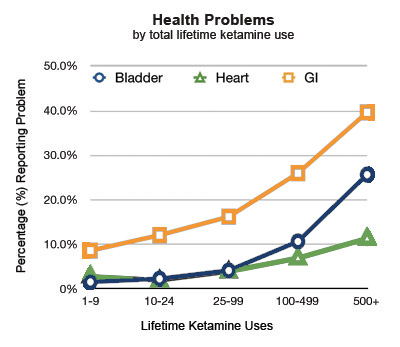
Seems related (from erowid user survey)

Pages (3): « 1 2 [3]
Powered by: vBulletin
Copyright © 2000-2021, Jelsoft Enterprises Ltd.