
TranceAddict Forums (www.tranceaddict.com/forums)
- DJ Promotion
-- The Oldskool Series: history of EDM (1964-2004)
Pages (5): « 1 2 3 [4] 5 »
Great series here, I am downloading all of them.
I think you skipped episode 21?
| quote: |
| Originally posted by Domesticated Great series here, I am downloading all of them. I think you skipped episode 21? |
Episode #22: Mental [1997]

DOWNLOAD: http://2rip.podomatic.com/enclosure...39_13-08_00.mp3
Since 1990 Nicole Maalste had been studying drug use and drug cultures in the Netherlands. In 1995 she started a project, subsidized by the Ministry of Health, that would monitor "risky behavior" and drug use at raves. The study found that one-third of partygoers have felt ill at raves but only 10% actually sought out first aid which was typically provided at most large scale events. As raves continued to become more popular these facts were mirrored across the world.
In 1997 a drug monitoring system reported that the ecstacy market had become polluted as chemists began using other drugs in the pill make-up, but selling them as pure MDMA. Such things had been seen in the past but with raves continuing to make an upswing the total number of partygoers using ecstacy was on the rise, creating a growing number of pill mishaps. That same year a magazine called NewScientist published as article that started out by saying "Panic reigns. Fear overwhelms logical thought. Pointless activity replaces reason, and sensible advice is no longer heard." The article actually did not scrutinize the use of ecstacy but called more intense studies to action so that the public can become more informed about it's effects. The article also called for organizations to honestly present the forthcoming information.
Fastforward to February 1999. An organization called DanceSafe was founded by Emanuel Sferios. DanceSafe became a self-described harm reduction organization that promoted health and safety within the rave and nightclub community. The nonprofit group began sending volunteers to raves to test pills that users believed to be Ecstacy. The group was under immediate scutiny because the testers would hand the pills back to the individual. Approximately 28 chapters were established around the country, some operating under different names such as FLOWER in Pittsburgh.
In an ABC News chat transcript DEA representative, Steve Casteel, and DanceSafe founder Emanuel Sferios were questioned on many aspects of their work. When asked if he has ever been to a rave, Steve Casteel replied that he had been in attendane at events as an attempt to get a feel for what was going on with the ecstacy culture. The DEA representative reported that earlier in the 90's ecstacy seizures were relatively small but nearing the latter portion of the decade the number had grown to the millions.
Rewind back to 1997. Global Underground was reflecting the performances of high profile DJs in venues from around the world. The first five installments of the series was recorded in their perspective clubs. The original was mixed by Tony De Vit in Tel Aviv and released in November of 1996. The second installment was never released. By March of 1997 the third installment featured Nick Warren live in Prague.
Nick Warren also became a part of the group called Echo which soon changed their name to Way Out West. Their debut was also in 1997 with an ablum that spawned singles "Blue," "Domination," "Ajare," and the UK top 15 hit "The Gift."
In the early nineties, ravers found their information through online email networks. The most notable were PB-Cle, SFRaves, SoCal-Raves and DC-Raves. A member of MTN-Raves named Sarah Gianetto built the AZ-Raves website. In the summer of 1997 she helped form a booking management company and record label with DJ Inertia. Their first release was "Time" by The Dream Traveler, which had become an international hit and was chosen as the opening track for Paul Oakenfold's legendary "Tranceport" compilation. The same song was illegally used for the production of Britney Spears: Live In Hawaii.
This mix represents some of the underground progressive house that was produced in the 1997 era. Some names in the credits that are worth noting are Peter Presta, John Digweed, Victor Calderone, Way Out West and Noel Sanger.
Aleem - We Try To Do Our Best
Tipple - The Drift
DJ Gordon - Moonshine Boogie
Victor Calderone - Price Of Love
BBC Click - I'll Do 4 U (Peter Presta Remix)
Chupher - Funk 2 Nite
Freespirit - Twilight
Clanger - Seadog (Way Out West Remix)
Chakra - I Am (John Digweed Remix)
Noel Sanger - All We Are (1997 Mix)
loving these.
Yes yes yes.
Episode #23: Continuum [1998]
DOWNLOAD: http://2rip.podomatic.com/enclosure...05_14-08_00.mp3
As the drum & bass sounds of the mid-nineties began to move towards lighter sounds such as that of intelligent or jazzy drum & bass. In 1996 there was a rise in drum & bass sub-genres such as "hardstep," "techstep," and "darkstep." These were attempts to bring the genre back towards it's darkcore roots.
Techstep became a big deal leading up to the later portion of the decade. The genre, while deeply atmospheric, was often characterized by samples from science fiction themes mixed together with cold and complex percussion.
By 1998 all of the genre splitting had come to an end for a short time. More genre splitting would occur after the change the millenium however.
This mix was recorded live in the garage of my parents house and represents exactly what my style was like back then. However I certainly did steer more towards techstep for the majority of my days spinning drum & bass.
Vortexion - This Side Down
Matrix & Dom - The Vandal
Calyx - Narcosis
DT - Checkmate
Flex Camp - Style Wars
Aphrodite - Acid Junky
EZ Rollers - Tough At The Top
Future Cut - Plastic
DJ Tek - The Year 2000
Episode 24: Liquid Groove [1998]

DOWNLOAD: http://2rip.podomatic.com/enclosure...37_33-08_00.mp3
VIEW FULL SERIES: http://www.2rip.podomatic.com
In 1990 a teenager in Montreal named Ryan Lair had begun his days of partying in the gay house music scene. At the time the only place you could go to hear this type of music was at a club called Crisco. Within a year Ryan found himself promoting for the first rave in Montreal, titled Solstice. In 1991 the Montreal rave scene was made up of parties in warehouses. The early rave scene was a combination of the gay house music clubbers and a new breed of young party people. The vibe of Montreal throughout this time was centered primarily around house music. Ryan had soon entered the dj circuit as RC Lair and had developed a following in Montreal. In 1994 he moved to Phoenix, AZ to experience a completely different scene.
The rave scene is Arizona was mostly into speedier tempos. Soulful house music was not widely accepted and genres like hardcore, trance and drum & bass dominated the scene. This would continue to be the pace for the Arizona scene for years to come.
In 1994 an annual party had come into being, hosted by Swell/Basshead Productions, called Musik. Swell was the name of a clothing/record store that was owned by Alyssa & Russ Ramirez, however the production company also included Scotty Mckenzie. The annual Musik event had become a much respected event throughout Arizona, hosted on the last Saturday of every month. It was considered blatant disrespect for any other local promoters to host parties on the same night. However Wise Guy Productions, led by Darren Blatt, took on the challenge by hosting Tranceformation on the same annual date.
In 1998, Musik was held at the Hyster Building which was a warehouse near the intersection of Ninth Ave & Madison. The party featured Superstar DJ Keoki, Mike Dearborne, Kelly Reverb as well as RC Lair and was also hosted by Z-Trip. Unfortunately the party was eventually busted by the Phoenix police. The bust allegedly took place after Ramirez had shown all of the party permits to the police officer when a kid lost control of an acid trip, took off his clothes and ran outside naked.
Another popular event in Arizona is the annual Earthdance. The idea was conceived in 1996 by an artist/musician named Chris Deckker as a vision to unite the whole world through the universal platform of dance & music. Earthdance has become the largest globally synchronized event in the world. What began in 1997 with 22 cities in 18 countries has grown exponentially each year. The 1998 Earthdance was hosted on Saturday October 10th in a giant airplane hanger Mesa, Arizona and drew a crowd of 1500+ people. However it was busted by 1am and moved to the Nile Theater which was the alternative location. The lineup featured dj's like Pete Salaz, Hipp-E, Lego, and Kevin Brown. At 12 midnight GMT every dj around the world played the same track for world peace and at the same time unified dancefloors and all the dancers.
1998 also saw the continued pursuit of desert raves, which had always been popular in Arizona. One special event during this year was the Emerald Forest parties. The venue was nestled in the foothills of Tonto National Park in a tiny valley that was known as "The Emerald Forest." Emerald Forest 2 which was hosted on May 9, 1998 featured a lineup of Adam Case, CL McSpadden, and Mitch Mills. The follow-up to this event was hosted later in the year on October 3, 1998 featuring 9 dj's playing mainly trance, hard acid and drum & bass.
During the same year a popular house music & garage night had open up called Red Monkey at the Riverbottom Lounge. The event was hosted by Pete Salaz who, like RC Lair, had a deep passion for house music and soulful melodies. Overall the crowd was mature but there was a definitely mix of ravers and non-ravers.
This mix is a session of deep house and tech house from 1998. The reason I chose to host this along with this chapter is because I can relate to the way that RC Lair felt when moving to Arizona, expecting crowds to love the house music he was playing but he had to develop himself and transform his sound, tailoring it to the crowd and the venue. This is something that I have to do on a weekly basis when I travel from city to city or from venue to venue.
David Alvarado - T.O.
Two Right Wrongans - Straight Ahead Then Take The Next Wrong
Adam X - Deepest Memory
Omega Man - Imaginary Trip
Vincenzo - King's Last Ride
Solomonic Sound - Seeing Clear
Kenny Hawkes - Sleaze Dubbing
Mannequin Lung - City Lights
Freestyle Man & Morris Brown - Remedy
Episode #25: Future Teknology [1999]
DOWNLOAD: http://2rip.podomatic.com/enclosure...27_40-08_00.mp3
Owner of Marine Parade Records and one-half of the production crew Tsunami One, Adam Feeland, released a breaks album called "Coastal Breaks" in 1996. At that time Freeland, Rennie Pilgrem and Tayo were hosting a party called Friction. They coined the term "nu skool" to describe the music that they were playing.
Other dj's and producers such as Uberzone, Plump DJ's and Aquasky have since pioneered the nu skool arena. Hybrid was one of the prominent artists to come out of this revolution. In 1999 they released their first album called Wide angle. The compilation was a combination of progressive house and nu skool breaks with vocals and symphonic textures. While they may not necessarily be the originators of the genre, Hybrid was one of the most widely known artists that were producing "progressive breaks."
On the other side of the spectrum there were groups like FreQ Nasty. FreQ Nasty broke down barriers with his music from tracks like "Boomin Back Atcha" to "Move Back". FreQ Nasty was mostly featured on the label Botchit & Scarper.
By the end of 1999 Botchit & Scarper were gearing to change their name to Botchit Breaks. Distinctive Breaks Records was formed shortly after featuring artists such as Way Out West, Icey, Nick Hook and Hybrid.
The nu skool sound had been characterized by most people as slower tempo drum & bass. It was unlike the funky Florida sound or big beat. The primary distinction was in the often growling, sometimes sinister basslines where the funky style of breaks had a lot of focus on using popular samples from funk songs, 80's pop and hip hop. Florida breaks was also influenced by Miami bass which was described in Episode 21. The most notable artists in the Florida breaks scene were DJ Sharaz, Icey and Baby Anne.
While the Orlando scene was highly popularized due to Baby Anne & Icey, it mirrored the nu skool sound while still retaining it's "Florida" feel. However Tampa, FL had forged its own unique sound which was very heavy on sampling and became one of the most notable sound in the Florida breaks category of music. Tampa's biggest pioneers were Huda Hudia & DJ Volume. They formed Kaleidoscope Records in 1997 and churned out 20 classic records before the turn of the millenium.
Since Florida was a prime area for drug trafficking, use of MDMA & cocaine had continued at a high level. A case study performed in 1999 by the DEA showed 3500 drug violation arrests. Around this time a drug known as GHB was being widely used around the country, especially in Florida. The drug was originally meant to be used as a sedative or sleep aid but became recreationally used in the latter period of the nineties. The drug was also popularized by date rapists as high doses of GHB would create a coma-like sleep that would last several hours. In 1999 GHB had become a Federally controlled substance and people became more alert to it's side effects.
This mix was recorded live in 1999. It primarily focused on the nu skool sound which was quite popular at the time, however the end of the mix delves into some of the Tampa style of breaks with Huda Hudia, Sharaz & DJ Volume on the tracklisting.
FreQ Nasty - Taking Liberties
Raw Deal - Oscillators
Tonic & NG - Phoenix
Tonic & NG - San Siro
BT & Tsunami One - Hip Hop Phenomenon
Lenne de Ice - We are I.E.
Inner City - Good Life (Way Out West Remix)
DJ Volume - Unknown
DJ Volume - Get Loose (Sharaz's 4:20 Remix)
Pull's Plastic Playground - 4 On The Floor
Huda Hudia - Drop The Bass Now (Woofer Candy Mix)
Episode #26: Deep Audio Release [1999]
DOWNLOAD: http://2rip.podomatic.com/enclosure...01_15-08_00.mp3
The underground scene of Australia in the 1980s was made up of artists such as Soho, Planet Patrol, Yaz, and Serious Intention. Many of which were producing a combination of electro, disco and funk. A popular form of dance called the Melbourne shuffle came out of this era. It was a fast heel-toe action that incorporated body movements suitable for underground dance music.
Melbourne becamse a haven for large-scale raves in the nineties era. In 1992 a crew known as the Melbourne Underground Development (MUD) began a series of parties called Every Picture Tells a Story. The parties were held in the Global Village warehouse complex in Footscray, Melbourne and drew crowds by the thousands.
Outside of Melbourne in the Bushland areas, production crews were hosting "doof" parties. Doofs were essentially outdoor festivals held in remote country areas. The most popular area for this type of partying was around Mt. Disappointment for parties such as Earthcore and Kryal Castle.
Across the country, Perth developed it's rave roots when dj's like Roy Jopson, Colin Clarke and Dave Jackson were mixing Detroit and German techno into their dj sets at the Limbos nightclub in 1990. On October 13, 1990 the first official rave was held in Perth that was titled NRG and held at the Network Dance Club on James Street Northbridge.
By 1999 there was a plethora of production companies hosting events anywhere they could get their hands on. Sydney primarily held down a warehouse scene and focused on house music. Perth production crews mainly used nightclubs as their rave havens but catered more towards a hardcore, drum & bass, and trance crowd.
Popular crews in the Perth region were Storm Productions, Bass Agenda Crew, Raggabone, and Technotainment. Some of the venues used by these crews in 1999 were The Factory Nightclub, the warehouse at 65 Edward St, Belmont Park, Osborne Park warehouse (Hutton St), Greenwich Bar, and a "superclub" called Redheads.
The featured mix is a selection from my deep house archives from 1999. During this time much of the dance scene to me had become all about hard trance, hard house, hardcore, hardstep, hard this & hard that. However during that time I always enjoyed taking a step back and going deep & groovy. The majority of these kinds of sets were never played out since it was almost taboo to spin anything deep with the current influx of ravers that had popped up around that time.
Romanthony & DJ Predator - Clap Ya Handz
Joshua - Remember
Miguel Migs - Easy Does It (Discoteque Mix)
Aka Electric - My Sweet Meat
Brooks - Inside the Heads
Petalpusher - Breakin It Down (Migs Dub)
Atjazz - Come & Play
Kerri Chandler - I Know
Blaze - Lovelee Dae (Primitive Dub)
Romanthony & DJ Predator - Music Mind

Where did you get that information? I'm impressed.
You missed a few things:
a) The shuffle first emerged in the '90s as far as I know, not the '80s.
b) One of the main production groups in Melbourne during the '90s was Hardware, which ran big parties down at the docks.
| quote: |
| Originally posted by DJ_2rip Episode #26: Deep Audio Release [1999] DOWNLOAD: http://2rip.podomatic.com/enclosure...01_15-08_00.mp3 The underground scene of Australia in the 1980s was made up of artists such as Soho, Planet Patrol, Yaz, and Serious Intention. Many of which were producing a combination of electro, disco and funk. A popular form of dance called the Melbourne shuffle came out of this era. It was a fast heel-toe action that incorporated body movements suitable for underground dance music. Melbourne becamse a haven for large-scale raves in the nineties era. In 1992 a crew known as the Melbourne Underground Development (MUD) began a series of parties called Every Picture Tells a Story. The parties were held in the Global Village warehouse complex in Footscray, Melbourne and drew crowds by the thousands. Outside of Melbourne in the Bushland areas, production crews were hosting "doof" parties. Doofs were essentially outdoor festivals held in remote country areas. The most popular area for this type of partying was around Mt. Disappointment for parties such as Earthcore and Kryal Castle. Across the country, Perth developed it's rave roots when dj's like Roy Jopson, Colin Clarke and Dave Jackson were mixing Detroit and German techno into their dj sets at the Limbos nightclub in 1990. On October 13, 1990 the first official rave was held in Perth that was titled NRG and held at the Network Dance Club on James Street Northbridge. By 1999 there was a plethora of production companies hosting events anywhere they could get their hands on. Sydney primarily held down a warehouse scene and focused on house music. Perth production crews mainly used nightclubs as their rave havens but catered more towards a hardcore, drum & bass, and trance crowd. Popular crews in the Perth region were Storm Productions, Bass Agenda Crew, Raggabone, and Technotainment. Some of the venues used by these crews in 1999 were The Factory Nightclub, the warehouse at 65 Edward St, Belmont Park, Osborne Park warehouse (Hutton St), Greenwich Bar, and a "superclub" called Redheads. The featured mix is a selection from my deep house archives from 1999. During this time much of the dance scene to me had become all about hard trance, hard house, hardcore, hardstep, hard this & hard that. However during that time I always enjoyed taking a step back and going deep & groovy. The majority of these kinds of sets were never played out since it was almost taboo to spin anything deep with the current influx of ravers that had popped up around that time. Romanthony & DJ Predator - Clap Ya Handz Joshua - Remember Miguel Migs - Easy Does It (Discoteque Mix) Aka Electric - My Sweet Meat Brooks - Inside the Heads Petalpusher - Breakin It Down (Migs Dub) Atjazz - Come & Play Kerri Chandler - I Know Blaze - Lovelee Dae (Primitive Dub) Romanthony & DJ Predator - Music Mind |
| quote: |
| Originally posted by Domesticated Where did you get that information? I'm impressed. You missed a few things: a) The shuffle first emerged in the '90s as far as I know, not the '80s. b) One of the main production groups in Melbourne during the '90s was Hardware, which ran big parties down at the docks. |
K... so it's going to look like I skipped a few episodes. That is because this past week I posted some retroactively and also re-ordered the entire series to work more chronologically. Check out www.2rip.podomatic.com to see the newly added Episodes 5 & 7.
Episode#29: Stargasm [1999 House]
DOWNLOAD: http://2rip.podomatic.com/enclosure...15_40-08_00.mp3
The untold story of Chicago is that after the birth of house, the city developed a major underground scene that mirrored other areas of the United States. By 1993 the Chicago rave scene had really begun to flourish with parties like 100% Pure Hardcore which featured Phantom 45 & Hyperactive; Rejoice which hosted Dubtribe along with Terry Mullan & DB; and See The Light which hosted Moby, Orbital & Aphex Twin.
Throughout the nineties other popular acts in Chicago were Danny Breaks, Ruffneck, Woody Mcbride, John Acquaviva, Sleepy C, and Underground Resistance. The rave scene in Chicago mostly carried over the drum & bass sounds from artists like Phantom 45, techno from Detroit and a lot of Chicago-style acid house. Straight house music dj's were still often featured on lineups with artists like Derrick Carter & Doc Martin.
The dj mixing style of Chicago has, since the days of disco, been a competitive format. As was seen with the birth of house music when dj's were constantly trying to outdo each other, the tradition continued the entire way through the nineties and into present day. Many Chicago dj's specialized in scratching and turntablism and most competed in DMC-style battles. Danny the Wildchild was one of these dj's who competed in and won the 1998 DMC Championships as well as Bad Boy Bill who won First Place one decade earlier in the 1988 DMC Championships.
Bad Boy Bill became famous for taking Chicago house music to a level it had never reached before. Having started his dj'ing with the WBMX dj mixing team "Hot Mix 5" and soon undertaking the challenge of mass producing mixtapes, Bad Boy Bill had developed a base to springboard onto the international music scene. Bill showcased a great deal of local Chicago flavor in his mix series Bangin' the Box which also incorporated a great deal of regional techno. In 1997 he formed House Connection with Richard Humpty Vission. Together they produced two mix compilations that had set the tone for Chicago house mixing in the late nineties.
In 1999 house music continued to progress forward. Pete Heller's "Big Love" was ranked as the #1 dance song of the year by Billboard Magazine while Junior Jack's "My Feeling" reached #31 on the UK Chart. Michael Moog's "That Sound" had also reached #1 on Billboard Magazine's chart, except this did not happen until the year 2000.
The featured session is a house mix that was recorded live during my college years nearly a decade ago. In it's entirety it featured some of the most popular and well-known house and disco house tracks of the 1999 period.
Kamasutra - Burnin
Hardsoul - Fight The Feeling
Celeda - Let The Music Use You Up
Jose Nunez - Hold On (Jazz N Groove Dub)
Ministers De La Funk - Believe (Dub)
Junior Jack - My Feeling (Kick N Deep Mix)
Paul Jacobs - Happy Days (PJ's Unreleased Mix)
Michael Moog - That Sound (Full Intention Dub)
Gambafreaks - Down Down Down (Vocal Mix)
Pete Heller - Big Love (Dronez Mix)
Episode #30: Alien Night 1999 [techno]

DOWNLOAD: http://2rip.podomatic.com/enclosure...34_58-07_00.mp3
As the nineties rushed on the media hype surrounding raves continued to grow. Daily newspapers as well as the evening news dedicated themselves to attempting to uncover the underground world of the rave scene and educate the public about the events, selling the older demographic on the notion that raves were a danger and a threat. The coverage in many ways created a promotion for the rave culture and as interest in the parties grew, so did attendance, as well as the budgets for hosting these events.
In Washington DC, Buzzlife had been successful with their event at the Capital Ballroom. In 1998 the venue was purchased by John Boyle who soon renovated the venue and changed the name to Nation. In 1999, Nation became one of the only venues to own the famous EAW Avalon soundsystem. Unfortunately by May of that year, Fox 5 News did a report which sensationalized what took place inside the venue. They released a report which focused almost completely on drug use and also sited the DC Metro police for being involved as one officer who was on camera was alleged to have had a relationship with one of the ravers who they had been filming. The news report was the cause of a great deal of controversy leading to the closing of Buzz. For two weeks, Buzz patrons protested outside of the Fox 5 studio on Wisconsin Ave in DC. After a few months of being closed the party re-opened.
During the same year a Philadelphia production company called Local 13 had thrown one of their largest events called Whistle 2 which was held at the South Jersey Expo Center in Pennsauken, NJ. The venue was sepereated into different rooms called dome: Pleasure Dome, Super Dome, Power Dome, Drum Dome and Industrial Strength Dome. The lineup featured dj's like Green Velvet, Nigel Richards, Frankie Bones, and DJ Icey.
In Pittsburgh a company called Downlow had thrown their first party together in 1997 called Intergalactic Circus. Since then they had pioneered new venues that gave a home to many ravers through the end of the nineties. Some of these venues included the Rostraver Ice Garden in Bell Vernon, PA as well as multi-room Paintball Arena near the intersection of 21st & Smallman Street in Pittsburgh's Strip District. In 1999, Downlow hosted Magick! at the Paintball Arena which featured Roy Davis Jr and Felix the Housecat.
In Ohio venues like Moda, Metropolis and The Eagles nest had become popular spots for raves. Most of the flyers that were designed for Ohio parties had very futuristic themes, often involving robots in the graphics. Between Cleveland, Akron, Columbus and Cincinnati several local dj's had made good names for themselves. Most parties between Ohio and Pittsburgh were featuring dj's like Tigger, Darwin, Ben Kenobi, Hazey, Deep Blue, and Lemon Lyman.
This podcast is an unfinished studio mix that was meant to be discarded nearly a decade ago. It was recovered from an old PC that I was preparing to throw away. The tracklisting is as accurate as I could make it, however there may be some mis-listings.
Green Velvet - Flash
Percy X - Worklife
Frank Dubois - Buckled
Steve Stoll - Thirty
S.O.L. - Solaris
Mijk van Dijk & Thomas Schumacher - Delivery
Ade Fenton - The Stalker
Yousef & Sharam - Into The Groove
Heckmann - Stahlwerk
Gerd - Arkest's Blaze
Sender Berlin - Nana (Alexander Kowalski Remix)
Episode #31: The Burial [1999 Drum & Bass]

DOWNLOAD: http://2rip.podomatic.com/enclosure...54_21-07_00.mp3
In 1999 drum & bass some of the most popular drum & bass dj's were AK1200, Dara, Aphrodite, J Smooth and Dieselboy. Along with them was dj's like Shy FX, DJ SS, DB and John B were popular. J. Majik was continuing to innovate, having started his own label known as Infrared a few years prior, he then released the Nightvision EP. This 3 disk set contained music by Goldie, System 3, John B, and Total Science. Other notable releases were tracks like "Stalker" by Usual Suspects which was featured on Dieselboy's "A Soldiers Story."
"A Soldiers Story" was aptly named because it was popular to feature drum & bass dj's on side stages or second stages at multi-room events. While there were many parties aimed primarily at drum & bass it was rare to find house music or techno as side stage music to a drum & bass main floor. "A Solider's Story" was referring to the fight in getting drum & bass the recognition that it deserved.
Outside of the drum & bass industry, raves continued to grow in popularity. However many ravers of earlier generations had begun to feel that the influx of new event attendees was damaging to the culture. Drug use was as much of a problem as it had always been, however it was clear to the older generation that kids were coming to raves specifically to use drugs. Trance, happy hardcore and even faster pitched techno had become popular with party attendees looking to indulge in party drugs like acid, ecstasy or derivatives of such.
Many of the drug abusers falling into this category or interest of music were "candy ravers." Candy ravers often exchanged or shared small gifts, primarily toys, necklaces, beads, bracelets and stickers. The defining part of their appearance is that they typically wear a large number of homemade bracelets made of colorful plastic beads known as "kandi." The fundamental idea behind the bracelets was to remember past raves and commemorate new friendships. In many cases a Kandi Kid found one or more things to wear that would make them stand out from other ravers, often wearing the same outfit or similar style outfits at events in order to be easily recognized or known. It was also popular for people to come up with rave names which were aliases used in the party scene.
On the other side of the spectrum, typical fans of drum & bass did not dawn kandi as their attire. Junglists throughout the span of the rave scene often wore hoodies and ball caps. During the end of the nineties almost all ravers were wearing clothing made by Mecca and Ecko. They also often wore Addidas or Kangol visors. Kikwear jeans and JNCO jeans were also popular as well as UFOs.
UFO Clothing was actually developed in 1967, using military surplus as inspiration. UFO Clothing adapted it to the times by using music, art and contemporary ideologies as its foundation. The UFO cargo pants and skirts were made of a light weight, polyester & cotton blend which were made baggy which were popular for ravers dancing all night long.
This session features a few popular tracks from the 1999 period of drum & bass. Some of the releases were from J. Magik's 3-disc Nightvision set which was one of my favorite releases at the time.
Futurebound - Sustain
Accidental Heroes - Dragster
Konflict - Cyanide
The Ganja Kru - Ghetto Brother
System 3 - Gatekeeper
Accidental Heroes - Elements
Red One - Strangled Duck
DJ Freedom - Chainsaw
John B - Gollum vs. Poison Arrow
This is a pretty awesome project.
| quote: |
| Originally posted by DJ_2rip Episode #30: Alien Night 1999 [techno] |
nice work my man.. i wish i had the time to forge something like this. ive only just found this topic, and im starting off with the old skool rave enhancer set. then gonna check out the deep bass old skool jungle/drum n bass 
Episode #32: Spiritual Light [1999 Progressive Trance]

DOWNLOAD: http://2rip.podomatic.com/enclosure...43_21-07_00.mp3
The year 1999 was said to have been the major explosion of the global rave culture. Just as the life of stars in our cosmos, the year 1999 built up to one of the last years of the main sequence which carried across the span of a decade. Interest had grown dramatically in the dance & rave scene despite many ups & downs.
Since 1991 an event called Winter Music Conference had taken place in Miami's South Beach. The conference was aimed at record labels, producers, and dj's. However as time grew on the event became a catalyst for the burgeoning South Beach club scene. In 1999 the first Ultra Music Festival took place on the Saturday immediately after the conference, which was hosted directly on South Beach.
Gatecrasher, although founded in 1993, had become very popular at The Republic in Sheffield, UK. The club had been primarily house and techno oriented, however by the end of the nineties it was a haven for trance artists like Judge Jules, Paul Oakenfold and Van Dyk. Similarly, trance was becoming a bigger phenomena on a global scale.
After the release of Paul Oakenfold's "Tranceport" in November of 1998, trance hit a breaking point. The CD featured many trance songs that were recieving a lot of play at the time, featuring artists like The Light, Paul Van Dyk, Transa, Three Drives on a Vinyl and Binary Finary. The follow-up to the series, Tranceport 2, was mixed by Dave Ralph and featured artists like Oliver Leib, X-Cabs, Sasha, Andy Ling, and Fragma.
DJ Mag, which began featuring a Top 100 dj's of the world poll in 1997 started with only 700 people voting in the poll. The first two years, Carl Cox was nominated the #1 DJ in the world the first year of the poll. In 1998 Paul Oakenfold was nominated #1 with Carl Cox and Judge Jules falling behind. In 1999, Paul Oakenfold claimed the #1 spot again.
Inside party scene, rave had become an often unspoken religion for many. While there are no formal priests in the rave culture, DJ's were often thought of as the equivalent as they were technically the head of proceedings, administering music and serving as the conductor of an inner journey of either thoughts or emotions. Drugs often contributed to the journey and especially by the end of the decade many people were sold on going to raves for "the experience." The experience included friends, drugs, music and an intense journey deep into one's self.
While the dj used records to take people on a journey, the music became a common line of communication & understanding for most partygoers. It did not matter who a person was, what nationality or religion or sexual preference there was a common sense of acceptance. It was a promoter's job to ensure that no bad vibes would enter parties, therefore most flyers in the late nineties featured two acronyms on flyers which stated the basic norms for the events. The first was Right Of Admission Refusion (ROAR) which meant that anyone could be turned away from an event. Often this meant that bad attitudes or people that looked untrust-worthy would not be permitted into the event.
The second acronym stood for Peace, Love, Unity & Respect (PLUR) which is said to have originated by techno dj, Frankie Bones, in the early 90s after a fight broke out at one of the Storm Raves. Frankie was said to have picked up the microphone and shouted "I want to see some peace, love & unity here or I'll break your fucking necks!" It was not until some time after this incident that the "R" was added to include respect. The full acronym was not coined until after Laura La Gassa had written an essay about "Peace, Love, Unity & Respect." This was an essay that she was inspired to write after her husband, Brian Behlendorf, came to visit her in 1993 to attend a renegade party in Washington, DC at RFK Stadium. Prior to the party, Brian had given her a booklet written by DJ Geoff of Wicked Soundsystem in San Francisco called "The Four Pillars of the House Community." After her essay was written, a raver on the ne-raves mailing list signed an email with "PLUR" and since then the term had caught on like wildfire and continues to be used to this day, primarily with candyravers.
This session was mixed live near the break of the millenium. It was inspired by a spiritual experience I had of my own, which has remained over the years to be the best day of my life. This was also during a period where I had switched (temporarily) from being interested in primarily techno and house to a growing interest in progressive trance which stayed the course of a three years crossing through the millenium.
3 Phase feat. Dr. Motte - Der Klang Der Familie (King of Spin Remix)
The M&M's - Four Play
Timo Mass vs. Ian Wilkie - Twin Town (Main Mix)
Joshua Ryan - Pistolwhip
Dj Remy - Backstabber
Mea Culpa - Spiritual Light
Aurora - Hear You Calling (Fire & Ice Remix)
Transa - Enervate (ETS Remix)
| quote: |
| Originally posted by [N]�k|��[Z] nice work my man.. i wish i had the time to forge something like this. ive only just found this topic, and im starting off with the old skool rave enhancer set. then gonna check out the deep bass old skool jungle/drum n bass |
Episode #33: Higher Learning [2000 Tech-House]

DOWNLOAD: http://2rip.podomatic.com/enclosure...55_36-07_00.mp3
Humans have the tendency to demonstrate a need to connect with one another in some form of group activity. For all communities to be psychologically healthy there needs to be a way for people to gather and exchange ideas or expressions as well as share common goals. Primitive humans spent a lot of their time sitting around fires and staring at the dancing flames & smoky forms. Anyone who has done this can understand how relaxing it can be and it gives your mind a chance to wander. It allows your thoughts to become fluid yet abstract. This is a trance-like state and in this state we have the ability to see the world from a different perspective.
Doing this in a group setting, in an altered state of consciousness (be it drugs or alcohol) and performed in a ritual type setting can, in some ways, be considered a tribal experience. Though it is packaged differently today, people continue to flock to group events where they can make some form of group connection, Be it nightclubs or sporting events or social clubs.
Rave culture had increasingly become an embodiment of modern neo-tribalism with the party as the ritual center. Although many younger ravers were unaware of the tribal roots of the rave movement, they became instinctively attracted to the rave scene because it gave them something they couldn't find anywhere else. Exceeding everything was a universal sense of the acceptance of differences amongst party kids. Raves had become a haven for people of all races, sexuality, religions and social backgrounds.
By surveying attendees at raves at the change of the millenium you could find lawyers, teachers, psychologists, high school students, drop-outs, dreamers, scammers, nurses, nerds and college students. With diversity came growth and each raver, in themself, was a special promotional piece as they often collected flyers for upcoming events and memorized what the next major party would be. The millenium had shown that this growing bubble had no signs of popping anytime soon.
The following mix was created in 2003 as a demo for a weekly event I hosted in the basement lounge of a restaurant in college, however it was only given to 10 people. The music I was playing during the early stages of this party consisted of a very tech-house selection. However my collection was not yet at the time up to date. This entire mix is strictly music from the turn of the new millenium.
LoSoul - Lies Watch Your Lift
Reactor Music - Holes In Space
Terry Lee Brown Junior - Fever
Loudeast - Thank You (Jack Mix)
Luke Slater - Body Freefall, Electronic Inform (Counterplan Mix)
Hakan Lidbo - Televinken
Get Fucked - De Icing
Rob Mello - Love Nasty
Jackmate - The Jacker
The RC Groove Project - The Sermon (B. McCarthy Remix)
Silicone Soul - Nosferatu
Brothers Vibe - Manos Libre
Homebase - Constant Love
^ win
Episode#34: Vibe Alive [2000 House Music]

DOWNLOAD: http://2rip.podomatic.com/enclosure...51_54-07_00.mp3
During the early years, dissemination of "rave" within North American media was relatively slow. However during the late 1990s noise complaints were waking up neighbors in cities all over the continent. After the 90's more parties had media hype surrounding events as a result of overdoses, and other drug-related deaths such as overheating.
Cities like Toronto, Phoenix and Pittsburgh were on the map after a small amount of drug related deaths which were associated with rave events. In 2000, Dateline NBC produced a segment titled "All The Rave" which showed footage of rave attendees talking about the drugs they were on and admitting the drugs they have experimented with. Also combined in the segment was a story of Hilary Farias who was given GHB at a rave. When she came home she went directly to sleep and was found dead the next morning. This segment led to parental outrage around the world and the follow-up called Teen Drug Polo" helped to seal any additional outrage regarding raves, despite the number of responsible party people attending events.
A number of newspaper articles were written in effort to substantiate the claims that raves were unsafe. On May 5, 2000 the Toronto Sun's first page announced that the city's police chief had invited the Prime Minister to a rave to show him "how drug parties are threatening the youth." The article included a quote where the police chief claimed that "raves are threatening the very fabric of Canadian life." One week later the city council made a decision to ban raves on public property. Toronto's mayor Mel Lastman stepped to the plate after this to vow to shut down afterhours clubs and raves.
While media coverage has been exploiting raves as being dangerous havens since the beginning of the acid house movement in the eighties, the overblown coverage in the new millenium formed a rift between parents and their kids and also within the rave community. By the end of the year 2000 it was prominent that party promoters were becoming more cautious of the hype regarding their events. Many nightclubs and afterhours locations had banned both possession and use of any form of camera at events. Other promoters had banned bookbags, doctors masks, binkies and in some instances glowsticks and kandi bracelets.
As a result of these changes, some parties experienced small hits in attendance while others recieved larger hits in attendance. The scene as a whole, however, remained strong.
This mix was recorded live in 2000. The tracklisting is not entirely accurate as these records are no longer in my collection but I tried to do my best in identifying them.
DJ Jacq - Symbolism
Retroflex - Moments Resistance
Pound Boys - Time Baby
Silicone Soul - Chic O Laa (H Foundation Mix)
GBR X-Perience - Put Your Hands
Matea & Matos - Got A Message (DJ Sneak Remix)
Fondue - Pump The Boogie (Pumpin Dub)
Statis Revenger - Happy People
Soul Providers - Rise
Layo & Bushwacka! - Side A
Episode #35: Silver Moon [Progressive Trance 2000]

DOWNLOAD: http://2rip.podomatic.com/enclosure...38_36-07_00.mp3
On December 28, 2000 the Milwaukee Journal Sentinel reported "Officials Cancel Party After Website Bills As Rave." The article then proceeded, "Washington County Fair Park officials have cancelled a contract for a New Year's Eve party after learning that it was being advertised as a rave party on the internet."
The internet had become a major marketing tool since it's conception. Since then partykids and even federal & municipal authorities were using the internet to track down local raves. Websites like Hyperreal and email listserves were helping to spread the word of the next upcoming party. The irony is that raves have been historically reserved for those "in the know." In the early days it was hard to find a party unless you knew where to get rave flyers, had already attended events, or were friends with someone else who knew. It was often a matter of finding a local record shop or clothing store in order to find party flyers. However, the internet slowly began to replace this method as more and more people got connected.
In 1996, a website called www.ravedata.com was founded by developer Matt Zinicola. The site put in place a real-time searchable database which was essentially a replacement of Hyperreal's "The GRID." The site was finally launched in 1997 and received 1100 hits on it's first day. Shortly after September of 1999 the site took on three regional rave mailing lists: Boston Raves, Florida Raves, and Southeast Raves. The number of subscribers had exceeded 4,000 and by the year 2000 the server was moving more than 500,000 messages per day.
Similarly a private website had formed in Pittsburgh, PA which was hosted by Rich Stroud, titled www.lolli.org. The project had it's origin at the end of 1998 and the page was launched in 1999. The focus was to provide another way of communicating online with a single-page messageboard. The site also featured a series of Flash games. Ravers sought this site for entertainment as they played games like "Virtual Rave" or "Raver Beaker." The site was promoted completely by word of mouth and helped establish a tight clique of ravers. The site spawned out of a period where the region was utilizing www.andythepooh.com, PB-CLE or SCRIS. By 2000 www.lolli.org had begun to flesh itself out with the addition of member profiles which were featured in "Da Hood" and "Gangs" which members could use to create private user groups within the site. By late 2000 the site had 4 gangs and approximately 400 users.
During the same year a movie titled "Groove" was released, dramatizing the underground warehouse experience in the San Francisco rave scene. The premise of the movie is that through a single email the word spread about a major party to take place at an abandoned warehouse. The movie illustrated many aspects of rave culture from finding a venue and setting up to personal interactions and relationships, tied together with music. The movie became immediately popular but did not receive great reviews.
This mix was created at the end of the year 2000 and archived.
Afterburn - Frattboy
Mainline - Narcotic
Steve Gibbs - Azure
James Holden - Horizons
Filter Tip - Liquid Lunch
Gus Gus - Purple (T-World Remix)
M.I.K.E. - Someone Somewhere
Sonorous - Glass Garden
Anjunabeats - Volume 1 (AnjunaDeep Mix)
Episode #36: Late Night (2001)

DOWNLOAD: http://2rip.podomatic.com/enclosure...38_19-07_00.mp3
The evolution of house music in the UK in the mid 1990s led to the term "garage" to describe the style. It is said to have been previously coined by the Paradise Garage DJs in New York. Artists such as The Artful Dodger and Sillo brought garage music to the mainstream in the UK. Other artists like Dizzee Rascal were pushing an offshoot of the "garage" genre called "grime."
Grime associated complex 2-step breakbeats, often between 130-140 beats per minute and incorporated hip hop and dancehall samples. While grime had become popular throughout the UK, major record labels were apprehensive to sign record deals due to a fear that the style would not sell on an international level. Both grime and garage had become predecessors to styles like 2-step, bassline house and speed garage.
In the mid-nineties when drum & bass was becoming popular garage was often played in the second room of jungle events. DJ's began to speed up garage tracks to make them more suitable for the UK jungle audience. The media began to call this tempo-altered form of garage "speed garage." When tracks were being sped up the dj's would often use dub versions to prevent vocals from sounding like chipmunks.
The the middle of 1998 speed garage and UK Garage were similar terms. Either term can be described by their mixture of sped up garage beats with heavy, almost junglistic bassline combined with timestretched vocals. Speed garage tracks often included a break in the middle where the beat is stripped down before the track builds up again.
In 1998 "Gunman" by 187 Lockdown had become a popular dancefloor tune in clubs around the world. This was the year that everyone was learning about speed garage and the music had made it's way into clubs and raves everywhere. It can be argued, however that the year 2000 was the biggest year for speed garage as many dj's either switched genres to play primarily speed garage, worked it into their house music sets, or dabbled with it on the side.
Starting in 2001, both speed garage and 2-step experienced a decline in popularity. Some experimental artists such as Horsepower Productions, Zed Bias, Wookie, and Steve Gurley stripped the R&B influence from both genres and the styles took on temporary terms such as "dark 2-step" and "nu dark swing." These changes in production helped to pave a new direction for the grime umbrella and eventually became direct precursors to what is known today as dubstep.
The featured mix is without a recording date but was recorded somewhere between 1999-2001. It was another mix that I had not released to the public possibly near the end of my highschool years or early college. It features mostly speed garage tracks that were popular around that time.
Mr. Oizo - Flat Beat
Dreem Teem - The Theme
Nicole - Runnin Away (E-Smoove Remix)
187 Lockdown - Gunman
Baffled Republic - Bad Boys (Blouse & Skirt Remix)
Boris Dlugosch - Hold Your Head Up High (Julian Jonah)
Somore - I Refuse
Sneaker Pimps - Spin Spin Sugar
Tori Amos & Armand Van Helden - Professional Widow
Ultra Nate - Free (Rip Up North Remix)
Coco - I Need A Miracle (Sol Brothers Remix)
Dsk - What Would We Do?
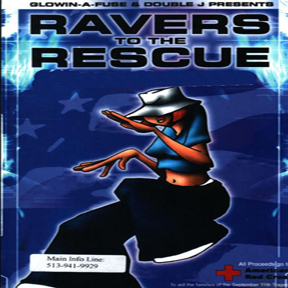
Episode #37: Ravers To The Rescue [2001 breaks]
DOWNLOAD: http://2rip.podomatic.com/enclosure...47_50-07_00.mp3
Lonnie Fisher founded Ultraworld in 1992 after attending several Catastrophic raves that were hosted in DC by the Baez brothers. Ultraworld is known for throwing the first rave in Baltimore city on October 3, 1992 which was titled �Ultraworld Excursions.� The warehouse that this party was hosted in was located in a segment of Baltimore known as Canton. Canton is located along the outer harbor on the southeastern section of the city and is considered to be centered around O�Donnell Square. With an attendance of 600+ people, it was the first of over a decade of successful Ultraworld events.
For the next two years Ultraworld hosted parties in the Erdman Ave Warehouse, 40 West Warehouse, Moravia Park Drive, a campground in south central Pennsylvania, and eventually at Timonium State Fairgrounds in Baltimore County which drew 3500+ in attendance. By 1994 Lonnie had moved into a warehouse where he & his roommates began to host events. In 1996 a narcotics investigator named Sergeant Smith became interested in the events at the Azar Court warehouse. Soon after, Sergeant Smith arrested both Lonnie & his roommates in an attempt to cite them with utilizing their warehouse events to distribute illegal substances.
During that same year Ultraworld had begun planning for an event at a Baltimore City Park called �Lost City�, however plans became halted when Sergeant Smith contacted Ultraworld�s co-sponsor for the event to slander Lonnie by referencing the Azar Court arrest & criminal charges. Another narcotics officer named Detective Galbreath was then assigned to investigate Ultraworld. �Lost City� was moved to Tracks nightclub in DC after the police refused to grant a permit to Ultraworld for the event.
After being told by the DC police �you can have a rave anytime� the next Ultraworld event called �Phoenix� was scheduled for November 27, 1996 at the DC Armory. The Baltimore police contacted DC officials and warned them that the Ultraworld event at the Armory would be a hotbed of drug activity. �Phoenix� pulled a crowd of 4000 people and had no issues.
Ultraworld�s next few events went off without a hitch but in May of 1997 Detective Galbreath continued to cause permit problems for Ultraworld by slandering the company in conversations with their sponsors as Ultraworld planned their next Sunrise Festival. Detective Galbreath had collected data from rave email lists to use against Ultraworld in an attempt to prove that drug use was rampant at raves, particularly Ultraworld events. In a meeting with the Baltimore police & the detective it was determined that the permit for Sunrise Festival would be denied.
On August of that same year Ultraworld hosted a party on one of Baltimore�s Harbor Cruise ships, The Lady of Baltimore. The event sold out at $50 per ticket, resulting in 550+ partygoers attending the event. In the middle of the night the Coast Guard came onboard and advised the crew that certain permits were not in order. The boat was directed back to the harbor where Detective Galbreath waited with a large group of police officers who were ordered to search everyone attending the event. No drugs or paraphernalia was found on anyone or on the cruise ship but one person had $1200 hidden inside his shoe. As a result Lonnie Fisher was detained and charged with three infractions which were made up by Detective Galbreath. The charges were eventually dropped by the city in 1998.
Lonnie Fisher met with Mayor Schmoke of Baltimore on April 27, 1998 to discuss the issues with Detective Galbreath and the city. He & Mayor Schmoke discussed the culture of the American DJ scene and it�s impact on a global scale, referencing magazines like URB, DJ Times & Mixmag. By the end of the meeting, the Mayor asked: �What is it that you want?� To which Lonnie Fisher proposed that Ultraworld host two outdoor festivals in Baltimore every year. One to be held at Ferry Bar Park and the other to be held at Fort Armistead Park. Later that year Sunrise Festival 1998 took place at Ferry Bar Park but the event did not last past 1999 as Starscape at Fort Armistead proved to be the most superior venue and most successful event. The Starscape Festival of 1999 is where Scott Henry claimed his famous �sunrise sets� as he closed out the last timeslot of the party.
In 2000, Starscape was rated by URB as the year�s best party. However the event continued to grow in size for every year consecutively from 2001 to present day.
This mix was recorded in 2008 after The Oldskool Series became fully established. A majority of my breakbeat records were from the early millennium so this gave me a perfect opportunity to dust off some old wax and create a unique journey with tracks from Lot49 and Botchit & Scarper.
Momu � This Is Momu
Sensei � I�m The Only One
Orange Krush � Swerve On
Karsh Kale � Distance (Might Junn Remix)
Beber Tamra � Traveling (Koma & Bones Remix)
Apex � Jump Funk
Meat Katie � Lapdance
DJ 43 � Pepper Spray (DJ Infiniti Remix)
Robin Fox � I See Stars
Backdraft - Demons

Powered by: vBulletin
Copyright © 2000-2021, Jelsoft Enterprises Ltd.