
TranceAddict Forums (www.tranceaddict.com/forums)
- Chill Out Room
-- Air France jet missing over Atlantic
Pages (8): « 1 2 3 [4] 5 6 7 8 »
| quote: |
| Originally posted by Moongoose "Ladies and gentlemen this is your captain speaking, we have just lost our second engine, the plane is about to stall and plow into the nearest mountain range in the next 120 or so seconds. Please proceed calmly and one by one your nearest emergency exit where a stewardess will provide you each with a parachute and properly instruct you on how to use it, while i remote detonate the shaped charges so that the emergency door will actually open and you can all jump to safety."  |
| quote: |
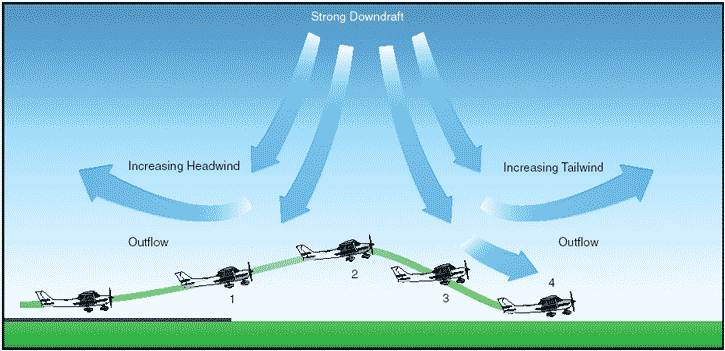
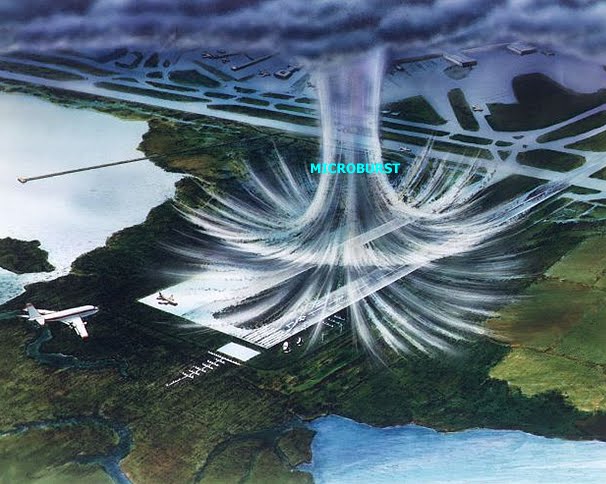
| Originally posted by iclone wind shear? |

| quote: |
| Originally posted by Moongoose "Ladies and gentlemen this is your captain speaking, we have just lost our second engine, the plane is about to stall and plow into the nearest mountain range in the next 120 or so seconds. Please proceed calmly and one by one your nearest emergency exit where a stewardess will provide you each with a parachute and properly instruct you on how to use it, while i remote detonate the shaped charges so that the emergency door will actually open and you can all jump to safety." |
| quote: |
| Originally posted by tubularbills more than likely a microburst |
 (it was just super late & i couldn't think lol). the same took down the delta L-1011 at DFW...
| quote: |
| Originally posted by iclone lol. THANK YOU  ops analysis at a major = operations analysis at a major airline. i dealt with flight/aircraft/maintenance performance analysis for 48,000-52,000 flights per month. |
| quote: |
| Originally posted by iclone that's what i was going for (it was just super late & i couldn't think lol). the same took down the delta L-1011 at DFW... |
| quote: |
| Originally posted by VDub Yah I figured that's what it was but didn't want to assume.. What airline?? |
| quote: |
| Originally posted by VDub A microburst at 32,000 ft????? |

A great 9-page article...
LINK
| quote: |
| Originally posted by iclone i didn't see the 32,000 ft part in the post about the mauritus flight, but i didn't click through the link, either. |

| quote: |
| Originally posted by VDub No man. That would be the last reason for that plane to go down that way... If it was the engines, the pilot would have glided down and done a water landing as well as declare an emergency on the radio... |
| quote: |
For whatever reason, the aircraft lost most electrical power and the pilots were flying off standby instruments. Now it's pitch dark in the cabin (except for the lightning outside). In a cruel irony, the "floor lighting will lead you to an exit" lights will be on. Not that those exits do any good 7 miles up. Now the pitch and roll gyrations get more extreme. Flying a half-powered airplane off the standby instruments is damn hard. Maybe they get a little too nose low and within a few seconds are over-speeding. Something breaks off. More likely, they got a little slow and that combined with an updraft caused an aerodynamic stall. if they hit a strong enough updraft, they don't even need to have gotten slow. Unlike the stalls described by light plane pilots above, stalling a big jet is quite a ride on a good day in smooth air. At night in extreme turbulence, it's the coup de grace. You'd expect a severe and nearly instant roll one way or the other, easily past 45 degrees, and maybe to 90 degrees or more. (i.e. one wing pointing straight down, the other straight up). Perhaps an engine breaks off as they are designed to do. Then the aircraft either snaps over the other way, or tries to keep rolling onto its back. Full opposite control inputs may not be enough. Now the nose starts to fall and the speed pick up. A couple more gyrations and they get it under control. Or they don't, and from on its back they end up diving more or less vertically. After 10-15 seconds of that, something catastrophic breaks off. A big piece of wing or tail. Now the unbalanced aircraft cartwheels more or less sideways. Within the next few seconds the fuselage breaks into several large pieces. At this point pressurization fails and the people are suddenly exposed to -30 to -50 degree temperatures and low pressure. As well as all the flailing wires and broken airplane chunks whipping around in the 300-600 mph wind. The lightning hasn't stopped either. Assuming you've got a good heart, are wearing your seatbelt and aren't right at the edge of a chunk, you're still 100% alive, conscious, & uninjured. Scared and doomed, but uninjured. Due to the extreme adrenaline rush, folks will be using up blood oxygen at a furious pace. Many will lose consciousness due to lack of air pressure at altitude. But far from all. And because you're falling into thicker air at a pretty good clip, I'd wager all but the elderly will revive to at least a groggy state prior to impact. It'll take 2-ish minutes for the fuselage chunks to fall to the sea. Many will be fully conscious and aware for the entire ride. The final impact will kill 99% of the people, and critically injure the last 2 lucky (?) souls. Who'll drown as their fuselage chunk sinks with them still strapped in. |
| quote: |
| Originally posted by Igaryok I think you have been reading too many emergency landing booklets stuffed on the back seat of airplanes. When was the last time you heard of a plane as large as the Airbus 330 "gliding and doing a water landing"? Maybe the Hudson river landing, but that was under way different circumstances and in an airbus 320 which is a way smaller plane. Here's a more likely scenerio from that flight as described by a former commercial jet pilot. http://boards.straightdope.com/sdmb...ad.php?t=520166 |
| quote: |
| Originally posted by iclone wind shear? |
Interesting article in the Daily Telegraph
LINK
| quote: |
| COMPLEX PROCESS Investigators said any information gleaned from the black boxes would take months to process and there was no certainty they would determine what went wrong before the crash, when the fully-laden passenger jet vanished in an equatorial storm. But chief investigator Alain Bouillard told Reuters he was confident part of the data could be recovered. "The recorders have several components so I am fairly confident we can get something, but until we open them we cannot say for sure." Investigators said it would take at least three days to extract copies of the data -- one for the investigation team and another for French prosecutors -- from the thin memory boards housed inside the bright orange capsules. Even then, deciphering the evidence is likely to involve weeks of work to synchronize the data and voice recordings. Of the two recorders, the one containing read-outs of data from the aircraft systems is the most crucial to unlocking the cause of the crash. "Without these parameters it will be difficult to understand what happened," Bouillard told Reuters. In the best case scenario, France's BEA crash investigation authority hopes to issue findings at the beginning of 2012. The BEA said it would never release the cockpit voice recordings in public but may issue transcripts of pilot conversations if they were needed to understand the crash. The speeding up of the investigation will bring some comfort to some 2,500 family members from 32 nations but could have legal implications for manufacturers or the airline. A French judge heading a criminal probe into the crash has placed Airbus and Air France under formal investigation, which falls short of charges but can open the way to a trial. Bouillard said many key cockpit systems had been recovered but the aircraft's speed sensors, initially cited as a possible factor in the crash, had not yet been found. The data recorder may shed light on why the Thales-built sensors, or pitot tubes, appeared to give inconsistent readings in maintenance records transmitted automatically from the aircraft shortly before it disappeared. |

Well it appears all the date from both the data recorder and voice recorder is intact. They have the last 2 hours from the flight in audio. That must be incredibly disturbing audio.
http://online.wsj.com/article/SB100...2484813816.html
Still no Pitot tubes found, though.
Hi,
My father is a pilot and I lived next to that airport in Rio de Janeiro for about a year. Based on my vast expertise in this area, I can confidently say I know what happened: it was an alien abduction gone wrong. Because, you know, it's hard to suck a big plane into the mothership.
There you go, I solved the problem for you guys. This technique I used is called "inference to the best House Episode explanation": If something can be true, it will be fantastically so.
| quote: |
| Originally posted by Lira My father is a pilot and I lived next to that airport in Rio de Janeiro for about a year. Based on my vast expertise in this area, I can confidently say I know what happened: it was an alien abduction gone wrong. Because, you know, it's hard to suck a big plane into the mothership. There you go, I solved the problem for you guys. This technique I used is called "inference to the best House Episode explanation": If something can be true, it will be fantastically so. |
I hear the only cure is Euro dance.
| quote: |
| Originally posted by Meat187 You've haven't watched that show a lot, have you? Here is what REALLY happened: On a previous flight to Brazil the co-pilot contracted a rare tropical disease called liraidosis. The most common symptoms include a heightened sense of moral, uncontrolled growth of facial hair, speaking in tongues and logorrhea. This is the worst symptom, because boring rants about shit no one cares about are also the main way in which liraidosis spreads. So when the co-pilot started to share his views on Buddhist teachings he infected the pilot who soon joined the discussion. With both of them infected the disease impaired their ability to perform any useful task or even bother with it once the discussion reached the subject of the stewardesses tits. So disaster struck and the plane crashed. It's also quite obvious why the recordings are not released: they're still contagious. |
Lupus 
| quote: |
| Originally posted by Meat187 You've haven't watched that show a lot, have you? Here is what REALLY happened: On a previous flight to Brazil the co-pilot contracted a rare tropical disease called liraidosis. The most common symptoms include a heightened sense of moral, uncontrolled growth of facial hair, speaking in tongues and logorrhea. This is the worst symptom, because boring rants about shit no one cares about are also the main way in which liraidosis spreads. So when the co-pilot started to share his views on Buddhist teachings he infected the pilot who soon joined the discussion. With both of them infected the disease impaired their ability to perform any useful task or even bother with it once the discussion reached the subject of the stewardesses tits. So disaster struck and the plane crashed. It's also quite obvious why the recordings are not released: they're still contagious. |

| quote: |
| According to an Airbus telex sent to all airlines using their A330, the flight recorders on Air France flight 447 confirm that their airplane didn't suffer any failure and they shouldn't take any precautionary measure: ...at this stage of preliminary analysis of the Flight Data Recorder, Airbus has no immediate recommendation to to its operators. Updates will be provided as soon as significant items that Airbus will be available or will be authorized to issue more information in accordance with the investigation. According to Le Figaro, the flight data recorder points to an error by the crew as the origin of the accident that killed 228 people aboard the Airbus A330. The data will be disclosed soon by the agency investigating the accident. Le Figaro's sources say that they still don't have data from the Cockpit Voice Recorder, which will probably reveal more about the actual source of the accident. |
From Bloomberg...
| quote: |
| Air France Flight 447 crashed in 2009 after the Airbus A330 lost speed and stalled before beginning a three-and-a-half minute plunge into the Atlantic Ocean that killed all 228 people on board, an investigation found. The findings by the French BEA air-accident investigation bureau show the autopilot disengaged shortly after pilots alerted cabin crew of possible turbulence ahead. Data presented by BEA show the youngest of the three pilots, who was 32 and in control for most of the last minutes, angled the jet�s nose higher, a position the aircraft maintained until its impact. The preliminary report sheds more light on the final minutes before the deadliest crash in Air France�s history, with pilots scrambling to avert disaster as the jet hurtled toward the ocean surface at a speed of 180 feet (55 meters) a second. The least experienced of the three pilots was managing the aircraft until less than one minute before recordings stopped, with the captain present though no longer in charge of the jet. �The question is why the pilot kept giving nose-up inputs when the plane was in a stall,� said Paul Hayes, director of safety at Ascend Worldwide Ltd., a London-based aviation consultant company. �You should put the nose down to recover speed.� Breakthrough Recovery The search for clues achieved a breakthrough after the two flight recorders were recovered from 3,900 meters (12,800 feet) beneath the Atlantic and returned to Paris this month, two years after the jet disappeared into the night on June 1, 2009. All data and voice recordings from the two recorders were recovered in full, after being submerged for two years, the BEA said. The report doesn�t mention if the pilots realized they were in a stall, or if Captain Marc Dubois, 58, ever attempted to regain control of the cockpit and relieve his junior crew. Dubois had been away from the cockpit when the autopilot disengaged, and his colleagues tried several times to call him back in the first minute of the unfolding drama, the BEA said. A stall can occur when an aircraft slows to the point where its wings suddenly lose lift, an incident pilots are trained to overcome. Earlier transmissions from the jet had shown that airspeed sensors, or pitot tubes, made by Thales SA (HO) had failed, presenting pilots with a sharp drop in speed readings on their displays after they entered ice clouds. Deteriorated Situation The data and cockpit voice recording suggest the pilots never realized that the plane had entered a stall, BEA Chief Investigator Alain Bouillard said in an interview. �They hear the stall alarm but show no signs of having recognized it,� he said. �At no point is the word �stall� ever mentioned.� Even as the plane plunged rapidly from 38,000 feet to 10,000 feet, �they make this observation without seeming to understand that they are in a stall,� Bouillard said. By the time Captain Dubois had returned to the cockpit, �the situation had already deteriorated considerably,� Bouillard said. The analysis shows that the pilot who took manual control after the auto-pilot shut down had favored climbing above the approaching stormy clouds but were prevented from doing so because it wasn�t cold enough for the jet to ascend to that level. The crew alerted flight attendants that they should �watch out� as the approaching zone would move the jet around. Resting Pilot With the flight captain resting and the two co-pilots at the controls, the auto-pilots disengaged four hours into the flight. The pilots acknowledged that the speed sensors had failed as they responded by pulling up the nose of the aircraft, voice and data recordings show. A stall warning sounded in the cockpit, the BEA said. According to the BEA, the co-pilots continued to increase the angle of climb, rising rapidly from 35,000 feet to 37,500 feet. When a third stall warning sounded, they continued to pull back on the controls with the engines set to full thrust and rose to about 38,000 feet, where the plane entered a stall. Less than two minutes after the autopilot went off-line, Dubois returned to the cockpit, and the conversation shows he was with his colleagues during the remainder of the flight. It�s routine for pilots to take a break away from the cockpit on long-haul flights, Air France has said. Last-Minute Control �The aircraft got well into the stall and pilots were acting as if they didn�t know that,� said David Learmount, a former combat pilot for the Royal Air Force and safety editor for Flight magazine. �The only way to recover is to put the nose down and get the speed back.� Dubois had almost 11,000 hours of flight experience, compared with fewer than 3,000 hours for the youngest member of the cockpit. His body was found among debris and other victims floating on the ocean surface in the weeks after the crash. The BEA�s report gave no indication about the tone in the cockpit, with only few reference to exchanges about who was in charge or the co-pilot saying early on �So, we�ve lost the speeds.� The third member of the crew, aged 37, was given control in the last minute before impact, receiving the order �Go ahead, you have the controls,� by his colleagues. No further comments by pilots were published by the BEA for the last minute. The BEA said that the plane�s so-called angle of attack, which defines the angle between air flow and the longitudinal axis of the aircraft, always remained above 35 degrees during the descent. �Pull Up!� �Why did the pilot fly the way he did? That�s the question of the day,� said Hans Weber, president of Tecop International Inc., an aviation consulting firm based in San Diego, who has given safety advice to the U.S. Federal Aviation Administration. �There was no indication they were flying through horrendous turbulence or weather.� Air France said the crew made a detour to avoid bad weather, and that the pilots showed professionalism, according to an e-mailed statement by the French airline. Airbus said the report �constitutes a significant step towards the identification of the complete chain of events,� according to a release today. Airbus said last week that it had no additional recommendations to operators of the A330 aircraft. With the plane�s nose still pointed up, the jet began falling at about 10,000 feet a minute, rolling heavily from left to right, the report found. Almost one minute into the stall, the pilots had reduced engine thrust and tried pushing down on the controls to lower the nose. Close to Impact Airspeed indications returned and the alarm sounded again as the stalled aircraft picked up some speed, though the plane continued falling until the first co-pilot commented that the aircraft was approaching an altitude of 10,000 feet. The final recordings show the aircraft had fallen to a ground speed of about 123 miles per hour (198 kilometers), the BEA said. The collision warning, �Terrain! Terrain! Pull Up!� sounded at an altitude of about 1,500 feet, which at the plane�s speed of descent was �very close to impact,� Bouillard said. The report concluded that the aircraft remained stalled during its descent, and that the engines were operational and responded to crew commands throughout. The preliminary findings from the black-box data have not yet established any conclusions about the accident�s causes or led to any recommendations, the investigator said. An interim report is due in mid-July. �What we�re publishing today are technical observations, including actions by the crew, which don�t explain the accident,� BEA chief Jean-Paul Troadec told reporters. �Understanding this chain of events and the reasons behind the crew�s actions is a complex task that is just beginning.� |
So many questions as to why they behaved the way that they did...
I thought of so many possibilities for the crash but never did pilot error cross my mind. I just gave the crew the benefit of the doubt...
I don't think I'll ever fly Air France...
Second pilot error crash in 3 years...
Quite a harrowing read...
| quote: |
| Originally from The Daily Beast Who�s to Blame for Flight 447? Two years ago, Air France flight 447 disappeared in the remote South Atlantic seas. Clive Irving on what the black boxes have finally revealed, and who�s to blame for the crash. The pilots did it. Put bluntly, that seems to be what the latest report by French air crash investigators on the loss of Air France flight 447 two years ago is saying. More precisely, the pilots had not been trained to deal with the sudden emergency they faced and lost control. What the investigating body, France�s Bureau of Investigation and Analysis (BEA), are not saying, at least not overtly, is that the crash should never have happened�and, but for a technical failure, would not have. Air crash investigation reports always deliver a torrent of technical jargon that has been through many drafts. The goal is to be sensitive toward those who can end up getting blamed, but then the language becomes impersonal. So let�s not forget the victims. And what they went through. This is the stark reality of the end of Flight 447: Eleven minutes after 2 a.m. on June 1, 2009, the 216 passengers bound for Paris from Rio de Janeiro were plunging toward the Atlantic Ocean at a rate of 10,000 feet a minute. But for the restraint of seat belts, they would have been tossed around the cabin like loose luggage. Brazil's Navy sailors recover debris from the missing Air France Flight 447 in the Atlantic Ocean on June 8, 2009., AP Photo They would have been fully aware of their plight. The airplane, an Airbus A330, had lost its ability to fly. During the fall its nose reared up far more steeply than in a takeoff, and it stayed there. It was in an aerodynamic stall. As it fell, the Airbus turned right, away from its heading to Europe and, three minutes after the descent began, it was heading back toward Brazil. With its nose still pointed sharply up, its wings dipped slightly left and at a forward speed of just over 120mph, the airplane hit the Atlantic. The most violent force was the rate of vertical descent�so violent that the cargo hold below the cabin crumpled and galleys in the cabin were crushed from the bottom up upon impact. The vertical stabilizer sheered off and floated away into the night, becoming a lone beacon for those sent to search for the wreckage. Fifty bodies were thrown into the water from gaps in the cabin�including that of the captain, 58-year-old Marc Dubois, and four flight attendants. The remaining passengers, five of the nine cabin crew and two of the three pilots went with the wreck deep to the ocean floor in one of the most remote and inaccessible parts of the south Atlantic. There had never been a crash like this: an airplane representing state of the art flight deck automation, an airline with a long and esteemed record, flying a route that should have been routine disappeared without explanation and without trace. Then, spectacularly, this spring the airplane�s black boxes and cockpit voice recorder were recovered on a sandy plateau 13,000 feet beneath the ocean�s surface, after two previously aborted searches. The details in today�s report confirm that this crash should not be considered on its own. It is another in a series of disasters involving what is technically called �loss of control� � a problem which has become the number one cause of air crashes. The trend is so alarming that it was the subject of heated debate at a Flight Safety Foundation conference in Turkey earlier this year. At the heart of the issue is how pilots respond when faced with an imminent aerodynamic stall, which comes down to just one movement on the flight controls: the need to push down the nose of the airplane, not pull it up. At the conference, Michael Coker, Boeing�s senior safety pilot, cited a series of crashes, beginning with that of the Colgan Air crash that killed 50 people at Buffalo in 2009 and including others in Venezuela, Amsterdam, and France. In each case the airplane had reached the brink of a stall, where the wings lose the ability to provide lift, and the pilots, rather than putting the nose down to regain speed�a basic tenet of Piloting 101 since the beginning of flight�had instead pulled up the nose and produced a fatal outcome. The case of Air France Flight 447 now joins that list as the deadliest of all. The French investigation shows that after the pilot in control had a second automatic warning that the Airbus was about to stall he pulled the nose up and even increased the angle. In the course of one minute and fifteen seconds the airplane soared up another 500 feet, from an altitude of 37,500 feet until it stalled so completely that it remained in that attitude until it hit the ocean. Captain John Cox, CEO of Safety Operating Systems in Washington, an expert with experience of flying a similar Airbus, the A340, as well as an A330 in a simulator, told me that the climb that led to the stall �is one of the most perplexing questions in the accident.� Before the black boxes were recovered, suspicion had focused on instruments called pitot tubes (the A330 has three of them) that measure the air speed. The pitot tubes on A330s had a record of freezing up and giving false readings to the automated flight management system, as the airplane was cruising and being flown by the autopilot. This is indeed what happened to Flight 447, creating an emergency on the flight deck. Eight minutes earlier, Captain Dubois had left to take his rest period. The most junior pilot, 32-year-old Pierre-Cedric Bonin, with just 807 hours experience on A330s, was left in control, watched by a second pilot, 37-year-old David Robert, who with 4,479 hours was the most experienced. (Captain Dubois had 1,747 hours.) With the autopilot disabled by the false air speed information, Bonin took over manually and remained in control. Today the BEA revealed that these pilots had received no training for this kind of emergency at cruise altitude when they had to fly the airplane manually. For a short time Bonin did put the nose down and the situation was recoverable. But when the second stall warning sounded, he reverted to the nose-up command. The captain arrived too late to take over. Why had the second, more experienced pilot, not taken over? John Cox explained to me that when a pilot says, as Bonin did, "I have the controls" that gives him authority over the co-pilot. "A transfer of control is essential after a disconnection from the autopilot." However, even though pilot proficiency is a huge question in this case, it is only fair to them to give a more complete view of what it must have been like on that flight deck. The failure of the pitot tubes was no minor glitch. There had been 32 previous cases of flight deck emergencies caused by false speed readings. The European Aviation Safety Agency � Europe�s FAA � said in an internal report, disclosed in the magazine Aviation Week, that these failures represented �a large reduction in safety margins and a high work load� for the crews. In the thin air at cruise altitude, 36,000 feet, there is a narrow band of speed in which the airplane is stable, giving a crew very little time to recover if they get anywhere near a stalling speed. There are at least three culpable parties here in addition to the pilots: the manufacturers of the flawed speed sensors, the French company Thales; Air France for negligent pilot training; and Airbus for not insisting that the faulty speed sensors be replaced when they were known to put the Airbus A330 in jeopardy. Today�s BEA report was clearly designed to drop into the biggest news black hole of the year. It�s the afternoon of the last Friday in July. In Paris. The moment that millions depart for la grande vacance. There is one grisly but intriguing detail yet to be explained. Why did Captain Dubois�s body float clear of the airplane, to be recovered a few days later, while the bodies of Robert and Bonin went down to the depths? Did Dubois not have enough time to strap himself into a seat? Was he fighting to remain on the flight deck during the hellish descent? These are questions that may never be answered. |

Powered by: vBulletin
Copyright © 2000-2021, Jelsoft Enterprises Ltd.