
TranceAddict Forums (www.tranceaddict.com/forums)
- Political Discussion / Debate
-- US supreme court rules on 2nd amendment case
Pages (3): [1] 2 3 »
US supreme court rules on 2nd amendment case
unsurprisingly the conservative court gave its disappointing opinion today that the DC gun law violates the 2nd amendment.
| quote: |
WASHINGTON (CNN) -- The U.S. Supreme Court ruled Thursday that a sweeping ban on handguns in the nation's capital violated the Second Amendment right to bear arms. The justices voted 5-4 against the ban, with Justice Antonin Scalia writing the opinion for the majority. The case's lead plaintiff, Dick Heller, applauded the decision, saying, "I'm very happy that I am now able to defend myself and my household in my own home." Paul Helmke of the Brady Campaign to Prevent Gun Violence said his group had a mixed reaction to the decision. Helmke said the group disagrees with the court's interpretation of the Second Amendment but that the ruling "still allows common-sense gun control laws, restrictions to make us all safer." Watch a gun shop owner's reaction � "It's clear what the court did today is, they limited the extremes," Helmke told reporters after the ruling. The National Rifle Association said the high court had given it the ammunition to challenge other cities' gun-control measures. At issue in District of Columbia v. Heller was whether Washington's ban violated the right to "keep and bear arms" by preventing individuals -- as opposed to state militias -- from having guns in their homes. "Undoubtedly some think that the Second Amendment is outmoded in a society where our standing army is the pride of our nation, where well-trained police forces provide personal security and where gun violence is a serious problem," Scalia wrote. "That is perhaps debatable, but what is not debatable is that it is not the role of this court to pronounce the Second Amendment extinct." More on American's relationship with the firearm Scalia was joined by Chief Justice John Roberts and Justices Samuel Alito and Clarence Thomas, all of whom are considered conservative voices on the court. Justice Anthony Kennedy, often seen as a swing vote, also joined the majority. Justices John Paul Stevens and Stephen Breyer delivered dissenting opinions, and were joined by their liberal counterparts Ruth Bader Ginsburg and David Souter. District of Columbia officials argued they had the responsibility to impose "reasonable" weapons restrictions to reduce violent crime, but several Washingtonians challenged the 32-year-old law. Some said they had been constant victims of crimes and needed guns for protection. Hear the arguments presented to the high court � Scalia wrote that the majority was sympathetic to Washington's problems with guns and crime but that banning handguns was not a solution. "The Constitution leaves the District of Columbia a variety of tools for combating that problem, including some measures regulating handguns," Scalia wrote. "But the enshrinement of constitutional rights necessarily takes certain policy choices off the table. These include the absolute prohibition of handguns held and used for self-defense in the home." Breyer, however, argued in his dissent that the framers of the Constitution did not present self-defense as their main reason for the Second Amendment. "The self-defense interest in maintaining loaded handguns in the home to shoot intruders is not the primary interest, but at most a subsidiary interest," he wrote. "The Second Amendment's language, while speaking of a 'militia,' says nothing of 'self-defense.' " Washington residents can protect themselves from crime though other means, Breyer wrote: "The law concerns one class of weapons, handguns, leaving residents free to possess shotguns and rifles, along with ammunition." iReport.com: What's your reaction to the ruling? In March 2007, a federal appeals court overturned the city's ban, which keeps most private citizens from owning handguns and keeping them in their homes. It was the first time a federal appeals court ruled a gun law unconstitutional on Second Amendment grounds. City attorneys urged the high court to intervene, warning, "The District of Columbia -- a densely populated urban locality where the violence caused by handguns is well-documented -- will be unable to enforce a law that its elected officials have sensibly concluded saves lives." There were 143 gun-related murders in Washington last year, compared with 135 in 1976, when the handgun ban was enacted. The Second Amendment says, "A well-regulated Militia, being necessary to the security of a free State, the right of the people to keep and bear Arms, shall not be infringed." The wording repeatedly has raised the question of whether gun ownership is an individual right, or a collective one pertaining to state militias and therefore subject to regulation. In an Opinion Research Corp. poll of 1,035 adult Americans this month, 67 percent of those surveyed said they felt the Second Amendment gave individuals the right to own guns. Thirty percent said it provided citizens the right to form a militia. The poll had a margin of error of plus or minus 3 percentage points. See poll results � The Supreme Court had avoided the question since the Bill of Rights was ratified in 1791. The high court last examined the issue in 1939 but stayed away from the broad constitutional question. Breyer expressed concern in his dissent that the majority's ruling could jeopardize the "constitutionality of gun laws throughout the nation." He added, "I can find no sound legal basis for launching the courts on so formidable and potentially dangerous a mission." Only Chicago, Illinois, has a handgun ban as sweeping as Washington's, though Maryland, Massachusetts and San Francisco, California, joined the Windy City in issuing briefs supporting the district's ban. The NRA, Disabled Veterans for Self-Defense and the transgender group Pink Pistols -- along with 31 states -- filed briefs supporting the District of Columbia's gun owners. After the ruling, Wayne LaPierre of the NRA said his organization would immediately file court challenges to the bans in Chicago and San Francisco. |
Had to be done...
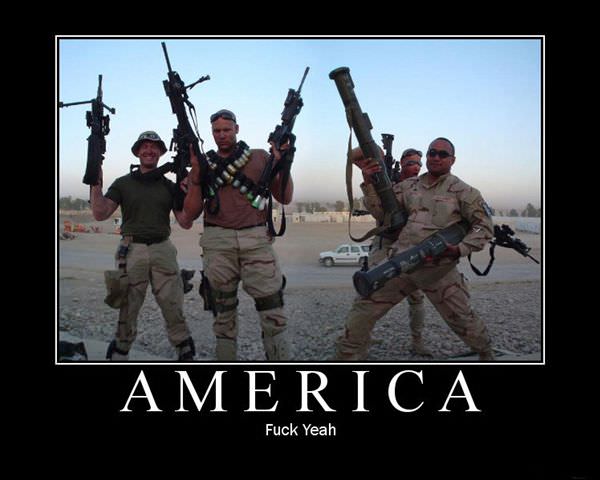
the pic above... 
So much for states having the ability to regulate arms on their own... I'm dying to see how Scalia supposedly walked the tight-rope between saying all restrictions should go and just the DC ban.
| quote: |
| Originally posted by Lebezniatnikov So much for states having the ability to regulate arms on their own... |
I quickly read scalia's opinion, but the opinion leaves many questions unanswered. First, the SC didn't even hold the law unconstitutional. The most important paragraph from the opinion:
| quote: |
In sum, we hold that the District's ban on handgun possession in the home violates the Second Amendment, as does its prohibition against rendering any lawful firearm in the home operable for the purpose of immediate self-defense. Assuming that Heller is not disqualified from the exercise of Second Amendment rights, the District must permit him to register his handgun and must issue him a license to carry it in the home. |
| quote: |
| Originally posted by Lebezniatnikov So much for states having the ability to regulate arms on their own... I'm dying to see how Scalia supposedly walked the tight-rope between saying all restrictions should go and just the DC ban. |
Obama's 1996 Illinois State Senate questionaire

| quote: |
| Originally posted by Q5echo |

| quote: |
| Originally posted by Lebezniatnikov So much for states having the ability to regulate arms on their own... I'm dying to see how Scalia supposedly walked the tight-rope between saying all restrictions should go and just the DC ban. |
| quote: |
| Originally posted by pkcRAISTLIN and here i was hoping you were going to render an opinion that didnt relate to obama, bush or foreign policy |
 )
)
| quote: |
| Originally posted by Groundhog Boy It's too bad that Kennedy's the only one whose position isn't completely predictable before even reading the facts of the case. |
| quote: |
| Originally posted by Q5echo it's information. thats all it is. use it however you want, or not use it. i've provided no context (although it certainly is implied )i just didn't feel like it warranted it's own thread. |
can i ask a question of you more scholarly (and local!) fellas; what role does 'well-regulated militia' and 'defense of a free state' play in the decision making?
| quote: |
| Originally posted by jerZ07002 Unfortunately, the court did hold that the 2nd amendment right is an individual right. I summarized some interesting points below. |
| quote: |
| Originally posted by Q5echo because unpredictability is somehow a good thing when interpreting the Constitution? |
| quote: |
| Originally posted by occrider Which is the biggest joke and it boggles the mind when people traditionally consider this statement as a "strict" interpretation of the constitution and the founders' intent. The language of the second amendment is somewhat confusing: "A well regulated Militia, being necessary to the security of a free State, the right of the people to keep and bear Arms, shall not be infringed." Does the clause guarantee the rights of militias for the purposes of defending the sate or the individual right of a person? It's grammatically confusing especially when you take into account it was written 300 hundred years ago, but the fact that it was written 300 years ago provides the necessary context. Some textual hints are provided by the fact that the text refers to the right of "the people" collectively rather than of "persons" individually and the phrase "bear arms." At the time, the phrase to "bear arms" was used from a military context alone. In other words, it wasn�t used to convey a hunter carrying a weapon or a homeowner carrying a weapon for protection. As a matter of fact, an earlier draft of the second amendment carried additional language that stated: �no one religiously scrupulous of bearing arms shall be compelled to render military service in person,� it clearly refers to a militia that defends the state rather than an individual right. In addition, if one were to examine all state constitutions that existed as of 1789 they consistently used the phrase �bear arms� in military contexts and NO OTHER. The inclusion of the phrase �the people� refers more to the notion that the �militia� or standing army should not consist of a permanent, hierarchical group that embodies a dangerous culture of non-changing elites, but rather a militia that truly represents the needs and desires of the changing electorate that it represents. �The people� refers to the necessary tie between democracy and the military. When looking at the reference to �the people� in the second amendment consider the reference to �the people� in the preamble of the constitution. In the preamble, �the people� ordained and established the Constitution, but NOT through individual assertions. The individual was represented by representatives who partook in constitutional assemblies. Clearly the phrase �the people� represents a holistic composition of people purposed with the role of contributing towards a militia to defend the state rather than any individual reasons. I�m a strict constitutionalist but if you want to talk constitution let�s talk 1700s, let�s use earlier drafts of the constitution as context, and let�s refer to other documents (like state constitutions that the federal constitution used as context) to define what the founding fathers really intended. Btw the source for much of my material is from "America's Constitution " by Akhil Reed Amar. It seems quite authorative. |
| quote: |
| Originally posted by pkcRAISTLIN can i ask a question of you more scholarly (and local!) fellas; what role does 'well-regulated militia' and 'defense of a free state' play in the decision making? |
| quote: |
| Originally posted by Q5echo A well regulated Militia, being necessary to the security of a free State, the right of the people to keep and bear Arms, shall not be infringed. "A well regulated Militia" is a purpose for the people's right to keep and bear arms. there is no such language as you describe "defense of a free state". the language in the Constitution reads, "being necessary to the security of a free State" |
 are you going to answer the question or not?
| quote: |
| Originally posted by Q5echo the Constitution recognizes the individual's right to keep and bear arms. |
| quote: |
| Originally posted by occrider The inclusion of the phrase �the people� refers more to the notion that the �militia� or standing army should not consist of a permanent, hierarchical group that embodies a dangerous culture of non-changing elites, but rather a militia that truly represents the needs and desires of the changing electorate that it represents. �The people� refers to the necessary tie between democracy and the military. When looking at the reference to �the people� in the second amendment consider the reference to �the people� in the preamble of the constitution. In the preamble, �the people� ordained and established the Constitution, but NOT through individual assertions. The individual was represented by representatives who partook in constitutional assemblies. Clearly the phrase �the people� represents a holistic composition of people purposed with the role of contributing towards a militia to defend the state rather than any individual reasons. |
| quote: |
| As Sutherland explains, the key 18th-century English case on theeffect of preambles, Copeman v. Gallant, 1 P. Wms. 314, 24 Eng. Rep.404 (1716), stated that �the preamble could not be used to restrict the effect of the words of the purview.� J. Sutherland, Statutes and Statutory Construction, 47.04 (N. Singer ed. 5th ed. 1992). This rule was modified in England in an 1826 case to give more importance to the preamble, but in America �the settled principle of law is that the preamble cannot control the enacting part of the statute in cases where the enacting part is expressed in clear, unambiguous terms.� |
| quote: |
| Three provisions of the Constitution refer to �the people� in a context other than �rights��the famous preamble (�We the people�), �2 of Article I (providing that �the people� will choose members of the House), and the Tenth Amendment (providing that those powers not given the Federal Government remain with �the States� or �the people�). Those provisions arguably refer to �the people� acting collectively�but they deal with the exercise or reservation of powers, not rights. Nowhere else in the Constitution does a �right� attributed to �the people� refer to anything other than an individual right.6 What is more, in all six other provisions of the Constitution that mention �the people,� the term unambiguously refers to all members of the political community, not an unspecified subset. As we said in United States v. Verdugo-Urquidez, 494 U. S. 259, 265 (1990): |
| quote: |
| Originally posted by pkcRAISTLIN well obviously i got a few of the words wrong, duh are you going to answer the question or not? |
| quote: |
| yes, yes. i know what YOU think it means, but i wanted to know how the court interprets those things i highlighted? |
| quote: |
| the �militia� in colonial America consisted of a subset of �the people�� those who were male, able bodied, and within a certain age range. Reading the Second Amendment as protecting only the right to �keep and bear Arms� in an organized militia therefore fits poorly with the operative clause�s description of the holder of that right as �the people.� We start therefore with a strong presumption that the Second Amendment right is exercised individually and belongs to all Americans. |
you know i luv ya.
| quote: |
| Originally posted by Groundhog Boy BTW, Q, Obama disagreed with the child rapist death penalty case, so it looks like he flipped on the death penalty, too. |
| quote: |
| Originally posted by occrider Which is the biggest joke and it boggles the mind when people traditionally consider this statement as a "strict" interpretation of the constitution and the founders' intent. The language of the second amendment is somewhat confusing: "A well regulated Militia, being necessary to the security of a free State, the right of the people to keep and bear Arms, shall not be infringed." Does the clause guarantee the rights of militias for the purposes of defending the sate or the individual right of a person? It's grammatically confusing especially when you take into account it was written 300 hundred years ago, but the fact that it was written 300 years ago provides the necessary context. Some textual hints are provided by the fact that the text refers to the right of "the people" collectively rather than of "persons" individually and the phrase "bear arms." At the time, the phrase to "bear arms" was used from a military context alone. In other words, it wasn�t used to convey a hunter carrying a weapon or a homeowner carrying a weapon for protection. As a matter of fact, an earlier draft of the second amendment carried additional language that stated: �no one religiously scrupulous of bearing arms shall be compelled to render military service in person,� it clearly refers to a militia that defends the state rather than an individual right. In addition, if one were to examine all state constitutions that existed as of 1789 they consistently used the phrase �bear arms� in military contexts and NO OTHER. The inclusion of the phrase �the people� refers more to the notion that the �militia� or standing army should not consist of a permanent, hierarchical group that embodies a dangerous culture of non-changing elites, but rather a militia that truly represents the needs and desires of the changing electorate that it represents. �The people� refers to the necessary tie between democracy and the military. When looking at the reference to �the people� in the second amendment consider the reference to �the people� in the preamble of the constitution. In the preamble, �the people� ordained and established the Constitution, but NOT through individual assertions. The individual was represented by representatives who partook in constitutional assemblies. Clearly the phrase �the people� represents a holistic composition of people purposed with the role of contributing towards a militia to defend the state rather than any individual reasons. I�m a strict constitutionalist but if you want to talk constitution let�s talk 1700s, let�s use earlier drafts of the constitution as context, and let�s refer to other documents (like state constitutions that the federal constitution used as context) to define what the founding fathers really intended. Btw the source for much of my material is from "America's Constitution " by Akhil Reed Amar. It seems quite authorative. |
| quote: |
| Originally posted by Q5echo you might want to reconsider that. We the People of the United States, in Order to form a more perfect Union, establish Justice, insure domestic Tranquility, provide for the common defence,[1] promote the general Welfare, and secure the Blessings of Liberty to ourselves and our Posterity, do ordain and establish this Constitution for the United States of America. the Preamble assigns no power to anything as you know. historically the phrase "We the people of the United States" has been interpreted as the citizens of the United States to exclude all others or Contitution's derivation of soveriegnty from the people. from the Heller opinion: additionally are you saying that the people in We the people of the United States are only "represented by representatives who partook in constitutional assemblies" that secure the Blessings of Liberty to themselves and limited others? |


Powered by: vBulletin
Copyright © 2000-2021, Jelsoft Enterprises Ltd.