
TranceAddict Forums (www.tranceaddict.com/forums)
- Political Discussion / Debate
-- Humanity's Demise
Humanity's Demise
Does anyone think this is true, or maybe we'll all be extinct? This was an interesting read.
LONDON, England (CNN) -- A group of experts from around the world will hold a first of its kind conference Thursday on global catastrophic risks.
They will discuss what should be done to prevent these risks from becoming realities that could lead to the end of human life on Earth as we know it.
Speakers at the four-day event at Oxford University in Britain will talk about topics including nuclear terrorism and what to do if a large asteroid were to be on a collision course with our planet.
On the final day of the Global Catastrophic Risk Conference, experts will focus on what could be the unintended consequences of new technologies, such as superintelligent machines that, if ill-conceived, might cause the demise of Homo sapiens.
"Any entity which is radically smarter than human beings would also be very powerful," said Dr. Nick Bostrom, director of Oxford's Future of Humanity Institute, host of the symposium. "If we get something wrong, you could imagine the consequences would involve the extinction of the human species."
Bostrom is a philosopher and a leading thinker of transhumanism, a movement that advocates not only the study of the potential threats and promises that future technologies could pose to human life but also the ways in which emergent technologies could be used to make the very act of living better.
"We want to preserve the best of what it is to be human and maybe even amplify that," Bostrom said.
Transhumanists, according to Bostrom, anticipate an era in which biotechnology, molecular nanotechnologies, artificial intelligence and other new types of cognitive tools will be used to amplify our intellectual capacity, improve our physical capabilities and even enhance our emotional well-being.
The end result would be a new form of "posthuman" life with beings that possess qualities and skills so exceedingly advanced they no longer can be classified simply as humans.
"We will begin to use science and technology not just to manage the world around us but to manage our own human biology as well," Bostrom said. "The changes will be faster and more profound than the very, very slow changes that would occur over tens of thousands of years as a result of natural selection and biological evolution."
Bostrom declined to predict an exact time frame when this revolutionary biotechnological metamorphosis might occur. "Maybe it will take eight years or 200 years," he said. "It is very hard to predict."
Other experts are already getting ready for what they say could be a radical transformation of the human race in as little as two decades.
"This will happen faster than people realize," said Dr. Ray Kurzweil, an inventor and futurist who calculates technology trends using what he calls the law of accelerating returns, a mathematical concept that measures the exponential growth of technological evolution.
In the 1980s, Kurzweil predicted that a tiny handheld device would be invented early in the 21st century, allowing blind people to read documents from anywhere at anytime; this year, such a device was publicly unveiled. He also anticipated the explosive growth of the Internet in the 1990s.
Now, Kurzweil is predicting the arrival of something called the Singularity, which he defines in his book on the subject as "the culmination of the merger of our biological thinking and existence with our technology, resulting in a world that is still human but that transcends our biological roots."
"There will be no distinction, post-Singularity, between human and machine or between physical and virtual reality," he writes.
Singularity will approach at an accelerating rate as human-created technologies become exponentially smaller and increasingly powerful and as fields such as biology and medicine are understood more and more in terms of information processes that can be simulated with computers.
By the 2030s, Kurzweil said, humans will become more non-biological than biological, capable of uploading our minds onto the Internet, living in various virtual worlds and even avoiding aging and evading death.
In the 2040s, Kurzweil predicts that non-biological intelligence will be billions of times better than the biological intelligence humans have today, possibly rendering our present brains obsolete.
"Our brains are a million times slower than electronics," Kurzweil said. "We will increasingly become software entities if you go out enough decades."
This movement towards the merger of man and machine, according to Kurzweil, is already starting to happen and is most visible in the field of biotechnology.
As scientists gain deeper insights into the genetic processes that underlie life, they are able to effectively reprogram human biology through the development of new forms of gene therapies and medications capable of turning on or off enzymes and RNA interference, or gene silencing.
"Biology and health and medicine used to be hit or miss," Kurzweil sad. "It wasn't based on any coherent theory about how it works."
The emerging biotechnology revolution will lead to at least a thousand new drugs that could do anything from slow down the process of aging to reverse the onset of diseases, like heart disease and cancer, Kurzweil said.
By 2020, Kurzweil predicts a second revolution in the area of nanotechnology. According to his calculations, it is already showing signs of exponential growth as scientists begin to test first generation nanobots that can cure Type 1 diabetes in rats or heal spinal cord injuries in mice.
One scientist is developing something called a respirocyte, a robotic red blood cell that, if injected into the bloodstream, would allow humans to do an Olympic sprint for 15 minutes without taking a breath or sit at the bottom of a swimming pool for hours at a time.
Other researchers are developing nanoparticles that can locate tumors and one day even eradicate them.
And some Parkinson's patients now have pea-sized computers implanted in their brains that replace neurons destroyed by the disease; new software can be downloaded to the mini computers from outside the human body.
"Nanotechnology will not just be used to reprogram but to transcend biology and go beyond its limitations by merging with non-biological systems," Kurzweil said. "If we rebuild biological systems with nanotechnology, we can go beyond its limits."
The final revolution leading to the advent of Singularity will be the creation of artificial intelligence, or superintelligence, which, according to Kurzweil, could be capable of solving many of our biggest threats, like environmental destruction, poverty and disease.
"A more intelligent process will inherently outcompete one that is less intelligent, making intelligence the most powerful force in the universe," Kurzweil writes.
Yet the invention of so many high-powered technologies and the possibility of merging these new technologies with humans may pose both peril and promise for the future of mankind.
"I think there are grave dangers," Kurzweil said. "Technology has always been a double-edged sword."
Something I've always thought about are malicious nano-robots. All one would have to do is program a self-replicating nano-bot to invade say a human body, and then eat it from the inside out. Way worse than biological terrorism. Nano-bot terrorism.
I think he predictions are all going to be true, but the dates are about 50 years early.
human beings will never be able to produce an artificial intelligence that is superior to ourselves. our computers regularly crash, our consoles freeze, our GPS driving aids tell us to drive off bridges.
advanced AI good enough to be a danger to the human race? fanciful nonsense from people that have obviously never seen the blue screen of death.
| quote: |
| Originally posted by Krypton Something I've always thought about are malicious nano-robots. All one would have to do is program a self-replicating nano-bot to invade say a human body, and then eat it from the inside out. Way worse than biological terrorism. Nano-bot terrorism. |

Serious man....

start learning.....


I read an interesting article a few months ago from some prominent Australian biologist explaining how the human race is on its way to splitting into 2 spearate species... 1 short and frumpy and 1 tall, slender, long legged and more attractive. Evidently it will take another 3000 years but that seems to be the way it's heading. Luckily, I'll be dead long before anything like the Singularity, nano-terrorists, or any of that other shit happens.
| quote: |
| Originally posted by Krypton Something I've always thought about are malicious nano-robots. All one would have to do is program a self-replicating nano-bot to invade say a human body, and then eat it from the inside out. Way worse than biological terrorism. Nano-bot terrorism. |
I don't think we have to worry about mad AIs. Seriously i doubt that there is a roboticist alive today that hasnt read Asimov. i have no doubt that if one day someone makes a true Ai, they will hardcode the three laws into the neural net or whatever it will be that runs the AI. So thats opne worry out of the window.
As for malicious nano bots, i think that its very unlikely that any country who would support terrorism would have the means to acquire such advanced technology. After all, unlike in some of today's scifi tv shows (stargate atlantis for example) you cant just use a wifi equipped laptop to connect to some nanites and update their programming as you wish.
| quote: |
| Originally posted by The17sss I read an interesting article a few months ago from some prominent Australian biologist explaining how the human race is on its way to splitting into 2 spearate species... 1 short and frumpy and 1 tall, slender, long legged and more attractive. Evidently it will take another 3000 years but that seems to be the way it's heading. Luckily, I'll be dead long before anything like the Singularity, nano-terrorists, or any of that other shit happens. |
| quote: |
| Originally posted by jerZ07002 that doesn't make much sense considering (1) the world is fragmented more than just between short and tall people, (2) world populations are migrating more than in any time in history, (3) inter-breeding among people of different locations is increasing, and (4) people in remote locations who were previously isolated from population centers for thousands of years and are still humans (ie., natives in the amazon, natives of australia, natives of borneo, etc..). |
| quote: |
| The human race will one day split into two separate species, an attractive, intelligent ruling elite and an underclass of dim-witted, ugly goblin-like creatures, according to a top scientist. 100,000 years into the future, sexual selection could mean that two distinct breeds of human will have developed. The alarming prediction comes from evolutionary theorist Oliver Curry from the London School of Economics, who says that the human race will have reached its physical peak by the year 3000. The report claims that after they reach their peak around the year 3000 humans will begin to regress. These humans will be between 6ft and 7ft tall and they will live up to 120 years. "Physical features will be driven by indicators of health, youth and fertility that men and women have evolved to look for in potential mates," says the report, which suggests that advances in cosmetic surgery and other body modifying techniques will effectively homogenise our appearance. Men will have symmetrical facial features, deeper voices and bigger penises, according to Curry in a report commissioned for men's satellite TV channel Bravo. Women will all have glossy hair, smooth hairless skin, large eyes and pert breasts, according to Curry. Racial differences will be a thing of the past as interbreeding produces a single coffee-coloured skin tone. The future for our descendants isn't all long life, perfect bodies and chiselled features, however. While humans will reach their peak in 1000 years' time, 10,000 years later our reliance on technology will have begun to dramatically change our appearance. Medicine will weaken our immune system and we will begin to appear more child-like. Dr Curry said: "The report suggests that the future of man will be a story of the good, the bad and the ugly. "While science and technology have the potential to create an ideal habitat for humanity over the next millennium, there is the possibility of a monumental genetic hangover over the subsequent millennia due to an over-reliance on technology reducing our natural capacity to resist disease, or our evolved ability to get along with each other. After that, things could get ugly, with the possible emergence of genetic 'haves' and 'have-nots'. Dr Curry's theory may strike a chord with readers who have read H G Wells' classic novel The Time Machine, in particular his descriptions of the Eloi and the Morlock races. In the 1895 book, the human race has evolved into two distinct species, the highly intelligent and wealthy Eloi and the frightening, animalistic Morlock who are destined to work underground to keep the Eloi happy. |
Can we have it tomorrow please? 

| quote: |
| Originally posted by The17sss Haha yeah i just found the article... I was wrong- it's actually predicted to happen in about 100,000 years. I'm no scientist but it seems like there's too many variables involved over the course of 100K years to make that prediction with today's computer models. Here's the text from the artical: |
| quote: |
| Originally posted by jerZ07002 i'm not sure a computer model made that prediction. more likely, the prediction was based on observations and tendancies. To me, the scenario seems likely. That is, if humans even populate the earth that long. |

year 2000 prediction from 1910

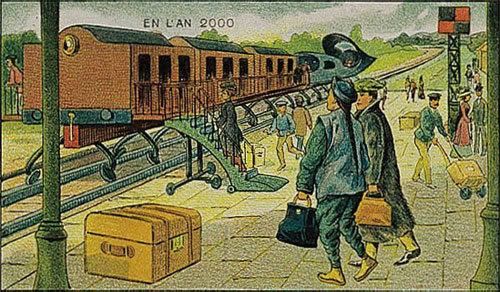
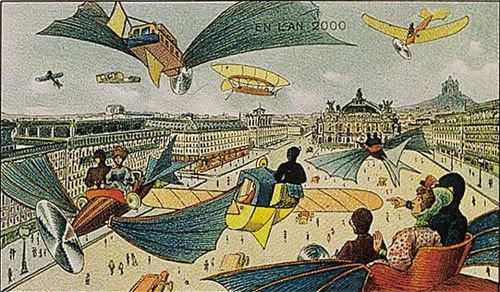
It would be wonderful...unless you are one of the trolls that is
Also big eyes 


Powered by: vBulletin
Copyright © 2000-2021, Jelsoft Enterprises Ltd.