
TranceAddict Forums (www.tranceaddict.com/forums)
- Production Studio
-- Dorian & Phrygian modes
Pages (2): [1] 2 »
Dorian & Phrygian modes
Musical theorists....i need your assistance 
Not good on scales/modes but learning bit by bit.
I know how to do Major scales/Minor scales - for minor scale, start on the root note, tone, semitone etc.. this applies no matter what the root note is, right?
What i was wondering was there are a pattern for Dorian/Phrygian modes in the same way? Or does it just depend on the root note all the time, something more complex?
there are a couple of useful bits on youtube, like this vid
he says this is a "white note scale" - does that apply to all root note positions? i.e. Would E Dorian use all white keys only?
Yes, the patterns of intervals for each of the Western modes are:
Ionian: T T S T T T S
Dorian: T S T T T S T
Phrygian: S T T T S T T
Lydian: T T T S T T S
Mixolydian: T T S T T S T
Aeolian: T S T T S T T
Locrian: S T T S T T T
T = Tone
S = Semitone
It doesn't matter which note you start on, the intervals are always the same for these modes. e.g., A Dorian:
A B C D E F# G [A]
Yays theory thread, i have the question for the grand masters. When making a track how do you pick a rote note and which type of instrument do you use to start it with? The bass? THe lead? Or idk i'm lost.
I'm sicking of having all my tracks in A#
I just put my hands on the keyboard and play.
Musicianship ftw.
Haha hell yea
What Geoff said.
Sometimes, I start with melody in my head, other times I start with a chord progression on the piano, other times I start with a guitar or bass. The important point, though, is that this is composition/songwriting, not theory. Plenty of musicians can write songs without employing a lot of music theory knowledge.
As for the key, it's pretty much semi-random for me. But, since I usually end up having vocals in my tracks, the key often gets transposed up or down to keep the melody in the singer's range, or we sometimes change the melody, if necessary, to keep the original key and make sure that it's within the singer's range. That said, if it's a pop/rock-song with real guitars and bass, I usually keep it in a key that's relatively easy to play - not many guitarists (esp. a hack like myself) like to play in Bb minor.
I see thanks for the input homies.
I'm not putting a downer on theory as it has it's uses, but a lot of those uses are describing what you're doing to somebody that already knows what they're doing.
Actually learning to read music and play an instrument is THE key to all this stuff, it just takes the longest to learn so most people don't bother.
One of my favorite ways to know the notes of scales I don't know, is to look in Animoog on iOS, if you go to the kb scale tab, you can pick the scale you want and it shows you the notes in that scale. Pretty handy. I know some theory, but I don't know every scale, and it can be useful to quickly learn the notes of scales I don't know to try to get different sounds I haven't tried before.
cryophonik is correct, the intervals are always the same. Here is a tool I made to help:
http://nickfever.com/music/scale-finder
A, and C are very popular keys. You could always transpose after you compose, or just pick one new key to learn and familiarize yourself with.
As far as where to start, it could be a bass line, melody or chord progression... sometimes even a drum loop. I would suggest not getting to tied to what you start with. It may evolve into something else. You may need to delete the part that you started with. "You may have to remove a good part to make a great song." (Can't remember who said that.) Anyhow, acceot that thatpart what a catalyst to get your creative juices flowing...
Summary, start with bass, chor progression or melody, and don't be afraid to remove parts.
HTH,
Nick
Re: Dorian & Phrygian modes
| quote: |
| Originally posted by evo8 he says this is a "white note scale" - does that apply to all root note positions? i.e. Would E Dorian use all white keys only? |
ive been learning Dominant V progs, and subdomninatn etc and 7th chords laately, check those out, good for house, Maj7 chords
There are a lot of handy little tools online to help you quickly get the notes in a specific scale.
Most of you wil know Chord House - Piano Room.
But there is one more which people might overlook � Wolfram|Alpha � which is very good IMO.
To use your example, E Dorian:
http://www.wolframalpha.com/input/?i=Dorian+mode+on+E
It�ll even show you the frequency of each note!
Wolfram|Alpha is a very powerful knowledge engine, which even has a whole section dedicated to music theory with some great examples:
http://www.wolframalpha.com/examples/MusicTheory.html
| quote: |
| Originally posted by cryophonik Yes, the patterns of intervals for each of the Western modes are: Ionian: T T S T T T S Dorian: T S T T T S T Phrygian: S T T T S T T Lydian: T T T S T T S Mixolydian: T T S T T S T Aeolian: T S T T S T T Locrian: S T T S T T T T = Tone S = Semitone It doesn't matter which note you start on, the intervals are always the same for these modes. e.g., A Dorian: A B C D E F# G [A] |

| quote: |
| Originally posted by nickfever cryophonik is correct, the intervals are always the same. Here is a tool I made to help: http://nickfever.com/music/scale-finder |
Cryo, what can you tell me about "B" Phrygian?
| quote: |
| Originally posted by TranceElevation Cryo, what can you tell me about "B" Phrygian? |
Do you know any famous track using it?
Btw, I'm curious what mode/scales are these two. They have kinda similar vibe.
| quote: |
| Originally posted by TranceElevation Do you know any famous track using it? |
| quote: |
| Originally posted by TranceElevation Btw, I'm curious what mode/scales are these two. They have kinda similar vibe. |
Hm..."Southern Sun" might actually be exactly in "B" Phrygian.
By playing on the keyboard while listening the song "B" definitely felt at home, but "F#" also. All the other black keys felt horrible. Seems "B" phrygian to me. But I'm not really good at it. If you have any free time and will would be great if you could confirm it.
edit: hm, but "F#" sounds so much at home also. Can't really tell honestly.
| quote: |
| Originally posted by TranceElevation Hm..."Southern Sun" might actually be exactly in "B" Phrygian. By playing on the keyboard while listening the song "B" definitely felt at home, but "F#" also. All the other black keys felt horrible. Seems "B" phrygian to me. But I'm not really good at it. If you have any free time and will would be great if you could confirm it. |
Yeah, the C# sounds completely out of place.
You know, I was curious cause what I noticed is that most of my projects (those I really care) have their melody all in Phrygian (B, E) or Aeolian mode (D mainly). I don't know what that might suggest you, but for some reason my soul is attracted to these modes/chords/melody.
Like, usually I work out my melodies from chord progressions and it turns out most of the time I end up on Phrygian or Aeolian mode. It just attracts me. It represents me in a way.
Most of the modes/scales sound too light or not enough deep/mysterious/enigmatic for my taste. Although have to say A minor is not bad as well, but those two are really representing me.
| quote: |
| Originally posted by TranceElevation Hm..."Southern Sun" might actually be exactly in "B" Phrygian. By playing on the keyboard while listening the song "B" definitely felt at home, but "F#" also. All the other black keys felt horrible. Seems "B" phrygian to me. But I'm not really good at it. If you have any free time and will would be great if you could confirm it. edit: hm, but "F#" sounds so much at home also. Can't really tell honestly. |

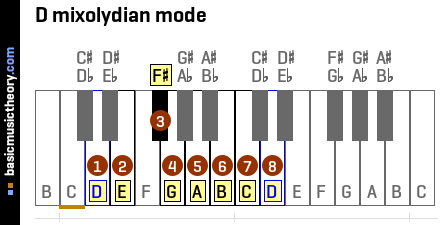
I cheat with a lot of this stuff myself.
You can use something like the schwarzinator or most piano roll interfaces to confine your note input to just about any scale you can think of. Then you can transpose between them freely to explore different options with respect to feel etc. Using a sound to midi tool like aubio, you can sing a melody from your head and get it into the computer with very little knowledge of instruments or theory and then whip out the chord tool of your choice to pick your favorite from a menu of possible harmonies. Sure, it is better to learn an instrument, but nobody is grading you so you may as while cheat in the meantime. Most of the shit I just mentioned is available legally for free.
What I generally start with is a melody or baseline in my head, I sing it into my machine then find a few scales that fit it. I use a chord helper to plop out some pads, then I extend my melody with variations that (mostly) fit within the chord structure. I play with the transpose a bit and then the musical part is done and it's on to knob twiddling.
If you absolutely must use commercial tools though, melodyne will map anything into notes, Cthulhu will let you cheat with chords, most sequencers let you highlight the portion of the piano roll that fits the scale of your choice.
yeah i use J74 Progressive, its a Max 4 Live plugin, helps with chord progressions and scales

Powered by: vBulletin
Copyright © 2000-2021, Jelsoft Enterprises Ltd.