|
Robby;
In trying to keep sound from traveling OUT of your studio, keep in mind that most of what your neighbors are hearing is, of course, bass.
That being said, rigid foams and lighter materials do nothing for stopping heavy bass frequencies. It's all about density and mass when it comes to stopping bass. Heavy sheet-rock (in multiple layers), the heaviest you can get, is part of what you need. Your idea for the double-wall construction is sound, but this is what you need to fill in the walls with (in addition to flexible foam for the high and some mid frequencies);
(click link-->>) Barrier
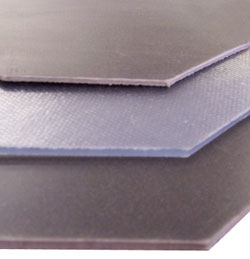
I was having the same problem you were having, and then I installed this stuff and it changed my life, lol. You attach it directly to the walls...pretty simple. Another version of it can also be laid on floors and attached to ceilings (see the website). Very effective.
It's not cheap! But the one thing you have to remember about sounds-proofing, is that there is no easy or cheap way to get quality sound-proofing in limited spaces. You're just going to have to bite the bullet and pay if you want to win this battle and be able to produce at home, the way you really want to (i.e., volume nice and high). This stuff is THIN, but dense, so it saves space, while giving maximum performance...especially compared to say; stuffing your walls with layers of old mattresses, etc.
Another thing to appreciate about good soundproofing is that once you install it, you'll never have to up-grade it...unlike most everything else in your studio! It will never de-value either, and you can always take it with you when you leave! (assuming you are willing to break it back out of the walls...which you may have to do anyway in order to put the home back the way it was).
Decoupling your studio room from the rest of the building is the rest of your goal. As was mentioned, if you can basically make a box (i.e., the room) that sits on isolation mounts (rubber, sand, etc.) up in that attic, then more than half your battle is over in terms of keeping sound from passing through the house's ceilings and walls. If you can't do all of this, then at least soundproof as heavily as possible with the barrier and sheet-rock. And don't forget to seal all the thin cracks and such in the corners, door seams, openings for pass-throughs, and where walls meet, etc., with some caulking! Most high frequency transmissions get in (or out) in this way.
But lastly, and this is VERY important; You'll need to get some solid advice from one of your relatives or their friends who is an Engineer about exactly how much weight those joists in the attic will hold, relative to your room's size and weight. Don't assume they can take whatever you can throw at them. They're already under a load that they WERE designed for, with some additional load from storage in the attic being factored in. But building a studio with this heavy barrier product, heavy layers of sheet-rock, etc...that's another story.
This is why most people build their studios in garages or basements. Cement floors solve SO many problems, lol. 
Good luck.
___________________
The thing about money? It makes you do things that you don't want to do
Last edited by donnybrasco on Dec-21-2007 at 23:55
|


