|
|
|
|
 |
cryophonik
Boom shanka

Registered: Jan 2008
Location: Elk Grove, CA USA
|
|
|
Re: Compression questions.
| quote: | Originally posted by Innocence Lost
Whats it mean to add or decrease gain input or output? |
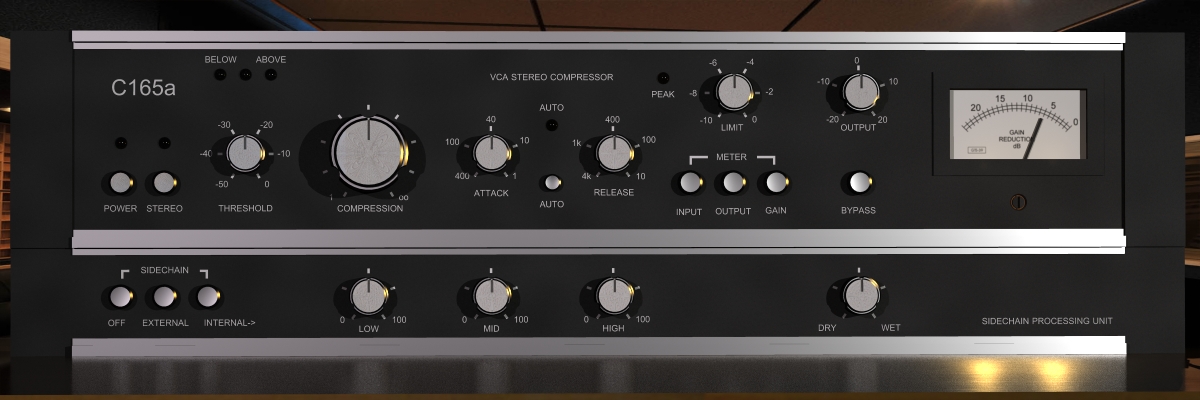
The input is simply how much of the uncompressed signal is going into the compressor. It will affect the way your compressor responds, so it can drastically affect the sound. Some compressors sound great when they're overdriven (high input gain), others not so much. The output is simply how much of the processed (i.e., compressed) signal is sent back out of the compressor. It's usually used for gain compensation - i.e., the compressor's job is to reduce the dynamic range of the signal, which results in a lower overall loudness, so the output gain can be used to compensate for that loss by turning to match the pre-compression loudness or balance in the mix.
| quote: | Originally posted by Innocence Lost
And here;s one general question, which type of compressor is best for letting digital drums sit in the mix? |
The one that sounds the best. 
Compression is a very program-dependent effect, so it can differ depending on the sound/balance of the drums. Personally, I tend to prefer SSL-style compression on drums.
___________________
cryophonik.com | facebook | soundcloud
Sonar Platinum | Ableton Live 9 | Logic Pro X | Access Virus TI2 Keyboard | Kurzweil PC3X | Nord Lead 4R | NI Maschine
|
|
 Feb-04-2015 00:07 Feb-04-2015 00:07 
|
|
|
|
|
DJ RANN
Supreme tranceaddict
Registered: May 2001
Location: Hollywood....
|
|
|
Everything Dave said is spot on.
For drums (especially dance music) you typically want hard knee settings. Some compressors do this better than others and I can't tell you what the softube one is like for that. Sometimes you want to drive the input gain as Dave suggested as it can sound great, but on others it can sound crap.
For vox and pads, you typically want slower, smoother compression and again you'll just have to play with it and see.
|
|
Feb-04-2015 17:53 
|
|
|
|
|
madmuso
Senior tranceaddict
Registered: Nov 2009
Location: Melbourne
|
|
|
Some comps have a threshold, and some have no threshold but rather an input knob to determine how much of the signal gets squahsed. Empirical labs distressor is a classic example of a comp with an input gain knob and no threshold knob. The output is a form of "make up gain".
The attack and release times for me are the most important settings.
Unlike automation, a compressor alters the signals ADSR envelope depepnding on the attack and release times you have set which can radiacly change the character of the audio.
Heres a tip I use all the time, in order to hear what the attack knob is doing more clearly, put the ratio really high 10:1 and above, set relase very fast. Make sure you got more than 10 db of gain reduction happening, the more the better in this case. Set the attack to its fastest setting, now play the audio and move the attack knob from fast to slow all the while listening to the front edge of the sound, you may have to crank the monitors a tad while doing this. Its a lot easier to hear the sweet spot like this, then you simply back off all the other settings to where they work for the part/song.
hope that helps, remember, quick release times can cause pumping which sometimes is wanted and sometimes not.
|
|
Feb-05-2015 11:03 
|
|
|
|
All times are GMT. The time now is 08:28.
Forum Rules:
You may not post new threads
You may not post replies
You may not edit your posts
|
HTML code is ON
vB code is ON
[IMG] code is ON
|
|
|
|
|
|
Contact Us - return to tranceaddict
Powered by: Trance Music & vBulletin Forums
Copyright ©2000-2026, Jelsoft Enterprises Ltd.
Privacy Statement / DMCA

|