|
In a nutshell...
and this is not to say that no one should be protesting, but if you're going to protest, at least have viable, alternative solutions...
| quote: |
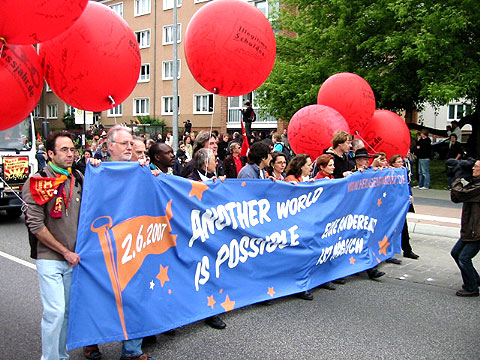
G-8 Protests Show Weaknesses of Activist Movements
By Jason Steck
In what is becoming a perennial ritual, protests at the G-8 summit have erupted into violence. While the majority of protesters remain peaceful, their crowds have served as a shield behind which violent radicals attack police and destroy property.
Supposedly, this is all in the name of a better, more just world. But a closer look at the protesters reveals little more than nihilism and narcissism.
On their face, anti-globalization protesters seem to point to genuine problems. The economic prosperity that is the calling card of globalization often affects only an elite few, with the majority of the population in developing countries left to deal with lifestyles that are radically altered but left without any significant new resources.
But to criticize the status quo alone is not enough. Alternatives are necessary to make real progress. And the anti-globalization movement, like many activist movements, shows serious weakness when asked to provide concrete ideas. The overarching slogan of the G-8 protests “another world is possible” begs the question of what that alternative world would look like and how it would function. Few details are offered, and they certainly are not available for assessment and critique. They hate capitalism, but they don’t defend any alternative. They defend the poor, but give no ideas on how to feed or employ them. They idolize the environment, but they are blind to the empirical record about where environmental protections are economically and politically possible (hint: socialist countries finish a distant second place). Instead, the protesters offer little more than a mish-mash assortment of activist groups, brought together under the vaguest possible umbrella to inflate their numbers and provide the largest possible turnout.
Once these problems are exposed, it is difficult not to see these massive protests as mere exercises in narcissism and nihilism, expressions of anger and, in some cases, blind rage bereft of serious intellectual content. Indeed, protests are becoming events, party-like atmospheres where basically the same groups of people get together to “protest” different issues. Today it is globalization, tomorrow it might be the Iraq war, the next the environment, and the next nuclear weapons.
When they have concrete proposals for alternatives, as with “orange revolution” protests in the Ukraine, protesters have found themselves able to obtain significant public support and to enact substantial, even revolutionary change. But when they lack proposals and embrace only the “it’s your problem to give alternatives”, protesters relegate themselves to the political margins as political adolescents unready for the responsibility of defining policy.
|
>>Source<<
___________________
"...End? No, the journey doesn't end here. Death is just another path...one that we all must take.
The grey rain-curtain of this world rolls back, and all change to silver glass...and then you see it...
...white shores...and beyond...the far green country under a swift sunrise."
|


