|
| quote: | Originally posted by Laux de par
yes !!! how disturbing.... who took it?
Will you give me a brief synopsis on the history of this photo ? |
Photojournalist Eddie Adams took careful portraits of U.S. presidents and world figures. But his best known work is one that was sudden and unglamorous: the 1968 killing of a Viet Cong captive in Vietnam.
Adams' picture of South Vietnam's police chief, Lt. Col. Nguyen Ngoc Loan, shooting the prisoner in the head on Feb. 1, 1968, would became one of the Vietnam War's most indelible images and one that shocked the American public.
Adams died Sunday at his Manhattan home from complications of amyotrophic lateral sclerosis, or Lou Gehrig's disease, said his assistant, Jessica Stuart. He was 71.
"Eddie Adams was an enormous talent and an inspiration to generations of AP photographers and staffers. His courage and creativity left a mark that will live forever," said AP President and CEO Tom Curley.
In addition to his photographs of 13 wars, Adams' images of politics, fashion and show business appeared on countless magazine covers and in newspapers around the world. His portraits of presidents ranged from Richard Nixon to President Bush, and those of world figures included Pope John Paul II, Deng Xiaoping, Anwar Sadat, Fidel Castro and Mikhail Gorbachev.
But fame instant, enduring and discomforting resulted from that single execution photograph taken on the embattled streets of Cholon Saigon's Chinese quarter during the communists' Tet Offensive.
Drawn by gunfire, Adams and an NBC film crew watched South Vietnamese soldiers bring a handcuffed Viet Cong captive to a street corner, where they assumed he would be interrogated. Instead, Loan, strode up, wordlessly drew a pistol and shot the man in the head.
In later years, Adams found himself so defined and haunted by the picture that he would not display it at his studio. He also felt it unfairly maligned Loan, who lived in Virginia after the war and died in 1998.
"The guy was a hero," Adams said, recalling Loan's explanation that the man he executed was a Viet Cong captain, responsible for murdering the family of Loan's closest aide a few hours earlier.
"Sometimes a picture can be misleading because it does not tell the whole story," Adams said in an interview for a 1972 AP photo book. "I don't say what he did was right, but he was fighting a war and he was up against some pretty bad people."
Adams won a 1969 Pulitzer Prize for the Saigon execution picture, among the more than 500 honors he received in his career, including a 1978 Robert Capa Award and three George Polk Memorial Awards for war coverage.
Adams served as a Marine Corps combat photographer in the Korean War and became one of the nation's top photojournalists with newspapers, the AP from 1962-72 and again from 1976-80, and with Time-Life, Parade magazine and other publications.
Adams had no social or political agenda, but was at heart "a hard-news photographer, always sharply focused on the picture that tells the story," said Hal Buell, AP's former executive photo editor.
"He was also a perfectionist who would go to the mat over anything he saw in the editing that he felt detracted from the story but he was most critical of himself, for opportunities missed or not up to the high standards he set," Buell said.
___________________
Retro ...

|


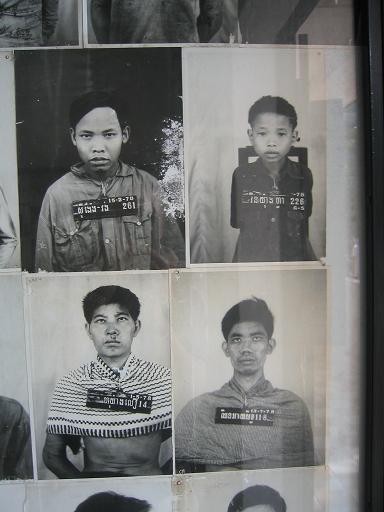


 sorry for the lack of info. the shooter is on the left side of pic, victim on right.


