|
*ahem*
Uh, Seventil, sorry to intervene here, but I'm kinda wonderin', are you really asking Tiesto14 these questions, even though we've thoroughly discussed 4 out of 5 of these already?
| quote: | Originally posted by Seventil
For the record, I believe these are a bit open to interpretation, but many prominent scientists think these are the scientific proofs against evolution: |
Well, just for the record, your term "many" is quite relative. Only 5% of scientists believe in a 10,000 yr. old or less earth:
http://www.religioustolerance.org/ev_publi.htm
and please keep in mind:
| quote: |
The "scientist" group would presumably include biologists and geologists. But it would also include persons with professional degrees in fields unrelated to evolution, such as computer science, chemical engineering, physics, etc. |
I also found this interesting:
| quote: | | "Bishop notes that these figures have remained remarkably stable over time. These questions were first asked about 15 years ago, and the percentages in each category are almost identical. Moreover, the profiles of each group has been constant. Just as when these questions were first asked 15 years ago, creationists continue to be older, less educated, Southern, politically conservative, and biblically literal (among other things). |
We did answer this, right? I specifically cited 2 examples already, and you conceded these. Are you know going back on what you've agreed to? Would that be a form of lying? Regardless, want some more?:
http://www.talkorigins.org/faqs/comdesc/
| quote: | | 2. Evolution violates the 2nd law of thermodynamics. |
Well know I thought that by your absence to my response, by default you agreed to my explanation about how evolution does nothing of the sort:
http://www.tranceaddict.com/forums/...2&pagenumber=14
Or at least you did not have a response just yet. Either way, it's rather disingenuous of you to pose this question again when we have already discussed this.
| quote: | | 3. There are no transitional fossils. |
Sure there are:
| quote: | 1.There are many transitional fossils. The only way that the claim of their absence may be remotely justified, aside from ignoring the evidence completely, is to redefine "transitional" as referring to a fossil which is a direct ancestor of one organism and a direct descendant of another. However, direct lineages are not required; they couldn't be verified even if found. What a transitional fossil is, in keeping with what the theory of evolution predicts, is a fossil which shows a mosaic of features from an older and a more recent organism.
2.Transitional fossils may coexist with gaps. We do not expect to find finely detailed sequences of fossils lasting for millions of years. Nevertheless, we do find several fine gradations of fossils between species and genera, and we find many other sequences between higher taxa that are still very well filled out.
Fossil transitions between species and genera:
a. Human ancestry. There are many fossils of human ancestors, and the differences between species are so gradual that it is not always clear where to draw the lines between them.
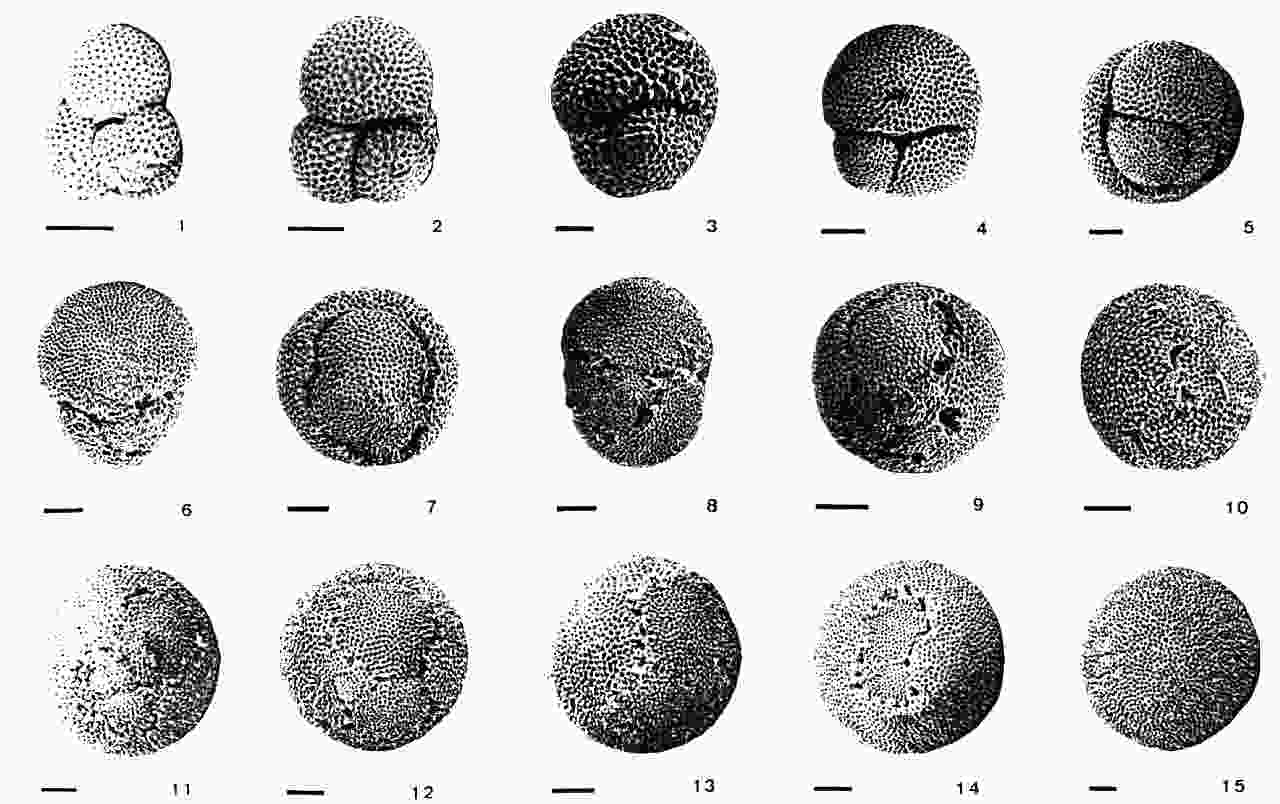
b. A gradual transitional fossil sequence connects the foraminifera Globigerinoides trilobus and Orbulina universa [Pearson et al. 1997]. O. universa, the later fossil, features a spherical test surrounding a "Globigerinoides-like" shell, showing that a feature is added, not lost. The evidence is seen in all major tropical ocean basins. Several intermediate morphospecies connect the two species, as may be seen in the figure included in Lindsay [1997].
c. The fossil record shows transitions between species of Phacops (a trilobite; Phacops rana is the Pennsylvania state fossil.). [Eldredge 1972; 1974; Strapple 1978]
d. Planktonic forminifera [Malmgren et al. 1984]. This is an example of "punctuated gradualism." A 10-million-year foraminifera fossil record shows long periods of stasis and other periods of relatively rapid but still gradual morphologic change.
e. Fossils of the diatom Rhizosolenia are very common (they are mined as diatomaceous earth), and they show a continuous record of almost 2 million years which includes a record of a speciation event. [Miller 1999, 44-45]
f. Lake Turkana mollusc species [Lewin 1981].
g. Cenozoic marine ostracodes [Cronin 1985].
h. The Eocene primate genus Cantius [Gingerich 1976, 1980, 1983].
i. Scallops of the genus Chesapecten show gradual change in one "ear" of their hinge over about 13 million years. The ribs also change. [Ward and Blackwelder 1975; Pojeta and Springer 2001]
j. The horns of titanotheres (extinct Cenozoic mammals) appear in progressively larger sizes, from nothing to prominence. Other head and neck features also evolved. These features are adaptations for head-on ramming analogous to sheep behavior. [Stanley 1974]
Fossil transitionals between families, orders, and classes:
a. Human ancestry. Australopithecus, though its leg and pelvis bones show it walked upright, had a bony ridge on the forearm, probably vestigial, indicative of knuckle walking. [Richmond and Strait 2000]
b. Dinosaur-bird transitions.
c. Haasiophis terrasanctus is a primitive marine snake with well-developed hind limbs. Although other limbless snakes might be more ancestral, this fossil shows a relationship of snakes with limbed ancestors [Tchernov et al. 2000]. Pachyrhachis is another snake with legs related to Haasiophis [Caldwell and Lee 1997].
d. The jaws of mososaurs are also intermediate between snakes and lizards. Like the snake's stretchable jaws, they have highly flexible lower jaws, but, unlike snakes, they don't have highly flexible upper jaws. Some other skull features of mososaurs are intermediate between snakes and primitive lizards. [Lee et al. 1999; Tchernov et al. 2000; Caldwell and Lee 1997]
e. Transitions between mesonychids and whales.
f. Transitions between fish and tetrapods.
g. Transitions from condylarths (a kind of land mammal) to fully aquatic modern manatees. In particular, Pezosiren portelli is clearly a sirenian, but its hind limbs and pelvis are unreduced [Domning 2001a, 2001b].
Fossil transitionals between kingdoms and phyla:
a. The Cambrian fossils Halkiera and Wiwaxia have features which connect them with each other and with the modern phyla of Mollusca, Brachiopoda, and Annelida. In particular, one species of halkieriid has brachiopod-like shells on the dorsal side at each end. This is seen also in an immature stage of the living brachiopod species Neocrania. It has setae identical in structure to polychaetes, a group of annelids. Wiwaxia and Halkiera have the same basic arrangement of hollow sclerites, an arrangement which is similar to the chaetae arrangement of polychaetes. The undersurface of Wiwaxia has a soft sole like a mollusc's foot, and its jaw looks like a mollusc's mouth. Aplacophorans, which are a group of primitive molluscs, have a soft body covered with spicules similar to the sclerites of Wiwaxia. [Conway Morris 1998, 185-195]
b. Cambrian and Precambrain fossils Anomalocaris and Opabinia are transitional between arthropods and lobopods.
Links:
Hunt, Kathleen, 1994-1997. Transitional vertebrate fossils FAQ. http://www.talkorigins.org/faqs/faq-transitional.html
Thompson, Tim, 1999. On creation science and transitional fossils. http://www.tim-thompson.com/trans-fossils.html
Miller, Keith B., n.d., Taxonomy, transitional forms, and the fossil record. http://www.asa3.org/ASA/resources/Miller.html
Patterson, Bob, 2002. Transitional fossil species and modes of speciation. http://www.origins.tv/darwin/transitionals.htm
References:
Caldwell, M. W. and M. S. Y. Lee, 1997. A snake with legs from the marine Cretaceous of the Middle East. Nature 386: 705-709.
Conway Morris, Simon, 1998. The Crucible of Creation, Oxford University Press.
Cronin, T. M., 1985. Speciation and stasis in marine ostracoda: climatic modulation of evolution. Science 227: 60-63.
Domning, Daryl P., 2001a. The earliest known fully quadupedal sirenian. Nature 413: 625-627.
Domning, Daryl P., 2001b. New "intermediate form" ties seacows firmly to land. Reports of the National Center for Science Education 21(5-6): 38-42.
Eldredge, Niles, 1972. Systematics and evolution of Phacops rana (Green, 1832) and Phacops iowensis Delo, 1935 (Trilobita) from the Middle Devonian of North America. Bulletin of the American Museum of Natural History 147(2): 45-114.
Eldredge, Niles, 1974. Stability, diversity, and speciation in Paleozoic epeiric seas. Journal of Paleontology 48(3): 540-548.
Gingerich, P. D., 1976. Paleontology and phylogeny: Patterns of evolution of the species level in early Tertiary mammals. American Journal of Science 276(1): 1-28.
Gingerich, P. D., 1980. Evolutionary patterns in early Cenozoic mammals. Annual Review of Earth and Planetary Sciences 8: 407-424.
Gingerich, P. D., 1983. Evidence for evolution from the vertebrate fossil record. Journal of Geological Education 31: 140-144.
Lee, Michael S. Y., Gorden L. Bell Jr. and Michael W. Caldwell, 1999. The origin of snake feeding. Nature 400: 655-659.
Lewin, R., 1981. No gap here in the fossil record. Science 214: 645-646.
Lindsay, Don, 1997. A smooth fossil transition: Orbulina, a foram. http://www.don-lindsay-archive.org/...n/orbulina.html
Malmgren, B. A., W. A. Berggren and G. P. Lohmann, 1984. Species formation through punctuated gradualism in planktonic foraminifera. Science 225: 317-319.
Miller, Kenneth R., 1999. Finding Darwin's God. New York: HarperCollins.
Pearson, P. N., N. J. Shackleton and M. A. Hall. 1997. Stable isotopic evidence for the sympatric divergence of Globigerinoides trilobus and Orbulina universa (planktonic foraminifera). Journal of the Geological Society, London 154: 295-302.
Richmond B. G. and D. S. Strait, 2000. Evidence that humans evolved from a knuckle-walking ancestor. Nature 404: 382-385. See also Collard, M. and L. C. Aiello, 2000. From forelimbs to two legs. Nature 404: 339-340.
Stanley, Steven M., 1974. Relative growth of the titanothere horn: A new approach to an old problem. Evolution 28: 447-457.
Strapple, R. R., 1978. Tracing three trilobites. Earth Science 31(4): 149-152.
Tchernov, E. et al., 2000. A fossil snake with limbs. Science 287: 2010-2012. See also Greene, H. W. and D. Cundall, 2000. Limbless tetrapods and snakes with legs. Science 287: 1939-1941.
Ward, L. W. and B. W. Blackwelder, 1975. Chesapecten, A new genus of
Pectinidae (Mollusca: Bivalvia) from the Miocene and Pliocene of eastern North America. U.S. Geological Survey Professional Paper 861.
Further Reading:
Godfrey, L. R., 1983. Creationism and gaps in the fossil record. In:
Godfrey, L. R. (ed.), Scientists Confront Creationism, New York: W. W. Norton, pp. 193-218.
Zimmer, Carl, 2000. In search of vertebrate origins: Beyond brain and bone. Science 287: 1576-1579.
Cuffey, Clifford A., 2001. The fossil record: Evolution or "scientific creation". http://www.gcssepm.org/special/cuffey_00.htm or http://www.nogs.org/cuffeyart.html
Strahler, Arthur N., 1987. Science and Earth History, Buffalo, NY: Prometheus Books, pp. 398-400.
Pojeta, John Jr. and Springer, Dale A., 2001. Evolution and the Fossil Record, Alexandria, VA: American Geological Institute, http://www.agiweb.org/news/spot_06apr01_evolutionbk.htm , http://www.agiweb.org/news/evolution.pdf , pg. 2.
Cohn, Martin J. and Cheryll Tickle, 1999. Developmental basis of limblessness and axial patterning in snakes. Nature 399: 474-479. (technical)
Morton, Glenn R., 2000. Phylum level evolution. http://home.entouch.net/dmd/cambevol.htm
Elsberry, Wesley R., 1995. Transitional fossil challenge. http://www.rtis.com/nat/user/elsber...p/tranform.html
http://www.talkorigins.org/indexcc/CC/CC200.html |
| quote: | | 4. The theory of evolution says that life originated, and evolution proceeds, by random chance. (Abiogenesis) |
Huh?
http://www.tranceaddict.com/forums/...2&pagenumber=15
You agreed to what I stated in the first paragraph. You have agreed that abiogenesis is not a part of evolution. By posting this question you are again being disingenuous in your arguments.
Why do you persist in doing so?
Regardless, even if you didn't agree with me here, it's quite irrelevant. You will not find one evolutionist researcher that takes abiogenesis into account into evolutionary theory. Thus, the argument by trueorigins has always been a straw man, and you have continued to support it.
| quote: | | 5. Evolution is only a theory; it hasn’t been proved. |
Now I know we discussed this:
http://www.tranceaddict.com/forums/...2&pagenumber=13
And I continually repeated how evolution is both a fact (we can observe certain instances, like my 2 examples) and a theory (best explanation of accumulated events over time). And you agreed to my definition on this.
Are you now backing off your agreement. Why or why not? If you are, why wouldn't you state as such?
I hope you can understand why I'm rather discouraged at this point with this whole debate. I really don't understand why you persist at repeating the same claims, even though we've discussed and actually agreed to a coupla refutations to a number of them.
What gives?
___________________
Whence September dusk grows crisper still,
with leaves all crimson conquered,
I yearn to shout,
and dance about,
and stick pickles in my honker...
|