|
|
|
|
 |
ShadoWolf
ISOS

Registered: Apr 2002
Location: State of Trance
|
|
|
 Dec-04-2004 17:30 Dec-04-2004 17:30 
|
|
|
|
|
Dunya
Senior tranceaddict

Registered: Jan 2004
Location: antwerpen
|
|
|
Dec-04-2004 17:37 
|
|
|
|
|
|
|
|
|
|
|
ShadoWolf
ISOS
Registered: Apr 2002
Location: State of Trance
|
|
|
| quote: | Originally posted by Radagast
T3h Crusades? |
They were defensive.
http://www.geocities.com/CapitolHill/6981/defense.htm
The Crusades: A Defensive Gesture
Popular perceptions paint the Crusades as an act of Christian aggression toward as alien Eastern culture. Although the desire to enrich Europe with captured plunder and lands, and the desire to spread the faith of Christianity were two important catalysts to the declaration of the Crusades, they were not the actual reasons that motivated these wars. Pope Urban II officially declared the First Crusade on Tuesday, November 27, 1095, with the goal of liberating the land formerly held by the Christians; and the liberation of oppressed Christians in the Middle East. Urban's declaration shows that the Crusades were not an aggressive venture by the Europeans, but rather a defensive move to count what they perceived as a looming threat to their lands and their faith.
Eastern aggression indirectly led to Pope Urban's declaration. After the death of Mohammed, Arab armies began successfully invading other nations. The Koran condemns aggressive acts of warfare, however, and a justification for these violations of Mohammed's principles was needed. Muslim jurists formed the concept of the jihad, or holy struggle, as the sought-after justification. The jihad's objective was to conquer the rest of the non-Muslim world "so that the world could reflect the divine unity [of God]" (Holy War, p. 40).
Under jihad, Arabs "conquered Palestine, Syria, Mesopotamia, and Egypt" (Infopedia, Byzantium). Constantinople survived two sieges, one in the 670s and another in 717-718. After the decline of the influential Abassids, the more belligerent Seljuk dynasty dominated in the 11th and 12th centuries. The Seljuks converted to Islam in the 10th century and controlled most of Iran and Iraq under Togrul Beg (c. 990-1063). Togrul's successors, Alp Arslan (c. 1029-1072) and Malik Shah (1055-1092) extended the Seljuk empire into Syria and Palestine. In 1071, Arslan conducted a campaign that resulted in the battle of Manzikert, where he routed the Byzantines. The battle of Manzikert "was the indirect cause of the Crusades" (The First Crusade, p. 28), heralding Byzantium's loss of control in Asia Minor. This loss of control "lay behind the appeal to the West in 1095" (The Crusades, p. 2). For the next ten years, Byzantium was in chaos and unable to counter the Turks. Then Emperor Alexius I of Byzantium ascended to the throne and waited for a suitable time to launch a counter-offensive against the Turks. By 1095, Alexius was ready to attack the Turks, but he desperately needed soldiers for his army. Alexius decided to send envoys to Urban's Council at Piacenza, who appealed to the assembled bishops and to the Pope to "send members of their flocks eastward to fight for their faith" (The First Crusade, p. 40). It is said that Urban told his audience that "a grave report has come from the lands around Jerusalem and from the city of Constantinople" (The Cross and the Crescent, p. 18), referring to Alexius' request for aid. Urban also stated that
'. . . a people from the kingdom of the Persians, a foreign race, a race absolutely alien to God . . . has invaded the land of those Christians, has reduced the people with sword, rapine and flame. . .' (The Cross and the Crescent, p. 18)
Clearly, Muslim aggression acted as a catalyst to Urban's declaration.
The rapid spread of Islam was another impetus to the Crusades. As fellow monotheists, Christians were considered a "People of the Book". Christians remained unharmed during the Muslim expansion, but occasionally were restricted by prohibitive taxes and laws. Many Christians eventually converted to Islam, due to the advantages of being a member of the ruling religions. These Christians were also attracted to a religion whose "theology was far simpler" (Holy War, p. 44), and one that nurtured "a new culture of great power and beauty" (Holy War, p. 45). Within a century of their conquest, Syria and Palestine were mostly Islamic nations. These conversions acted as the justification for the concept of jihad, feeding the need for Arab expansionism. In time, Muslims dropped the doctrine of jihad and developed trading and diplomatic contacts with non-Muslim nations. By then, the rapid spread of Islam was viewed with anxiety by the Christians.
To the Christians, Islam was absorbing Christianity with an alarming speed, "conquering countries which had been strongly Christians with ease" (Holy War, p. 42). A paranoia arose, with the jihad becoming "a bogey in the West for centuries" (Holy War, p. 42). This paranoia is exemplified best by Edward Gibbon's account of Sultan Abd al-Rahman's defeat at the "Battle of Poitiers" by Charles Martel in 732:
. . . the Rhine is not more impassable than the Nile or the Euphrates, and the Arabian fleet might have sailed without a naval combat into the mouth of the Thames. Perhaps the interpretation of the Koran would now be taught in the schools of Oxford, and her pulpits might demonstrate to a circumcised people the sanctity and truth of the revelation of Mahomet. From such calamities was Christendom delivered by the genius and fortune of one man [Martel]. (Holy War, p. 42)
Gibbon seemed to have been under the belief the al-Rahman's intention was a continuation of the jihad, which was false. The Sultan "had been invited into Christendom by Eudo, Duke of Aquitaine" (Holy War, p. 42), and had no intention of continuing the jihad or conquering Europe. Muslim historians only refer to the "Battle of Poitiers" in passing, referring "to it as an unfortunate but unimportant little raid" (Holy War, p. 42). The disparity between the two sides show that the Christians were wary of the burgeoning success of Islam. Urban himself denounced the conversions at Clermont, saying how the Muslims "enslaved them [Christian churches/people] to the practice of its own rites" (The Cross and the Crescent, p.18). The spread of Islam was another catalyst that prompted Urban to declare the First Crusade.
Paired with the defense of the faith was the defense of the people themselves. Christians in Muslim-dominated areas were restricted by taxes and regulatory laws. There were occasionally skirmishes between Muslims and their Christian subjects, and lurid reports would inevitably make their way to Europe. Urban coupled the defense of the people with the defense of Jerusalem itself, and proceeded to bolster the First Crusade with it. Urban appealed to the people at Clermont, detailing how
'. . . [the Muslim] has invaded the land of those Christians, has reduced the people with sword, rapine, and flame and has carried off some as captives to its own land, has cut down others by pitiable murder. . .'(The Cross and the Crescent, p. 18)
To Urban, the lands of the Middle East and the people of the Middle East were the property of the church, to be defended from the Muslims.
The Crusades were fostered in a climate of concern over the loss of Christian lands and people. The insurgencies upon Byzantium stirred the call to arms, the rapid rise of Islamic converts roused the indignation of Christian Europe, and the tales of persecution of Christians shocked the Christians. These were the reasons Pope Urban II used when he declared the First Crusade. Thus, the Crusades were a defensive counter to Eastern expansion, rather than an aggressive expansion.
"Deus hoc vult!"
Bibliography
* Armstrong, Karen. Holy War. Bantam Doubleday Dell Publishing Group Inc. 1991
* Billings, Malcolm. The Cross and the Crescent. Sterling Publishing Company Inc. 1987 (in US, 1990)
* Infopedia Encyclopedia CD-ROM. Future Vision Holding Inc. 1995
* Riley-Smith, Jonathan. The Crusades. BookCrafters, Inc. 1987
* Runchman, Steven. The First Crusade. Press Syndicate of the University of Cambridge. 1991
___________________
 Nathan Fake - Outhouse (Valentino Kanzyani Remix) || ID PLZ! PVD ID!!! Nathan Fake - Outhouse (Valentino Kanzyani Remix) || ID PLZ! PVD ID!!!
Disco and classical had sex while watching a sci-fi movie. Their child: trance.
|
|
|
Dec-04-2004 18:06
|
|
|
|
|
ShadoWolf
ISOS
Registered: Apr 2002
Location: State of Trance
|
|
|
http://www.nationalreview.com/comme...rint110201.html
Crusade Propaganda
The abuse of Christianity’s holy wars.
By Thomas F. Madden, the author of A Concise History of the Crusades and coauthor of The Fourth Crusade, is associate professor and chair of the Department of History at Saint Louis University in St. Louis, Missouri.
November 2, 2001 8:00 a.m.
ince September 11 the crusades are news. When President Bush used the term "crusade" as it is commonly used, to denote a grand enterprise with a moral dimension, the media pelted him for insensitivity to Muslims. (Nevermind that the media used the term in precisely the same way before the "gaff.") Attempting to capitalize on this indignation, the leader of the Taliban, Mullah Omar, crowed "President Bush has told the truth that this is a crusade against Islam." Yet clearly the crusades were much on the minds of our enemies long before Bush brought them to their attention. In a 1998 manifesto, cosigned by the leaders of Islamist groups in Egypt, Pakistan, and Bangladesh, Osama bin Laden declared war against the "Jews and the Crusaders." If you didn't guess, the Americans are the crusaders here. On the day the U.S. strikes on Afghanistan began, in a live-from-a-cave address, bin Laden declared Bush to be "the leader of the infidels" in a worldwide war against Islam. He previously warned that "crusader" Bush would lead the infidel forces into Afghanistan "under the banner of the cross."
So, what do the medieval crusades have to do with all this? After all, doesn't the Muslim world have a right to be upset about the legacy of the crusades? Nothing and no.
The crusades are quite possibly the most misunderstood event in European history. Ask a random American about them and you are likely to see a face wrinkle in disgust, or just the blank stare that is usually evoked by events older than six weeks. After all, weren't the crusaders just a bunch of religious nuts carrying fire and sword to the land of the Prince of Peace? Weren't they cynical imperialists seeking to carve out colonies for themselves in faraway lands with the blessings of the Catholic Church? A couch potato watching the BBC/A&E documentary on the crusades (hosted by Terry Jones of Monty Python fame no less) would learn in roughly four hours of frivolous tsk-tsk-ing that the peaceful Muslim world actually learned to be warlike from the barbaric western crusaders. No wonder, then, that Pope John Paul II was excoriated for his refusal to apologize for the crusades in 1999. No wonder that a year ago Wheaton College in Illinois dropped their Crusader mascot of 70 years. No wonder that hundreds of Americans and Europeans recently marched across Europe and the Middle East begging forgiveness for the crusades from any Muslim or Jew who would listen. No wonder.
Now put this down in your notebook, because it will be on the test: The crusades were in every way a defensive war. They were the West's belated response to the Muslim conquest of fully two-thirds of the Christian world. While the Arabs were busy in the seventh through the tenth centuries winning an opulent and sophisticated empire, Europe was defending itself against outside invaders and then digging out from the mess they left behind. Only in the eleventh century were Europeans able to take much notice of the East. The event that led to the crusades was the Turkish conquest of most of Christian Asia Minor (modern Turkey). The Christian emperor in Constantinople, faced with the loss of half of his empire, appealed for help to the rude but energetic Europeans. He got it. More than he wanted, in fact.
Pope Urban II called the First Crusade in 1095. Despite modern laments about medieval colonialism, the crusade's real purpose was to turn back Muslim conquests and restore formerly Christian lands to Christian control. The entire history of the crusades is one of Western reaction to Muslim advances. The crusades were no more offensive than was the American invasion of Normandy. As it happened, the First Crusade was amazingly, almost miraculously, successful. The crusaders marched hundreds of miles deep into enemy territory and recaptured not only the lost cities of Nicaea and Antioch, but in 1099 Jerusalem itself.
The Muslim response was a call for jihad, although internal divisions put that off for almost fifty years. With great leaders like Nur ed-Din and Saladin on the Muslim side and Richard the Lionheart and St. Louis IX on the Christian side, holy war was energetically waged in the Middle East for the next century and a half. The warriors on both sides believed, and by the tenets of their respective religions were justified in believing, that they were doing God's work. History, though, was on the side of Islam. Muslim rulers were becoming more, not less powerful. Their jihads grew in strength and effectiveness until, in 1291, the last remnants of the crusaders in Palestine and Syria were wiped out forever.
But that was not the end of the crusades, nor of jihad. Islamic states like Mamluk Egypt continued to expand in size and power. It was the Ottoman Turks, though, that built the largest and most awesome state in Muslim history. At its peak in the sixteenth century, the Ottoman Empire encompassed all of North Africa, the Near East, Arabia, and Asia Minor and had plunged deep into Europe, claiming Greece, Bulgaria, Albania, Hungary, Croatia, and Serbia. Under Suleiman the Magnificent the Turks came within a hair's breadth of capturing Vienna, which would have left all of Germany at their mercy. At that point crusades were no longer waged to rescue Jerusalem, but Europe itself. Christendom had been shrinking for centuries. The smart money was all on Islam as the wave of the future.
Of course, that is not how it turned out. But surprisingly the rise of the West was not the result of any military victory against Muslims. Indeed, the Ottoman Empire survived largely intact until the end of World War I. Instead, something completely new and totally unpredictable was happening in Europe. A new civilization, built on the old to be sure, was forming around ideas like individualism and capitalism. Europeans expanded on a global scale, leaving behind the Mediterranean world, seeking to understand and explore the entire planet. Great wealth in a commercial economy led to a fundamental change in almost every aspect of Western life, culminating in industrialization. The Enlightenment turned Western attention away from Heaven and toward the things of this world. Soon religion in the West became simply a matter of personal preference. Crusades became unthinkable — a foolishness of a civilization's childhood.
As for the Islamic world, it was left behind. Even today Muslim countries struggle to catch up. It is a difficult task, for they are seeking to reconcile their own culture with modern concepts that are uniquely western. Invariably this tension has led to charges among Muslims that their religion and their world is being sold out. Those Muslim leaders who have dealt with the West have been labeled apostates and sometimes targeted by jihad warriors. Indeed, the vast majority of Islamist terrorism over the last century has been aimed at other Muslims. The division, starkly put, is between those who wish to adopt the benefits of Western culture while retaining a devotion to Islam and those who consider any concession to the West to be an abjuration of faith. In short, it is a division between the medieval and the modern worlds.
Which brings us back to the crusades. If the Muslims won the crusades (and they did), why the anger now? Shouldn't they celebrate the crusades as a great victory? Until the nineteenth century that is precisely what they did. It was the West that taught the Middle East to hate the crusades. During the peak of European colonialism, historians began extolling the medieval crusades as Europe's first colonial venture. By the 20th century, when imperialism was discredited, so too were the crusades. They haven't been the same since. In other words, Muslims in the Middle East — including bin Laden and his creatures — know as little about the real crusades as Americans do. Both view them in the context of the modern, rather than the medieval world. The truth is that the crusades had nothing to do with colonialism or unprovoked aggression. They were a desperate and largely unsuccessful attempt to defend against a powerful enemy.
That's the thing about bin Laden, he is a troublesome mix of the modern and the medieval. He and his lieutenants regularly fulminate about the "nation," a reference to a Muslim political unity that died in the seventh century. They evoke an image of the crusades colored with the legacy of modern imperialism. And they call for jihad, demanding that every Muslim in the world take part. In short, they live in a dream world, a desert cloister where the last thousand years only partially happened.
___________________
Nathan Fake - Outhouse (Valentino Kanzyani Remix) || ID PLZ! PVD ID!!!
Disco and classical had sex while watching a sci-fi movie. Their child: trance.
|
|
|
Dec-04-2004 18:10
|
|
|
|
|
Dunya
Senior tranceaddict
Registered: Jan 2004
Location: antwerpen
|
|
|
| quote: | Originally posted by ShadoWolf
http://www.nationalreview.com/comme...rint110201.html
Crusade Propaganda
The abuse of Christianity’s holy wars.
By Thomas F. Madden, the author of A Concise History of the Crusades and coauthor of The Fourth Crusade, is associate professor and chair of the Department of History at Saint Louis University in St. Louis, Missouri.
November 2, 2001 8:00 a.m.
ince September 11 the crusades are news. When President Bush used the term "crusade" as it is commonly used, to denote a grand enterprise with a moral dimension, the media pelted him for insensitivity to Muslims. (Nevermind that the media used the term in precisely the same way before the "gaff.") Attempting to capitalize on this indignation, the leader of the Taliban, Mullah Omar, crowed "President Bush has told the truth that this is a crusade against Islam." Yet clearly the crusades were much on the minds of our enemies long before Bush brought them to their attention. In a 1998 manifesto, cosigned by the leaders of Islamist groups in Egypt, Pakistan, and Bangladesh, Osama bin Laden declared war against the "Jews and the Crusaders." If you didn't guess, the Americans are the crusaders here. On the day the U.S. strikes on Afghanistan began, in a live-from-a-cave address, bin Laden declared Bush to be "the leader of the infidels" in a worldwide war against Islam. He previously warned that "crusader" Bush would lead the infidel forces into Afghanistan "under the banner of the cross."
So, what do the medieval crusades have to do with all this? After all, doesn't the Muslim world have a right to be upset about the legacy of the crusades? Nothing and no.
The crusades are quite possibly the most misunderstood event in European history. Ask a random American about them and you are likely to see a face wrinkle in disgust, or just the blank stare that is usually evoked by events older than six weeks. After all, weren't the crusaders just a bunch of religious nuts carrying fire and sword to the land of the Prince of Peace? Weren't they cynical imperialists seeking to carve out colonies for themselves in faraway lands with the blessings of the Catholic Church? A couch potato watching the BBC/A&E documentary on the crusades (hosted by Terry Jones of Monty Python fame no less) would learn in roughly four hours of frivolous tsk-tsk-ing that the peaceful Muslim world actually learned to be warlike from the barbaric western crusaders. No wonder, then, that Pope John Paul II was excoriated for his refusal to apologize for the crusades in 1999. No wonder that a year ago Wheaton College in Illinois dropped their Crusader mascot of 70 years. No wonder that hundreds of Americans and Europeans recently marched across Europe and the Middle East begging forgiveness for the crusades from any Muslim or Jew who would listen. No wonder.
Now put this down in your notebook, because it will be on the test: The crusades were in every way a defensive war. They were the West's belated response to the Muslim conquest of fully two-thirds of the Christian world. While the Arabs were busy in the seventh through the tenth centuries winning an opulent and sophisticated empire, Europe was defending itself against outside invaders and then digging out from the mess they left behind. Only in the eleventh century were Europeans able to take much notice of the East. The event that led to the crusades was the Turkish conquest of most of Christian Asia Minor (modern Turkey). The Christian emperor in Constantinople, faced with the loss of half of his empire, appealed for help to the rude but energetic Europeans. He got it. More than he wanted, in fact.
Pope Urban II called the First Crusade in 1095. Despite modern laments about medieval colonialism, the crusade's real purpose was to turn back Muslim conquests and restore formerly Christian lands to Christian control. The entire history of the crusades is one of Western reaction to Muslim advances. The crusades were no more offensive than was the American invasion of Normandy. As it happened, the First Crusade was amazingly, almost miraculously, successful. The crusaders marched hundreds of miles deep into enemy territory and recaptured not only the lost cities of Nicaea and Antioch, but in 1099 Jerusalem itself.
The Muslim response was a call for jihad, although internal divisions put that off for almost fifty years. With great leaders like Nur ed-Din and Saladin on the Muslim side and Richard the Lionheart and St. Louis IX on the Christian side, holy war was energetically waged in the Middle East for the next century and a half. The warriors on both sides believed, and by the tenets of their respective religions were justified in believing, that they were doing God's work. History, though, was on the side of Islam. Muslim rulers were becoming more, not less powerful. Their jihads grew in strength and effectiveness until, in 1291, the last remnants of the crusaders in Palestine and Syria were wiped out forever.
But that was not the end of the crusades, nor of jihad. Islamic states like Mamluk Egypt continued to expand in size and power. It was the Ottoman Turks, though, that built the largest and most awesome state in Muslim history. At its peak in the sixteenth century, the Ottoman Empire encompassed all of North Africa, the Near East, Arabia, and Asia Minor and had plunged deep into Europe, claiming Greece, Bulgaria, Albania, Hungary, Croatia, and Serbia. Under Suleiman the Magnificent the Turks came within a hair's breadth of capturing Vienna, which would have left all of Germany at their mercy. At that point crusades were no longer waged to rescue Jerusalem, but Europe itself. Christendom had been shrinking for centuries. The smart money was all on Islam as the wave of the future.
Of course, that is not how it turned out. But surprisingly the rise of the West was not the result of any military victory against Muslims. Indeed, the Ottoman Empire survived largely intact until the end of World War I. Instead, something completely new and totally unpredictable was happening in Europe. A new civilization, built on the old to be sure, was forming around ideas like individualism and capitalism. Europeans expanded on a global scale, leaving behind the Mediterranean world, seeking to understand and explore the entire planet. Great wealth in a commercial economy led to a fundamental change in almost every aspect of Western life, culminating in industrialization. The Enlightenment turned Western attention away from Heaven and toward the things of this world. Soon religion in the West became simply a matter of personal preference. Crusades became unthinkable — a foolishness of a civilization's childhood.
As for the Islamic world, it was left behind. Even today Muslim countries struggle to catch up. It is a difficult task, for they are seeking to reconcile their own culture with modern concepts that are uniquely western. Invariably this tension has led to charges among Muslims that their religion and their world is being sold out. Those Muslim leaders who have dealt with the West have been labeled apostates and sometimes targeted by jihad warriors. Indeed, the vast majority of Islamist terrorism over the last century has been aimed at other Muslims. The division, starkly put, is between those who wish to adopt the benefits of Western culture while retaining a devotion to Islam and those who consider any concession to the West to be an abjuration of faith. In short, it is a division between the medieval and the modern worlds.
Which brings us back to the crusades. If the Muslims won the crusades (and they did), why the anger now? Shouldn't they celebrate the crusades as a great victory? Until the nineteenth century that is precisely what they did. It was the West that taught the Middle East to hate the crusades. During the peak of European colonialism, historians began extolling the medieval crusades as Europe's first colonial venture. By the 20th century, when imperialism was discredited, so too were the crusades. They haven't been the same since. In other words, Muslims in the Middle East — including bin Laden and his creatures — know as little about the real crusades as Americans do. Both view them in the context of the modern, rather than the medieval world. The truth is that the crusades had nothing to do with colonialism or unprovoked aggression. They were a desperate and largely unsuccessful attempt to defend against a powerful enemy.
That's the thing about bin Laden, he is a troublesome mix of the modern and the medieval. He and his lieutenants regularly fulminate about the "nation," a reference to a Muslim political unity that died in the seventh century. They evoke an image of the crusades colored with the legacy of modern imperialism. And they call for jihad, demanding that every Muslim in the world take part. In short, they live in a dream world, a desert cloister where the last
thousand years only partially happened. |
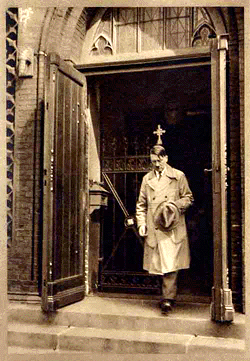
Shut up you stupid Italian Nazie companion. You are a misformed human with a huge mental disability.I don't pay attention to this kind of donkies.

___________________

|
|
|
Dec-04-2004 18:31
|
|
|
|
|
| |
All times are GMT. The time now is 08:09.
Forum Rules:
You may not post new threads
You may not post replies
You may not edit your posts
|
HTML code is ON
vB code is ON
[IMG] code is ON
|
|
|
|
|
|
Contact Us - return to tranceaddict
Powered by: Trance Music & vBulletin Forums
Copyright ©2000-2026, Jelsoft Enterprises Ltd.
Privacy Statement / DMCA

|


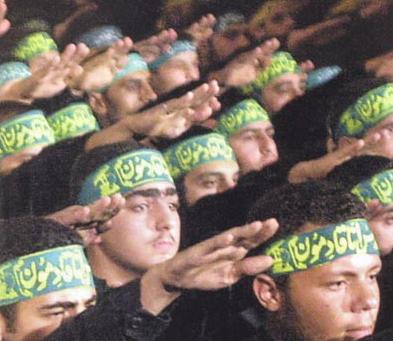
 at shadowolf three finger salut.
 .
.