|
|
|
|
 |
|
|
|
2rip
Suspended User

Registered: May 2004
Location: Washington DC, US
|
|
|
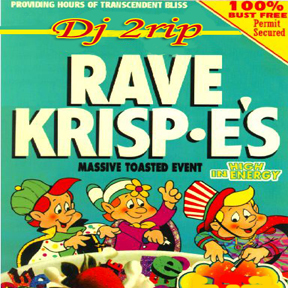
Episode #4: Everything Begins With E!

DOWNLOAD: http://2rip.podomatic.com/enclosure...13_38-08_00.mp3
In 1987 American house music began reaching European music charts. "Acid house" was a term being used in England to encompass any form of house music that sounded "crazy." People also thought the drug reference sounded cool. Incidentally the drug of the acid house movement was not LSD, but MDMA (Ecstacy). During this same year a group of three dj's who were scraping by spent the summer in Ibiza. During their time on the island they had taken their first Ecstacy trips and experienced the open-air disco known as Amnesia. These three dj's were Danny Rampling, Paul Oakenfold, and Nicky Holloway.
In 1988 each of these three dj's had opened their own club nights in London. One of the most notable was Paul Oakenfold's Monday night Spectrum party which pulled crowds of over two thousand people. At Nicky Holloway's "The Trip" had crowds of rivaled football players, whose violence was at an all-time high, dancing together in an Ecstacy induced euphoria. Clubbers during this time were living as if they had been transplanted back to the sixties, talking about peace and changing the world.
In 1988 the word "raving" was also finally coined and the acid-house culture had reached it's peak. The media began documenting the events while police worked in full-force to prevent raves from happening.
In 1989 the first fully licensed event took place on the London/Essex border hosted by a crew called Raindance. The yellow smiley face seen on Have A Nice Day signs became the logo for Danny Rampling's clubnight "Shoom" and simultaneously became the trademark for the acid-house revolution.
By 1990, while the music was continuing to be produced, acid-house was deemed as being "dead." The media had stopped their coverage and promoters began to set up an urban house scene in clubs like London's luxurious Ministry of Sound, bringing a second wave of ravers to the arena.
While I was not remotely close to DJ'ing during this time I've always had a passion for the songs that I chose to compile into this mini-mix, which was created a shortwhile before graduating college. This year marks the timeline for the 10 years that I have been dj'ing so I will be taking a step back and posting mixes each week of pure oldskool techno & house music.
Oval Emotion - Go Go (Deep Destruction Remix)
Drum & Bass - I Love You
Black Riot - A Day In The Life
Royal House - Can U Party (Todd Terry B-Boy Remix)
2 In A Room - Take Me Away
Underground Resistance - Jupiter Jazz
Simon Sed - Criminal
___________________
www.myspace.com/dj2rip | www.districtignition.com
|
|
 Sep-30-2008 15:16 Sep-30-2008 15:16 
|
|
|
|
|
2rip
Suspended User
Registered: May 2004
Location: Washington DC, US
|
|
|
Episode #5: Techno Rave Candies

DOWNLOAD: http://2rip.podomatic.com/enclosure...29_40-08_00.mp3
The early 1990's can be seen as a season of extreme change for dance music beginning with the "death" of European acid-house and rise of hardcore. In the United States, Detroit techno and Chicago/NYC house maintained their roots. However, European hardcore techno quickly made it's way onto US soil and stomping, German techno came along as well.
DJ's Frankie Bones, Adam X, and Heather Heart paved the way for North American rave, hosting illegal parties known as "Storm Rave." These parties took place in obscure locations such as construction sites, brickyards, and derelict stables. Rave-baron, Lord Michael, brought rave music into the nightclub scene with the help of Peter Gatien. Scotto & DB joined to form NASA which promoted the nighclub events at Limelight and Palladium. This created conflict between the underground Brooklyn Storm Raves and the NYC rave clubs. During the same time dj's like Keoki and America's first "techno star" known as Moby came into the picture to move America onto a broader scale in the global culture.
In 1990 the first trance track was released titled "Age Of Love." From there acts like Art of Trance, Paul Van Dyk, and Union Jack defined the sounds of trance. Similarly, hardcore became popularized by records such as "Charly" by The Prodigy and Sesame's Treat, which was a rip of the Sesame Street Theme.
This podcast shows the upward swing from acid house and techno to some early trance tunes which were, at the time, considered to be techno tracks by their producers. This was still a period where people weren't yet completely set on genres but there were different scenes created by the history of traditional house music and "rave music." Through the early 1990's the notion of segregated genres starts to become more and more prevalent with the emergence of newer styles.
Outlander - The Vamp
Joey Beltram - Energy Flash
Joey Beltram - Jazz 303
Orbital - Chime
Tasti Box - Rush
Cybex Factor - Die Schopfung
Trilithon - Choice
Orbital - Omen
___________________
www.myspace.com/dj2rip | www.districtignition.com
|
|
|
Oct-12-2008 16:21
|
|
|
|
|
biscomusic321
Junior tranceaddict
Registered: Nov 2005
Location: Nashvegas
|
|
|
just started listening to this series- impressive... keep on sharing
|
|
|
Oct-14-2008 17:24
|
|
|
|
|
2rip
Suspended User
Registered: May 2004
Location: Washington DC, US
|
|
|
This isn't supposed to come out until next week but fuck it... here's a freebee. 
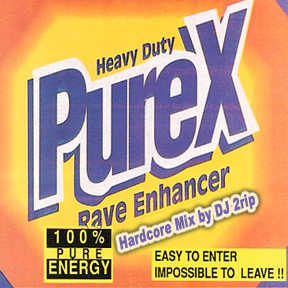
Episode #7: PURE-X
DOWNLOAD: http://2rip.podomatic.com/enclosure...12_05-07_00.mp3
By 1990, techno had become a catch-all term denoting anything less traditionally soulful than house music. Hardcore techno was the first fully fledged genre of European rave music. DJ's in Holland were taking techno tracks that were meant to be played on 33 RPM and pumping them up to 45 RPM instead, creating beats that often exceeded 200 beats per minute.
As early as 1989, DJ duo Fabio & Grooverider were experimenting in a similar way. They conducted experiments with house music records that employed breakbeats and sped them up to similar speeds of 200 beats per minute. They did this with records that had noticeable breakbeats such as music produced on the "Shut Up & Dance" record label and songs like "Humanoid" by Stakker. This sort of experimentation help pave the way to the rise of UK Hardcore.
UK Hardcore was then influenced by Prodigy's 1991 anthem "Charly" and Acen's 1992 "Trip To The Moon." This new style served as the introductory rave sound in many North American cities. In cities like Chicago & New York the influential sound was house music but in suburban areas and rural towns, hardcore was the first "techno" heard by most people. And raves soon began cropping up all around the United States, including cities like Pittsburgh, Dallas, and Milwaukee. By the end of 1993 hardcore fizzled out in most of those towns as their local flavors emerged.
In Canada, Toronto took on an "all hardcore" personality. Ravers and party promoters essentially copied everything that was going on in England and between 1991 & 1993, England raves were huge on the new hardcore sound. Don Burns (aka Dr. Trance) had a notion to take raving in a commercial direction with an idea that rave music was for "mass enjoyment." He wanted to spread culture and did this through the use of Toronto's airwaves. Burns was a figureman in a seven partner company called Nitrous - the same company that hosted events in the CN Tower and the Ontario Science Museum.
In 1993 there was a concensus that hardcore was becoming too mainstream as the music was brushing airwaves throughout the US, Canada & Britain. Some producers began to develop what was at the time known as darkcore by stripping the elements of hardcore and making it "darker" with less pitched up vocals. All of the euphoric and happy elements were taken from it. This was the beginning of jungle. In response to this movement a different group of producers took the "happy" elements from oldskool hardcore to create happy hardcore.
With the rise of hardcore came an influx of drug use in the rave culture. The whistles and toys that were first seen in England at Danny Rampling's Shoom events became prominent everywhere hardcore was represented. Children's party accessories like glowsticks were suddenly also very popular and dancers began wearing excessively large T-shirts, wooly hats and children's bookbags.
In 1994 the Criminal Justice Act was passed which led to the crackdown of many illegal raves, outlawing them and preventing a large number of massives from taking place. This law also increased police powers of unsupervised "stop & search" along with an entire section that covered collective trespass & nuisance on land as well as a dedicated section to raves.
This episode is a look at some vital hardcore tunes that were released between 1991-1994.
Tracklisting:
Prodigy - No Good
Codene - Hilton Park
Vol 2 - Turbo Sound
Ramos & Supreme - Crowd Control
Prodigy - Out Of Space
Subdoh - Seduction
Yolk - Bish Bosh
Unknown - Mayday Anthem
Tyrrany - Off Me Head
Unity - Unity (FSOL remix)
___________________
www.myspace.com/dj2rip | www.districtignition.com
|
|
|
Oct-15-2008 17:19
|
|
|
|
|
| |
All times are GMT. The time now is 03:54.
Forum Rules:
You may not post new threads
You may not post replies
You may not edit your posts
|
HTML code is ON
vB code is ON
[IMG] code is ON
|
|
|
|
|
|
Contact Us - return to tranceaddict
Powered by: Trance Music & vBulletin Forums
Copyright ©2000-2026, Jelsoft Enterprises Ltd.
Privacy Statement / DMCA

|