|
|
|
|
 |
Lira
Ancient BassAddict

Registered: Nov 2001
Location: Brasilia, Brazil
|
|
|
| quote: | Originally posted by Omega_M
Awesome ! This seems to imply that these languages have either influenced each other or one has influenced the other. Do you know whether these languages evolved around the same time, or whether one predates the others ? |
Well,
As Eros.Au pointed out, we believe that both Sanskrit and Latin came from a hypothetical language called Proto-Indo-European. And, as it spread across distant lands, the different dialects became increasingly unintelligible (that's a common phenomenon). When two "dialects" are no longer mutually comprehensible, you tend to say they're two separate languages. But this is, by no means, objective.
Theoretical problems aside, it is safe to say that all these languages evolved around the same time, as no language remains "static" over time. If it sounds strange for some reason, here's a good analogy: contemporary monkeys are different from whatever ancestral we share in common with them, because monkeys too have evolved during this time. That's precisely why we aren't the same species.
___________________
Indiana Clones Upcoming Sets
[ I May Upload Something Someday ]
|
|
 Jan-04-2008 17:27 Jan-04-2008 17:27 
|
|
|
|
|
Omega_M
Nostalgia

Registered: Jun 2005
Location: Ether
|
|
|
The other day I came across this video. It's a talk show and the guest, Dean Brown, talks about the Sanskrit language. Didn't watch the whole thing, but I think Lira may be interested.
http://www.youtube.com/watch?v=3cQ4hIG9w7c
http://www.youtube.com/watch?v=WJ4gWh5jVgo
http://www.youtube.com/watch?v=F9A_q8kxE8g
Who was Dean Brown ? A Sanskrit scholar, Linguist, physicist, friend of Albert Einstein and a computer scientist.
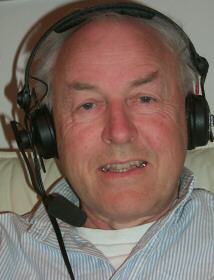
| quote: | He was a sanskrit scholar. A few years ago the Philosophical Research Society published his translation of the Upanishads and Yoga Sutras. More than that, he was conversant with many all of the world's great spiritual texts. And, he studied them in their original languages. At one time he counted 25 languages with which he was familiar. He passion was to find the "invariants" within all of this literature - the metaphysical underpinnings of world spirituality.
But, it would be a mistake to simply classify Dean as a student of metaphysics and religious traditions. He was a physicist of the highest order - making contributions to the development of the hydrogen bomb and designing the fuel element for the Nautilus, the world's first nuclear submarines. In his youth, he worked at the Institute of Advanced Studies in Princeton - and was a friend and colleague of Albert Einstein. They enjoyed playing "Go" together as a way of exploring Von Neumann's game theory.
Dean was also a computer scientist. He is actually the first person, back in the 1950s, to suggest that computers would have applications in the field of education. He worked with the United Nations for several years introducing this technology to various countries around the world. One project involved installing computers throughout the educational system of Spain. At this time he wrote a fascinating little book on the essentials of learning.
Dean was a founder of Zylog, Inc., a company that manufactured one of the first microprocessors, the Z80 chip - which is still in use today. Dean was instrumental in designing that chip. Another company that he founded, Picodyne, is still active today in the field of educational software. |
http://www.intuition.org/Brown.htm
___________________

Download and review ! Omega_M - In the Mix (Beta Version)
Originally posted by twilightki : It feels like something you'd listen to at 4 in the morning, or listen to in your car while you're going in a tunnel.
|
|
Jan-04-2008 18:44 
|
|
|
|
|
Lira
Ancient BassAddict
Registered: Nov 2001
Location: Brasilia, Brazil
|
|
|
That was indeed inspiring, and I actually saw the whole thing 
I should point out the fact that his etymologies seem to be poetical rather than factual, though, and seems to be based on the misconception that the European words he mentioned came directly from Sanskrit, and not from a common ancestor — at least, that's what I gathered from his explanation (he doesn't seem to treat "Latin" and "Sanskrit" as being sister languages). Nevertheless, Human, for example, comes from the Proto-Indo-European root dhghem-, rather than from sanskrit "Ohm" (is there any etymology available for this word, by the way? The only "ohm" I found was something else entirely  ). Also, "-man" in "human" is not related to the actual word man (whose origin was independent), but from a abbreviation of the latin "humanus" (English is known for dropping these weak sounds in the end)... that's why the plural of "human" is "humans", rather than "humen". ). Also, "-man" in "human" is not related to the actual word man (whose origin was independent), but from a abbreviation of the latin "humanus" (English is known for dropping these weak sounds in the end)... that's why the plural of "human" is "humans", rather than "humen".
Finally, "Deva" and "deity do share the same root (dyeu), but the semantic shift here came from "shining" and "sky" to "deity" (reason why the Latin word for day also shares this root), not from "sense". I do have to grant, however, that "God is your senses" is indeed a great insight, and only appeared in Europe quite recent forms of idealism (when compared to the Veidic tradition).
I wonder why this guy doesn't seem to be famous (I couldn't find a Wikipedia Entry, or a page from some educational institution), because a dialogue between him and an anthropologist would be quite remarkable 
___________________
Indiana Clones Upcoming Sets
[ I May Upload Something Someday ]
|
|
|
Jan-05-2008 03:35
|
|
|
|
|
Omega_M
Nostalgia
Registered: Jun 2005
Location: Ether
|
|
|
| quote: | Originally posted by Lira
That was indeed inspiring, and I actually saw the whole thing
I should point out the fact that his etymologies seem to be poetical rather than factual, though, and seems to be based on the misconception that the European words he mentioned came directly from Sanskrit, and not from a common ancestor — at least, that's what I gathered from his explanation (he doesn't seem to treat "Latin" and "Sanskrit" as being sister languages). Nevertheless, Human, for example, comes from the Proto-Indo-European root dhghem-, rather than from sanskrit "Ohm" (is there any etymology available for this word, by the way? The only "ohm" I found was something else entirely ). Also, "-man" in "human" is not related to the actual word man (whose origin was independent), but from a abbreviation of the latin "humanus" (English is known for dropping these weak sounds in the end)... that's why the plural of "human" is "humans", rather than "humen".
Finally, "Deva" and "deity do share the same root (dyeu), but the semantic shift here came from "shining" and "sky" to "deity" (reason why the Latin word for day also shares this root), not from "sense". I do have to grant, however, that "God is your senses" is indeed a great insight, and only appeared in Europe quite recent forms of idealism (when compared to the Veidic tradition).
I wonder why this guy doesn't seem to be famous (I couldn't find a Wikipedia Entry, or a page from some educational institution), because a dialogue between him and an anthropologist would be quite remarkable |
I watched the first video and that is why I asked whether any of these languages Sanskrit/Latin/Greek developed before any other. Because, Dean Brown seems to imply that Sanskrit and Latin are not "sister languages" as you mention.
ohm is actually spelled as AUM or simply Om. And a technically correct pronunciation needs significant practice. If pronounced correctly, it sounds very beautiful ! It has a very long, drawn out deep sound that stretches for more than 10 seconds.
___________________
Download and review ! Omega_M - In the Mix (Beta Version)
Originally posted by twilightki : It feels like something you'd listen to at 4 in the morning, or listen to in your car while you're going in a tunnel.
|
|
|
Jan-05-2008 14:31
|
|
|
|
|
|
|
|
|
|
|
Lira
Ancient BassAddict
Registered: Nov 2001
Location: Brasilia, Brazil
|
|
|
| quote: | Originally posted by Omega_M
I watched the first video and that is why I asked whether any of these languages Sanskrit/Latin/Greek developed before any other. Because, Dean Brown seems to imply that Sanskrit and Latin are not "sister languages" as you mention. |
Maybe the terminology is to blame for his confusion. Vedic Sanskrit was around just a bit earlier than Latin simply because Rome did not exist (so you wouldn't find "Latin speakers" before they had settled in Lazio). But, they were both around 800~500 BC.
His idea of India being Western is also interesting, by the way, and kinda reminded me of Jaspers' Axial Age
| quote: | Originally posted by Omega_M
ohm is actually spelled as AUM or simply Om. And a technically correct pronunciation needs significant practice. If pronounced correctly, it sounds very beautiful ! It has a very long, drawn out deep sound that stretches for more than 10 seconds. |
Oh, thanks! Lots of things make sense to me now. My geography teacher (in 6th grade) liked yoga very much, and had we recite "Aum" for a few minutes before the class started (I was one of the few students that took it seriously, however  ). And that letter is quite popular around here ). And that letter is quite popular around here
___________________
Indiana Clones Upcoming Sets
[ I May Upload Something Someday ]
|
|
|
Jan-05-2008 17:57
|
|
|
|
All times are GMT. The time now is 07:55.
Forum Rules:
You may not post new threads
You may not post replies
You may not edit your posts
|
HTML code is ON
vB code is ON
[IMG] code is ON
|
|
|
|
|
|
Contact Us - return to tranceaddict
Powered by: Trance Music & vBulletin Forums
Copyright ©2000-2026, Jelsoft Enterprises Ltd.
Privacy Statement / DMCA

|