|
It should be noted that the "Online Journal" webpage seems fairly fanatical. Just read their homepage and you'll see for yourself.
I saw that article around the time it was posted, and yet, even at the time of its posting, I could find NO other stories on the web of closings in Yellowstone due to high ground temperatures.
Given that this thing has a cycle of roughly 600,000 years, and that it seems to be in a waning cycle, I'd say the odds of it exploding in our lifetimes, even in the next 1,000 years, are incredibly small.
And I'm no geologist, but how does soil, of all things, reach temperatures of 200 F? Thats hotter than a pan frying an egg. Its dirt, I can't imagine that happening. Even if it did, you have to understand this is an area that shoots water out of the ground hundreds of feet into the air regularly, has bubbling mud pits, hot springs, and other absurd acts of geology. I wouldn't consider the occasional ground-heating too out of the norm.
I also found that Yellowstone has its own little online newspaper, which is updated several times daily. Looking through I can find NO reports of closures due to ground heating. There is a story about the buldge under the lake, which they attribute to a pocket of steam or gas, which is not uncommon and has happened in the past. You can also read that at the time, there were many wildfires burning throughout the park, and many areas were closed due to them. Maybe this is what they were talking about? And the news articles are not shy of addressing the Caldera, just read around and you'll find it talking about it often.
You'll also notice through a quick look of the USGS' website that earthquakes are quite common around the area, and have been so since we began recording them some 120 odd years ago. The article makes it sound as if they were a rare occurance - quite the contrary.
I wouldnt let the Yellowstone thing spook you. You've got to realize how large that Caldera is... when its getting ready to blow, the signs are going to become blaitantly obvious. It wont suddenly one day start to go, geology works much much slower than that.
Even if it did explode, its not the end of the world. Many would indeed die, and there would be some tough times, but they would not last more than a few years. Theres a 2 day warning from when the thing starts to empty its steam, to when it explodes. When it does, it will probably indeed cloud up the sky and cause massive plant deaths across much of the northern hemisphere. But within 2 years the sun would be back shining again. Volcanic ash also helps make for some of the most fertile soil in the world. Why do you think that major cities throughout civilization have been founded under threatning volcanos? And why have people kept coming back again and again after they explode and destroy everything? Just read on how fast the area surrounding Mt. Saint Hellens grew back, and how it came back 10 fold.
Sadly, this falls under the typical human pattern of impending doom at every turn. All of these gobal hazards we've come to understand in the last century; meteors, nuclear weapons, global warming, global cooling, overpopulation, deadly viruses, aliens, supervolcanos, etc, have been ranted and raved upon that the end at their hand was impending. It's common for things that are only recently discovered to become the new buzz thing for our impending doom. I dont think yellowstone was common knowledge till that History channel documentary a couple years back. So dont start writing that will just yet 
Face it, your gonna die some day, somehow. On the list of things to knock you off, I'd rank this one pretty far down.
___________________
NEW MIX [Feb/March 2008]
Last edited by nrjizer on Nov-04-2003 at 08:17
|


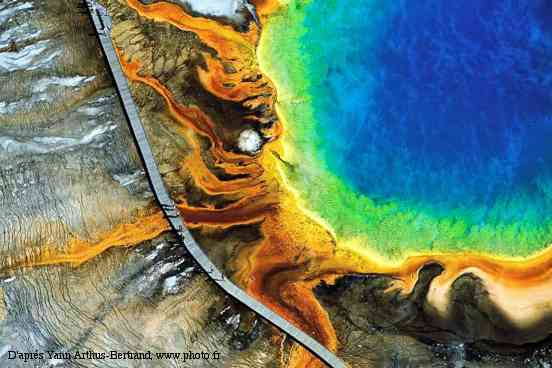


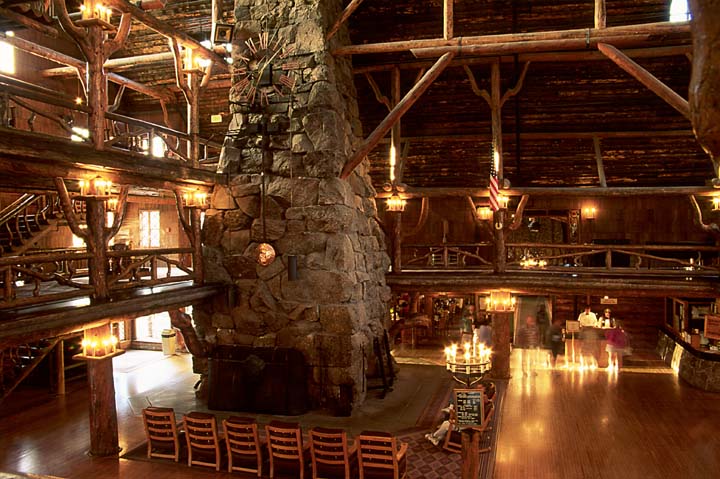

 I had to take it down and reverse it hehe. It's something I will never forget.

 One of the park rangers had told us earlier that they had never seen a bison fall into a thermal pool before and that they knew how to avoid them. I guess that was a rare site that we all witnessed.