|
I need help sound proofing a studio.
|
View this Thread in Original format
| DJ Robby Rox |
I've been reading about sound proof theory and I'm reading way too many different things to make a decision.
Like I said before since I moved I have been forced to use headphones (good ones) but my motivation to produce has been destroyed because I CAN NOT stand using headphones no matter how good they may sound.
I've been at this town house for about a month and today I saw the attic for the first time. It turns out theres sooo much space up there, great ventilation, and theres studs everywhere so putting walls up wouldn't be hard.
This is what I was thinking about doing but I'd appreciate some input. I won't be blasting the music like in a club but it will be loud. Imagine 80 watt speakers turned up about 60-70% and thats roughly where it will be.
But this is my plan and I'd appreciate some knowledgeable input.
I was reading about "room in a room" theory that says a room inside another room will filter out a great deal of noise because as the sounds vibrate through the first wall than hit the second wall a lot of the sound gets stuck vibrating between the 2 walls and cancelling out before it can really leave the second wall.
I'm not expecting to get all the sound removed but hopefully enough to make peace with my neighbors (they already called the association on me my first week here).
So this is my idea:
I'm neither a contractor or anything so please bare with me.
There are studs up there and I hear sheetrock is great as a sound baffle. So I was going to do 2 layers of sheetrock on the studs to form a square enclosure (no door here, I'll be entering through the floor). Than a foot from the first 2 layers of sheet rock I'm going to put studs up and make a second wall totalling 4 layers of the thickest sheet rock I can buy.
Between the wall I want to either fill it with the expandable foam insulation or egg cartons or anything cheap I can buy that will help filter as much sound as possible before reaching the second wall.
My question is:
What would be a good material to put in between the 2 walls?
And does this idea sound practical? I'm also gonna get myself an access virus pretty soon so having an actual sound proof studio would be HUGE.
Any ideas, comments or opinions are greatly welcome. Thanks! |
|
|
| echosystm |
| what's your expected budget? then we can say if it is practical or not. :) |
|
|
| DJ Robby Rox |
| quote: | Originally posted by echosystm
what's your expected budget? then we can say if it is practical or not. :) |
I'm trying to use cheap materials to do the job so I'm hoping I can do it for under $200. I know theres prob more appropriate sound baffles and what not but I'm hoping enough sheet rock and insulation will work. |
|
|
| 3F05Q |
Not going to happen for 200.
Expandable foam will still create a mechanical coupling between your noise room and your outer walls/studs.
If you want to do a room in a room, you should find out what, if anything, is subject to building code. I know it sounds strange, since no building inspector will see it, but if you're renting (are you?) then it's worth considering.
Don't forget the floor and ceiling as well. Those need to be seperated, and a ceiling would need to be structurally sound. 200 is nowhere near enough.
For a ballpark estimate take into account that drywall will run you 10-15 dollars for 4' x 8' x 5/8" from Home Depot. You want quad thickness, so let's go with the low range of 10 and say $40 for 4' x 8'. Let's say you do a 12' x 16' room, thats... (drop the zero, carry the one) $520 for drywall for the walls alone. 2x4's should have propor spacing as studs, which is 16". Now, you can probably get away with something larger, but it's always a compromise. You could probably get those for a couple bucks a shot.
Insulation is another matter, and so is high voltage wiring which you should get an electrician to do. That electrician better be a friend or they may not do the work on a non-inspected structure.
I'd suggest finding a friend of a friend, or going to a home improvement store and getting an estimate based on room size. |
|
|
| DJ Robby Rox |
| quote: | Originally posted by 3F05Q
Not going to happen for 200.
Expandable foam will still create a mechanical coupling between your noise room and your outer walls/studs.
If you want to do a room in a room, you should find out what, if anything, is subject to building code. I know it sounds strange, since no building inspector will see it, but if you're renting (are you?) then it's worth considering.
Don't forget the floor and ceiling as well. Those need to be seperated, and a ceiling would need to be structurally sound. 200 is nowhere near enough.
For a ballpark estimate take into account that drywall will run you 10-15 dollars for 4' x 8' x 5/8" from Home Depot. You want quad thickness, so let's go with the low range of 10 and say $40 for 4' x 8'. Let's say you do a 12' x 16' room, thats... (drop the zero, carry the one) $520 for drywall for the walls alone. 2x4's should have propor spacing as studs, which is 16". Now, you can probably get away with something larger, but it's always a compromise. You could probably get those for a couple bucks a shot.
Insulation is another matter, and so is high voltage wiring which you should get an electrician to do. That electrician better be a friend or they may not do the work on a non-inspected structure.
I'd suggest finding a friend of a friend, or going to a home improvement store and getting an estimate based on room size. |
You know what I was reading your response and I got to the end and suddenly it clicked. I come from a family of construction workers (I'm the only one graduating college) and the business my dad currently works for actually sells certain supplies to Home Depot like ice guard, roofing materials, AND sheetrock.
I asked my dad (him & his boss are bestfriends) and he said w/out even asking his boss that he'd let me take w/e I needed from their supply yard in the back.
So I'm really psyched about that. I know they have sheetrock and I'm yet to see what else they have. My oldest brother is a computer engineer but he's also a certified electrician and did all his own work recently on an addition. I'll call him up but I'm sure he'll do the wiring. So right now sheetrock is free. The only thing I really need to buy is some proper type of medium to go between the walls.
And this is a random question but it has a point. I wasn't considering the fact that I'd have to do the floor and ceiling too and I'm thinking I can do the floor myself but do I really need to do the cieling? Reason I ask is if sound does escape that way it would be traveling upwards and directed into the sky (vibrations through the roof) essentially diffusing in a direction AWAY from my neighbors. Or does someone see a flaw in my logic that I'm not seeing?
Thanks a lot everyone. Oh btw, its not my place its my brothers and he owns it. I pay him rent but its a very small amount and most goes towards food anyway. |
|
|
| echosystm |
| you need to do all surfaces, including roof & floor. you need pretty much 90% coverage to get any decent kind of isolation. |
|
|
| 3F05Q |
Well, shoot, if you've got a supply hookup and your brother owns it, then best of luck to you. My only concern then is that you really draw it up properly, maybe as far as a complete blueprint. That would ensure quick execution as well as making it easier for your brother in the future if anything needs to be changed. Also, you won't get 3/4 of the way through and come upon some unexpected expense.
+37.2 on what echo said. It's surprising how much sound can 'leak' from even a small gap that's gone unchecked.
Keep us updated.
Oh... and PLEASE do a -ton of research on what others have done for isolation. Build off of ideas that others have come up with, especially when it comes to the floor, since there are probably some great tricks/materials that are proven to work better than others. :D |
|
|
| Storyteller |
| Rubber is awesome. Get some old tires fill the gaps with isolation and build your floor on that. |
|
|
| donnybrasco |
Robby;
In trying to keep sound from traveling OUT of your studio, keep in mind that most of what your neighbors are hearing is, of course, bass.
That being said, rigid foams and lighter materials do nothing for stopping heavy bass frequencies. It's all about density and mass when it comes to stopping bass. Heavy sheet-rock (in multiple layers), the heaviest you can get, is part of what you need. Your idea for the double-wall construction is sound, but this is what you need to fill in the walls with (in addition to flexible foam for the high and some mid frequencies);
(click link-->>) Barrier
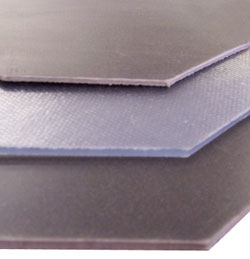
I was having the same problem you were having, and then I installed this stuff and it changed my life, lol. You attach it directly to the walls...pretty simple. Another version of it can also be laid on floors and attached to ceilings (see the website). Very effective.
It's not cheap! But the one thing you have to remember about sounds-proofing, is that there is no easy or cheap way to get quality sound-proofing in limited spaces. You're just going to have to bite the bullet and pay if you want to win this battle and be able to produce at home, the way you really want to (i.e., volume nice and high). This stuff is THIN, but dense, so it saves space, while giving maximum performance...especially compared to say; stuffing your walls with layers of old mattresses, etc.
Another thing to appreciate about good soundproofing is that once you install it, you'll never have to up-grade it...unlike most everything else in your studio! It will never de-value either, and you can always take it with you when you leave! (assuming you are willing to break it back out of the walls...which you may have to do anyway in order to put the home back the way it was).
Decoupling your studio room from the rest of the building is the rest of your goal. As was mentioned, if you can basically make a box (i.e., the room) that sits on isolation mounts (rubber, sand, etc.) up in that attic, then more than half your battle is over in terms of keeping sound from passing through the house's ceilings and walls. If you can't do all of this, then at least soundproof as heavily as possible with the barrier and sheet-rock. And don't forget to seal all the thin cracks and such in the corners, door seams, openings for pass-throughs, and where walls meet, etc., with some caulking! Most high frequency transmissions get in (or out) in this way.
But lastly, and this is VERY important; You'll need to get some solid advice from one of your relatives or their friends who is an Engineer about exactly how much weight those joists in the attic will hold, relative to your room's size and weight. Don't assume they can take whatever you can throw at them. They're already under a load that they WERE designed for, with some additional load from storage in the attic being factored in. But building a studio with this heavy barrier product, heavy layers of sheet-rock, etc...that's another story.
This is why most people build their studios in garages or basements. Cement floors solve SO many problems, lol. ;)
Good luck. |
|
|
|
|

