|
Dank (pg. 14)
|
View this Thread in Original format
| wotyzoid |
I'm not an academic like you guys but I'm gonna jump in. I wanna read this one:
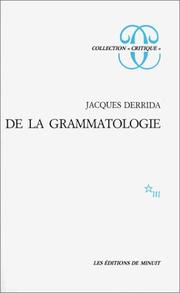
I think dank |
|
|
| Woony |
| quote: | | Originally posted by Lira Recommendations? |
I don't post in any, really but I'm part of one called "Dialectical dialecticzposting for big others and negated absolutes". There's a lot of memes and random posting but if you ask a real question with content, you'll probably get a qualified answer. Same with Reddit's /r/askphilosophy, which has a lot of academics that know their but Reddit is also not really a good format for having extended discussions. RIP message boards :(
@ Derrida, I wouldn't just jump into that book but I'm not a Derrida expert :p If you are interested, there is a really good Essay from Richard Rorty that not only explains Derrida's project pretty well but also does a qualified general defense of "poststructuralism". It's short but very dense and written on an academic level though. http://faculty.georgetown.edu/irvin...riting-1978.pdf
| quote: | | To understand Derrida, one must see his work as the latest development in this non-Kantian, dialectical tradition-the latest attempt of the dialecticians to shatter the Kantians' ingenuous image of themselves as accurately representing how things really are. Derrida talks a lot about language, and it is tempting to view him as a "philosopher of language" whose work one might usefully compare with other inquiries concerning the relations between words and the world. But it would be less misleading to say that his writing about language is an attempt to show why there should be no philosophy of language.' On his view, language is the last refuge of the Kantian tradition, of the notion that there is something eternally present to man's gaze (the structure of the universe, the moral law, the nature of language) which philosophy can let us see more clearly. The reason why the notion of "philosophy of language" is an illusion is the same reason why philosophy-Kantian philosophy, philosophy as more than a kind of writing-is an illusion. |
|
|
|
| wotyzoid |
| quote: | Originally posted by Woony
@ Derrida, I wouldn't just jump into that book but I'm not a Derrida expert :p |
Too late :crazy:
Edit:
| quote: | For essential reasons: the unity of all
that allows itself to be attempted today through the most diverse concepts of science and of
writing, is, in principle, more or less covertly yet always, determined by an historico-
metaphysical epoch of which we merely glimpse the closure. I do not say the end. The idea of
science and the idea of writing—therefore also of the science of writing—is meaningful for us
only in terms of an origin and within a world to which a certain concept of the sign (later I
shall call it the concept of sign) and a certain concept of the relationships between speech and
writing, have already been assigned. A most determined relationship, in spite of its privilege,
its necessity, and the field of vision that it has controlled for a few millennia, especially in the
West, to the point of being now able to produce its own dislocation and itself proclaim its
limits. |
Edit 2: thanks for that, though |
|
|
| wotyzoid |
 |
|
|
| Lira |
| quote: | Originally posted by Woony
I don't post in any, really but I'm part of one called "Dialectical dialecticzposting for big others and negated absolutes". There's a lot of memes and random posting but if you ask a real question with content, you'll probably get a qualified answer. Same with Reddit's /r/askphilosophy, which has a lot of academics that know their but Reddit is also not really a good format for having extended discussions. RIP message boards :( |
Yeah, I miss having other boards like TA.
And joined the group, thanks!
| quote: | Originally posted by Woony
@ Derrida, I wouldn't just jump into that book but I'm not a Derrida expert :p If you are interested, there is a really good Essay from Richard Rorty that not only explains Derrida's project pretty well but also does a qualified general defense of "poststructuralism". It's short but very dense and written on an academic level though. http://faculty.georgetown.edu/irvin...riting-1978.pdf |
I love me some Richard Rorty, but I'm always wary of what Daniel Dennett calls the Rorty Factor ("Take whatever Rorty says about anyone's views and multiply it by .742 to derive what they actually said"). If that's a good source, however, I'm definitely going to give it a read. Danke schön, herr Woony! |
|
|
| Woony |
lol, never heard of the Rorty factor. I've noticed that people like Rorty can be good writers almost to a fault because they could make anything sound appealing, clear, concise and easy to understand, even if it isn't.
I don't a ton about Derrida but I've been told that essay is fairly accurate. But then again, with authors like Derrida scholars can't even agree to what he was actually trying to say so you're only ever going to get someones personal interpretation regardless. |
|
|
| Lews |
| quote: | Originally posted by Woony
What authors did you read? Genuinly curious. I mean, I find some of the guys like Baudrillard insufferable to read but I would never aquate someone being hard to read (even intentionally so) with them being nonsense. I think being "obscurant" and nonsensical are not the same things. And of course, a lot of the derivative stuff published in poststructuralist journals in the wake of the big names is genuine nonense. I also don't particularily like Foucault and I find a lot of the terminology that he has spawned obnoxious but again, I wouldn't call it nonsense. |
Right, but I never stated that they were nonsense because they were hard to read. In my experience, many defenders of post-structuralism seem to have been taught that analytics/etc just don't get it, often because they are turned off by the terminology/language or because they have some personal (power) stake in the current social structure. There's rarely an acknowledgement that one can get it but simply not be impressed.
I said that 'its mostly nonsense' rather than 'its complete nonsense' because I do think there is some good stuff in, e.g., Baudrillard, Derrida, Foucault, and Lyotard, all of whom I have read. But the overall system/view of post-strucutralism I find very problematic. So much of it (especially the more contemporary stuff) is self-referential, self-reinforcing, 'preaching to the true believers.' While this is a problem for all philosophy, I find it especially problematic for post-structuralism, due to the view's own insistence on taking down all of these elements. In the end, most post-structuralism takes itself down, leaving it with little more than rhetoric deriding the world and praising itself, which it then cloaks in intentionally obscure prose to hide that that is all that is left. |
|
|
| Lira |
| quote: | Originally posted by Woony
lol, never heard of the Rorty factor. I've noticed that people like Rorty can be good writers almost to a fault because they could make anything sound appealing, clear, concise and easy to understand, even if it isn't. |
His "Philosophy and the Mirror of Nature" is great for this reason, in my opinion. It was one of the very few philosophy books that I found exciting rather than just interesting or whatever.
| quote: | Originally posted by Woony
I don't a ton about Derrida but I've been told that essay is fairly accurate. But then again, with authors like Derrida scholars can't even agree to what he was actually trying to say so you're only ever going to get someones personal interpretation regardless. |
Good point, I guess it is inevitable :p
Speaking of inevitable and accurate... May the dankness recommence:
 |
|
|
| Woony |
| quote: | Originally posted by Lews
Right, but I never stated that they were nonsense because they were hard to read. In my experience, many defenders of post-structuralism seem to have been taught that analytics/etc just don't get it, often because they are turned off by the terminology/language or because they have some personal (power) stake in the current social structure. There's rarely an acknowledgement that one can get it but simply not be impressed. |
But it's not like continentals just dreamt this up as some kind of defence mechanism, 'obscurantism' is by far the number one charge laid against post structuralism and the 20th century continental tradition by analytics in general. I think at some point there was even a contest by analytics to find the biggest "nonsense" text in academia, which a text by Judith Butler won that wasn't even close to nonsense, just unnessecarily heavy on marxist/continental jargon. So I don't think it's an unfair thing to assume so unless someone states otherwise. I don't think it's even very surprising, given how much the analytics school teaches the idea of simple, clear and logical arguments and how much it is part of it's own identity, also as an distinction to the continental tradition. I've talked to multiple people online who did a degree in philosophy in an analytic faculty and never even had a single course on a thinker in the continental tradition. Of course someone that hasn't been taught in the kind of language that post-structuralism uses will not understand the philosophic language of someone like Derrida, just like how I won't understand a text that goes crazy with formalizing.
| quote: | Originally posted by Lews
I said that 'its mostly nonsense' rather than 'its complete nonsense' because I do think there is some good stuff in, e.g., Baudrillard, Derrida, Foucault, and Lyotard, all of whom I have read. But the overall system/view of post-strucutralism I find very problematic. So much of it (especially the more contemporary stuff) is self-referential, self-reinforcing, 'preaching to the true believers.' While this is a problem for all philosophy, I find it especially problematic for post-structuralism, due to the view's own insistence on taking down all of these elements. In the end, most post-structuralism takes itself down, leaving it with little more than rhetoric deriding the world and praising itself, which it then cloaks in intentionally obscure prose to hide that that is all that is left. |
I'm not even a staunch defender of post structuralism as a movement, it's just that 90%+ of the time if an analytic (commenting on the internet :p) derides post-structuralism or postmodernism, the underlying assumption is that all of it is more or less nonsense, no exceptions. The majority certainly has not ever seriously engaged with Baudrillard, Derrida or Foucault beyond judging their language and style as unreadable because of the charge of 'obscurantism' mentioned above. I mean, it goes the other way too, right, most continentals will just assume that formalizing is just pointless jerking off with logical notation, just like analytics assume that continentals are just pointlessly jerking off with fancy literaly style and terminology. |
|
|
| SYSTEM-J |
| quote: | Originally posted by Woony
Of course someone that hasn't been taught in the kind of language that post-structuralism uses will not understand the philosophic language of someone like Derrida |
| quote: | Originally posted by Woony
...with authors like Derrida scholars can't even agree to what he was actually trying to say |
Right.
You're really struggling to frame this discussion outside of a continental/analytical binary, no matter how much you protest otherwise. |
|
|
| Woony |
| quote: | Originally posted by SYSTEM-J
Right.
You're really struggling to frame this discussion outside of a continental/analytical binary, no matter how much you protest otherwise. |
How are these two sentences related? There's a staunch difference between scholars not being able to agree on a single interpretation and a given reader not being able to crack the language of a text at all. Nietzsche is an incredibly captivating writer with comparatively little jargon that has reached more readers outside academia than other modern philsopher and yet he is arguably the most controversial philosopher ever and nobody can agree on what the he was actual trying to say.
And I don't know how you got the idea that I protested against framing this discussion in the continental/analytic binary since my whole point has been that much of the deriding of post structuralism is due to the continental/analytic divide. The vast majority of the people making wide claims about all or most of poststructuralism being nonsense have been trained analytically, which are principles that not only extend to academic philosophy but also a general cultural/academic attitude in the anglosphere. Most of the arguments against poststructuralism were brought against Hegel and Heidegger long before there even was such a thing as the poststructuralist movement. |
|
|
| Woony |
| To give a more favorable example towars the analytic tradition, if you compare german and english learning material or textbooks for pretty much any topic, there is an extremely apparant divide in how each culture approaches teaching and the english materials will be more concise and easier to understand pretty much every time. Perhaps some of this is ingrained in the structure of the languages themselves, I often reach for the english translation if I have issues with something like Kant's abominable style (german allows for grammatic constructions so horrible that they literally aren't even permitted in the english language) |
|
|
|
|

