|
What Are You Reading? Part Deux. (pg. 58)
|
View this Thread in Original format
| pozz |
| quote: | Originally posted by Lira
Have you ever read the book!? Where in the book does he say anything remotely similar to this?
I'm no fan of Sam Harris, and I didn't even like the book very much, but if you're going to criticise a work an author has penned, read it.
Philosophical qualities aside, Harris' style is a lot clearer and well-founded. I'm glad he's no Nietzsche, otherwise this book would be begging for more misunderstandings than the one you've just provided! |
sorry, meant "The End of Faith" by Sam Harris. i can quote relevant passages if you like.
I assume this new book streams from that same approach: Utilitarian calculus.
Avoiding all the discussion you just had with EgosXII, the main reason to read Nietzsche is he does not resort to the same tired methods of argument. He studies why a particular system of morality is able to emerge at all rather than argue about which system is the best. For Nietzsche, a type of person will correspond to a type of morality, rather than morality emerging out of reasoned argument. "Reasoned argument" is itself entrenched in particular ways of knowing/thinking as part of a historical process, and so has very little to do with Truth apart from that Truth it envisions itself finding.
I remember lurking around and reading somewhere that you've read Hegel. If you've read and know Hegel then why do you care about style? If you are able to navigate his writings effectively then Nietzsche should be child's play. Style isn't an appendage to a work, style is the practice that generates the theory. |
|
|
| pozz |
| quote: | Originally posted by Tasty Onions
Topology is (partly) based around the idea that shapes with the same number (called "Euler Characteristic") are in some sense really the "same" shape, when viewed from a broader perspective. So, for example, you can view a cube as basically just a sphere that has been "deformed" into a different shape. You can get the ordinary polyhedra by poking and prodding a sphere, but you can't get a torus (for example) without doing something more drastic: cutting a hole in it.
[Edit: Wiki has a neat animation demonstrating "equivalence" between two different shapes, a coffee cup and a donut.]

|
this is flippin' cool. |
|
|
| Lews |
That looks super cool, Brian. Too bad I suck at math worse than you :p
I just finished Physics of the Impossible. ing fantastic. Wrote a mini-little review on Goodreads about it for those of you who are there (Brian and everyone else sign up, dammit :p)
Going to read Dune 2 now as a bit of a mental break before moving to either the Evolution book or Neuromancer. |
|
|
| EgosXII |
| quote: | Originally posted by Lews
That looks super cool, Brian. Too bad I suck at math worse than you :p
I just finished Physics of the Impossible. ing fantastic. Wrote a mini-little review on Goodreads about it for those of you who are there (Brian and everyone else sign up, dammit :p)
Going to read Dune 2 now as a bit of a mental break before moving to either the Evolution book or Neuromancer. |
"we" is awesome ;) |
|
|
| Lira |
| quote: | Originally posted by pozz
sorry, meant "The End of Faith" by Sam Harris. i can quote relevant passages if you like. |
I'm sure Oscar will want to talk about Sam Harris more than I do :)
| quote: | Originally posted by pozz
I assume this new book streams from that same approach: Utilitarian calculus. |
Sort of. He agrees he's a consequentialist, but he refuses to be called a utilitarian because (if I recall correctly) of his emphasis on science. That makes his utilitarianism a lot less problematic than Bentham's. Don't get me wrong, I'm not a fan of Harris' work (despite my posts in this thread, the books I like easily outnumber the books I don't like). My main criticism regarding this book is that, even though he talks about the wonders of science and reason, he manages to ignore all the discussion that took place before him, probably because no one else hated religion as much as he does (that's the only conclusion I can arrive at after he criticises Mill).
| quote: | Originally posted by pozz
Avoiding all the discussion you just had with EgosXII, the main reason to read Nietzsche is he does not resort to the same tired methods of argument. He studies why a particular system of morality is able to emerge at all rather than argue about which system is the best. For Nietzsche, a type of person will correspond to a type of morality, rather than morality emerging out of reasoned argument. "Reasoned argument" is itself entrenched in particular ways of knowing/thinking as part of a historical process, and so has very little to do with Truth apart from that Truth it envisions itself finding. |
I know his work, and the whole master/slave morality dichotomy. Really :p
| quote: | Originally posted by pozz
I remember lurking around and reading somewhere that you've read Hegel. If you've read and know Hegel then why do you care about style? If you are able to navigate his writings effectively then Nietzsche should be child's play. Style isn't an appendage to a work, style is the practice that generates the theory. |
Actually, I read Hegel's most accessible work (Introduction to Philosophy of History). Besides, it's not the difficulty that bothers me (I absolutely love Kierkegaard), but the way he comes to his conclusions and the conclusions themselves. Like I said, it's his project I'm sceptical about (and I admit there's a chance I'm being unfair here). |
|
|
| Tasty Onions |

 |
|
|
| justin |
finishing Robinson Crusoe, don't want to finish it cuz its sooo good so saving the end til some ither time.
Meantime I have Kafka short stories that I never read but heard about from so many people. So far very wierd. Me thinks, the Metamorphosis is gonna be one of those:conf: |
|
|
| Lews |
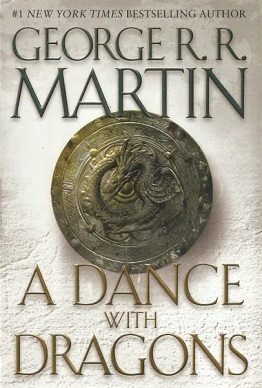 |
|
|
| Ted Promo |

As suggested earlier in this thread. ing immense (especially for someone such as myself who is a pesky American without much knowledge regarding the history of this continent as it was entirely brushed aside in my schooling and I just recently took initiative to rectify that and become familiar).
I find narrative histories such as this of different countries and continents and whatnot verrry intriguing so if you guys have recommendations akin to like this lemme know. |
|
|
| Joss Weatherby |
| Just finished Norwegian Wood by Murakami. I really enjoyed it. It was very depressing, but entirely refreshing at the same time. Also very sexual! |
|
|
| Lews |
I've been extremely busy lately and haven't been able to focus on a single book, so I've been reading short stories out of this when I get a chance. Pretty enjoyable so far, no space-operas or the like.
 |
|
|
|
|

